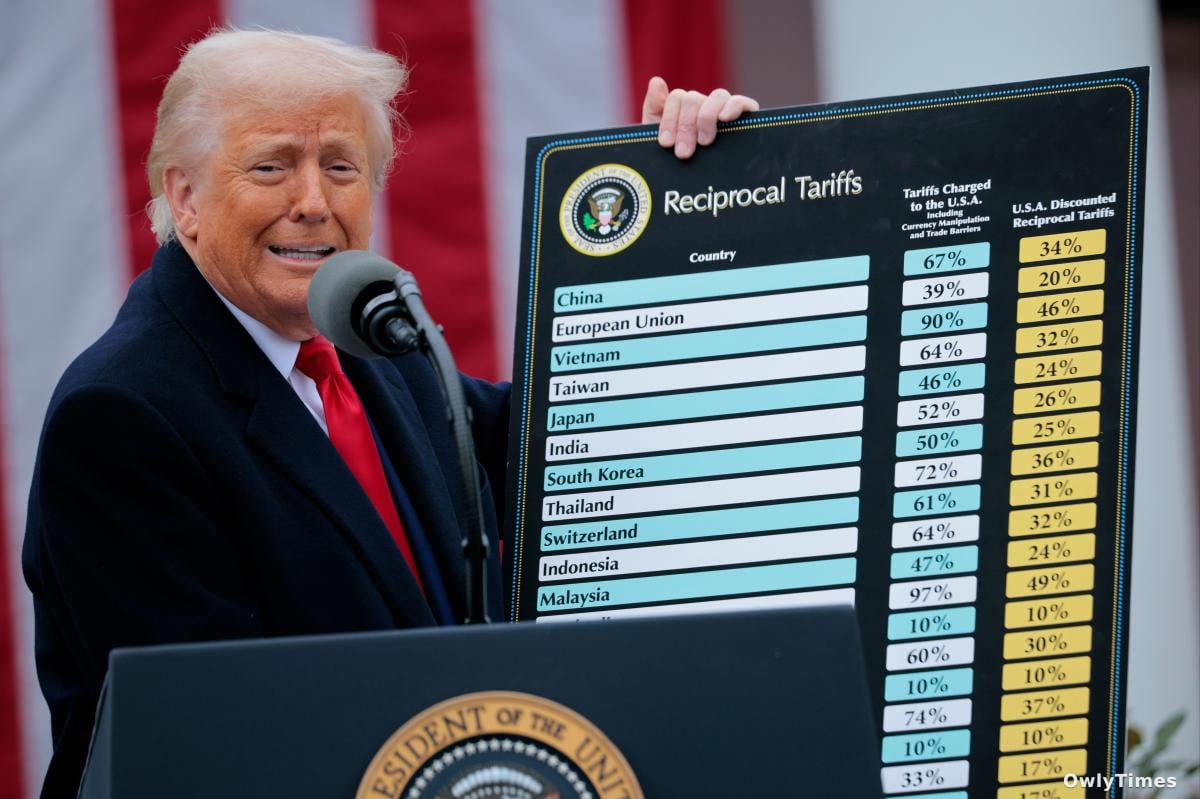

Is your spice rack about to get more expensive? That’s the question most Americans should be asking as yet another legal battle erupts over Donald Trump’s continued insistence on tariffs, even after a decisive Supreme Court defeat. The real story here isn't about arcane trade law – it’s about a fundamental power grab by the executive branch and the very real pinch it puts on household budgets. We’ve been told these tariffs are about “fundamental international payments problems,” as the White House spokesperson Kush Desai put it, but the evidence suggests a different motive: a continued attempt to reshape global trade on terms dictated by one man, regardless of legal constraints.
On Monday, the Liberty Justice Center filed a new complaint at the US Court of International Trade, representing Burlap & Barrel, a spice importer, and Basic Fun, the company behind Tonka Trucks and other childhood staples. This isn’t a repeat of the previous lawsuit; it’s a direct response to Trump’s attempt to circumvent the Supreme Court’s February 20th ruling. That ruling deemed his earlier tariffs, implemented under the International Emergency Economic Powers Act (IEEPA), unconstitutional. Undeterred, the administration slapped down a 10% global tariff on February 24th, promising a hike to 15%, now justifying it under Section 122 of the Trade Act of 1974. According to Jeffrey Schwab of the Liberty Justice Center, who successfully argued the previous case before the Supreme Court, “Section 122 authorizes temporary tariffs for certain economic conditions that do not currently exist; it is not a general license for the President to tax the American people for reasons Congress never intended.”
The implications are far-reaching. While the initial Supreme Court case focused on the legality of tariffs imposed under IEEPA, this new challenge attacks the very foundation of the administration’s authority to levy tariffs at all. It’s not just about spices and toys, though those are the visible casualties. Basic Fun, based in Boca Raton, Florida, relies on manufacturing in China, meaning the tariffs directly impact the cost of goods for American families. Burlap & Barrel, sourcing spices from small farmers globally, faces increased costs that will inevitably be passed on to consumers. This isn’t abstract economic theory; it’s a direct hit to the wallets of people buying groceries and gifts. The fact that 24 states have also filed a lawsuit challenging the new tariffs underscores the widespread concern.
The administration’s defense – that these tariffs address “large and serious balance-of-payments deficits” – rings hollow when considered alongside the $130 billion in tariffs the Court of International Trade recently ordered refunded to importers. That’s $130 billion already collected, and potentially misused, based on a legal justification that’s now demonstrably shaky. The White House’s vow to “vigorously defend” these policies isn’t a sign of strength, but of desperation. It’s a signal that this isn’t about economic policy, but about preserving presidential power. The administration is attempting to establish a precedent where the executive branch can unilaterally impose taxes without Congressional approval, effectively rewriting the rules of trade and governance.
Reporting from the New York Post informs this analysis.
This isn’t simply a legal dispute; it’s a test of the balance of power. The Supreme Court has spoken once, but the administration is clearly attempting to find loopholes and alternative justifications to achieve the same outcome. The question now is whether the Court of International Trade will see through this maneuver. Watch closely for a ruling on whether Section 122 truly grants the President the authority claimed, and more importantly, whether the administration will continue to escalate this fight, potentially leading to further legal challenges and continued economic uncertainty. My prediction? This won’t end with a simple ruling. Expect the administration to push this to the Supreme Court again, and for the next year to be defined by escalating trade tensions and a growing sense of legal instability. The real question isn’t if prices will rise, but how much before this legal battle is finally resolved.





