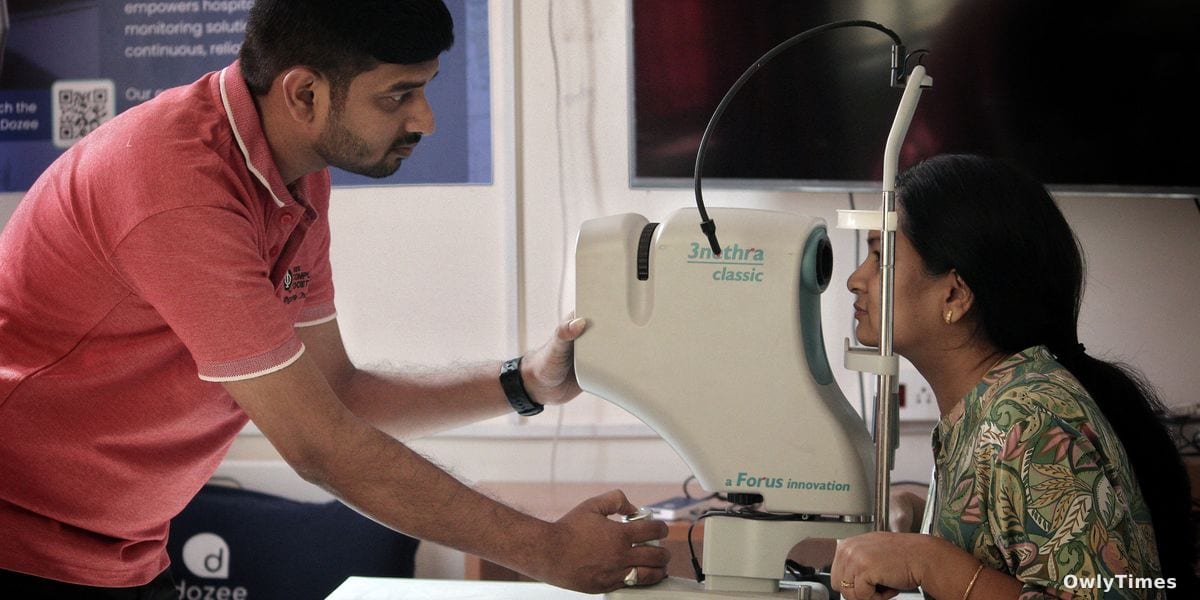

The pursuit of accessible healthcare often feels like a technological arms race – faster scans, more precise diagnostics, and increasingly complex interventions. But what happens when the most cutting-edge tools remain out of reach for the communities that need them most? Abhishek Appaji’s career isn’t about chasing the next technological marvel; it’s about deliberately engineering solutions that bridge the gap between innovation and equitable access, a philosophy recently recognized with the IEEE Theodore W. Hissey Outstanding Young Professional Award. While headlines celebrate the award itself, the story behind it reveals a critical, often overlooked dimension of biomedical engineering: the imperative to design for constraint, not simply for capability.
Appaji, an associate professor of medical electronics engineering at B.M.S. College of Engineering in Bengaluru, India, doesn’t silo his work within a single discipline. He actively integrates artificial intelligence, biomedical engineering, deep learning, and neuroscience, believing the convergence of these fields unlocks the most impactful diagnostic advancements. This isn’t theoretical; his inventions, like an AI-powered retinal scanner and a smart bed monitoring vital signs, are deployed in remote areas of India, providing crucial diagnostic capabilities where they are desperately needed. The core principle driving this work, he explains, is that “our success as engineers is not solely measured by research outcomes or publications but by the tangible impact we have on lives through accessible technology.” This statement isn’t simply aspirational rhetoric; it’s the guiding principle behind his entire body of work.
This piece references the spectrum.ieee.org report.
A pivotal moment in Appaji’s journey came with his participation in the MIT Global Entrepreneurship Bootcamp in 2017. He possessed the technical expertise, honed through bachelor’s and master’s degrees from B.M.S. College of Engineering and the University of Visvesvaraya, both in Bengaluru, but lacked a structured framework for translating research into marketable solutions. The bootcamp challenged his team to address a complex healthcare problem, leading to the development of a noninvasive blood glucose measurement device for managing gestational diabetes. This project ultimately spawned Glucotek, a company founded in Brisbane, Australia, demonstrating the power of collaborative, globally-minded innovation. It’s a compelling example of how structured entrepreneurial training can accelerate the translation of academic research into real-world impact.
However, the narrative often simplifies the journey from lab to market. Appaji’s subsequent doctoral research at Maastricht University in the Netherlands, focusing on retinal vascular patterns as biomarkers for mental illness, illustrates a more nuanced reality. He discovered that analyzing the curvature, branching angles, and dimensions of retinal vessels could reveal microvascular changes mirroring neurovascular changes in the brain, potentially offering a noninvasive way to diagnose conditions like schizophrenia and bipolar disorder. This led to the creation of the Smart Eye Kiosk, an AI-powered tool capable of screening for both eye diseases and psychiatric conditions. While the kiosk represents a significant technological achievement, its development also highlights the complex interplay between technological innovation, clinical validation, and the logistical challenges of deploying such a system in resource-constrained settings. The kiosk’s success relies not only on the accuracy of the AI models but also on access to ophthalmologists, psychiatrists, and the infrastructure to collect and analyze the data.
It’s important to note that Appaji’s work isn’t happening in a vacuum. He’s an active volunteer with the IEEE Young Professionals Bangalore Section, launching networking events, workshops, and mentorship programs. This commitment to fostering the next generation of engineers underscores his belief that technological progress is inextricably linked to empowering future leaders. His leadership within IEEE, including roles as treasurer of the IEEE Education Society and chair of the IEEE Computer Society Bangalore Chapter, demonstrates a dedication to building a global network for collaborative problem-solving. During the COVID-19 pandemic, this network proved invaluable, enabling him to secure funding from the IEEE Humanitarian Technologies Board to develop 3D-printed protective equipment for vulnerable communities in Bengaluru.
Limitations to consider include the inherent biases present in AI algorithms, which are trained on specific datasets and may not generalize well to diverse populations. The retinal vascular patterns used in the Smart Eye Kiosk, for example, may vary across ethnicities and geographic regions, requiring careful calibration and validation. Furthermore, the reliance on deep learning algorithms necessitates substantial computational resources and expertise, potentially creating a barrier to widespread adoption. The success of these technologies also depends on robust data privacy and security measures to protect patient information.
Looking ahead, Appaji’s work with Dozee (Turtle Shell Technologies) on wireless smart beds represents a promising avenue for remote patient monitoring. These beds, which measure mechanical microvibrations to track vital signs, are already being used in over 200 hospitals in India and thousands of households. The next step is to refine the algorithms and expand the range of physiological parameters that can be monitored, potentially enabling earlier detection of deterioration and personalized interventions. But perhaps the most crucial question is this: how can we ensure that these advancements are not simply adopted by well-resourced hospitals but are actively integrated into primary care settings and made accessible to individuals in their homes, particularly in underserved communities? The answer will likely require innovative financing models, public-private partnerships, and a continued commitment to designing technology that prioritizes equity and accessibility.





