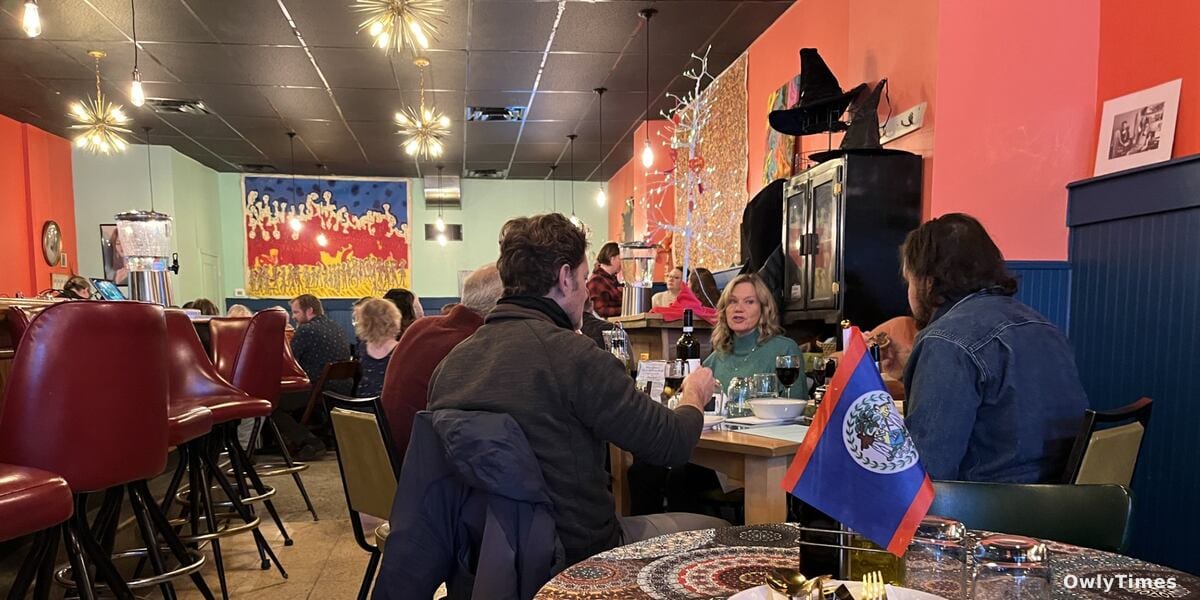

The impulse to “help” often carries an unspoken assumption: that those offering aid possess a complete understanding of the needs and contexts of those receiving it. Sunday’s fundraiser at Negaunee’s Strega Nonna, hosted by Hillside Health Care and U.P. health care providers to benefit underserved communities in Belize, offers a compelling case study in how even well-intentioned efforts can be strengthened by a deeper engagement with the complexities of global health equity. While the event, featuring authentic Belizean cuisine, aimed to raise $2,000 to support medical services in Belize, the underlying narrative reveals a crucial question: how do we move beyond simply delivering healthcare to building sustainable healthcare systems, responsive to local needs?
Bridging Rural Healthcare Gaps: A U.P. Connection
The connection drawn by Rachael Prusi, a member of the Hillside Health Care Board of Directors, between the U.P. and southern Belize is particularly insightful. She highlighted shared characteristics – rurality, geographic isolation, and challenges in accessing medical care – as justification for the fundraising effort. This isn’t simply a matter of shared hardship; it’s a recognition that the logistical and systemic barriers to healthcare delivery are often remarkably similar, regardless of latitude. However, equating the experiences risks overlooking crucial differences in the underlying causes of those barriers. The U.P.’s healthcare access issues stem, in part, from economic factors and a declining population, while Belize faces a unique set of challenges related to infrastructure, historical inequities, and the specific health burdens of a tropical environment. The stated goal of supporting 20 full-time Belizean staff – nurses, pharmacists, and expanding speech therapy and mental health services – is a concrete step, but its long-term impact hinges on how those roles are defined and integrated within the existing Belizean healthcare framework.
Beyond Immediate Relief: Investing in Local Capacity
The focus on expanding mobile outreach clinics to reach villages in the jungles is a promising element of the initiative. Mobile clinics can be invaluable in overcoming geographic barriers, but their effectiveness is maximized when they are not simply parachuted into communities. Successful mobile health programs require robust coordination with local health workers, community leaders, and existing healthcare facilities. The funds raised will also support speech therapy and mental health services, areas often overlooked in global health initiatives. This is a significant and welcome addition, acknowledging the holistic nature of health and well-being. However, the sustainability of these services depends on training local Belizean therapists and counselors, ensuring that expertise remains within the country long after the initial funding cycle ends. It’s not enough to provide mental healthcare; the goal must be to establish a mental healthcare system.
This piece references the uppermichiganssource.com report.
What the Fundraising Goal Reveals About Scope
The $2,000 fundraising goal, while laudable, offers a glimpse into the scale of the undertaking. While Prusi anticipates surpassing this target, it’s important to contextualize this amount within the broader needs of the Belizean healthcare system. $2,000, while meaningful for a local fundraiser, represents a relatively small investment in a country facing significant healthcare challenges. This isn’t to diminish the value of the effort, but rather to underscore the need for sustained, large-scale funding and collaborative partnerships to achieve lasting impact. The initiative’s reliance on volunteer U.P. healthcare providers, while demonstrating a commitment to service, also raises questions about the long-term sustainability of the program. A system built solely on volunteerism is inherently vulnerable to fluctuations in participation and may not be able to respond effectively to evolving needs.
Limitations to Consider: Data and Long-Term Impact
The reporting doesn’t detail the specific metrics used to assess the needs of the Belizean communities being served, nor does it outline a clear plan for evaluating the impact of the funded programs. Without baseline data on health outcomes and a robust monitoring and evaluation framework, it will be difficult to determine whether the intervention is truly making a difference. Furthermore, the article doesn’t address the potential for unintended consequences. Introducing new services or technologies without careful consideration of local cultural norms and existing healthcare practices can sometimes disrupt established systems or create new inequalities.
The next crucial step for Hillside Health Care and its partners is to prioritize data collection and community engagement. A thorough needs assessment, conducted in collaboration with Belizean healthcare professionals and community members, is essential. This assessment should not only identify the most pressing health needs but also explore the underlying social, economic, and environmental factors that contribute to those needs. Future reporting should focus not just on the amount of money raised, but on the tangible improvements in health outcomes and the development of a sustainable, locally-driven healthcare system in Belize. The question to watch for isn’t simply whether the $2,000 goal is met, but whether this fundraiser marks the beginning of a long-term, equitable partnership that empowers Belizean communities to build a healthier future.





