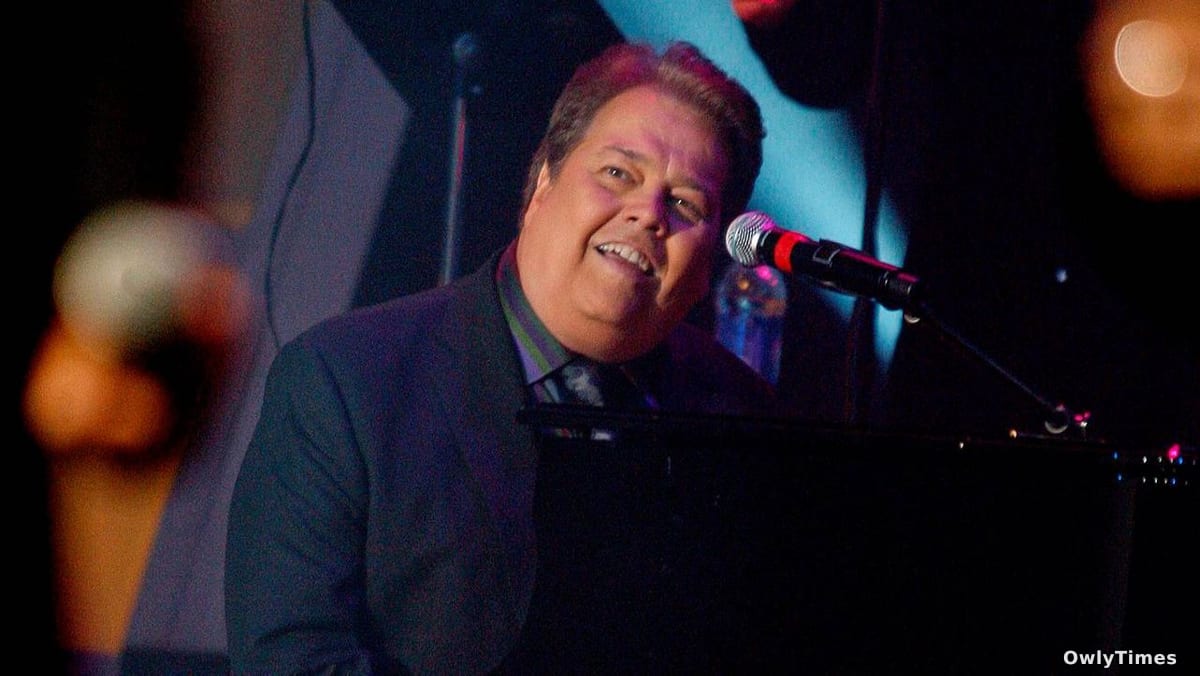

The stage lights eventually dim for every performer, but for Alan Osmond, the music didn't just stop—it evolved into a quieter, more personal composition. When the eldest member of the legendary Osmond family passed away this Monday at his home in Lehi, Utah, he left behind a legacy that stretched far beyond the glitter of television studios. At 76, he closed a chapter that began in the 1950s, leaving his wife, Suzanne Osmond, and their eight sons to navigate a loss that marks the end of an era for American pop culture.
From State Fairs to Global Stardom
The trajectory of the Osmond Brothers—Alan, Wayne, Merrill, and Jay—is the stuff of mid-century entertainment folklore. Born in Ogden, Utah, on June 22, 1949, Alan was the architect of a sound that defined a generation. Their journey from the humble state fair circuit in Utah to the polished heights of The Andy Williams Show in the 1960s wasn't just a lucky break; it was a masterclass in professional discipline.
By the early 1970s, the group had achieved a level of commercial dominance that is staggering even by today’s metrics. In 1971 alone, the family tallied nine gold records, a feat that famously surpassed the single-year bests set by industry titans like Elvis Presley and The Beatles. Alan was the steady hand behind this meteoric rise, co-writing hits such as "One Bad Apple," "Crazy Horses," and "Are You Up There?" while ensuring the family’s image remained as crisp as their harmonies.
The Architecture of an Image
Alan’s influence was not limited to the recording booth. As a principal producer on ABC’s The Donny and Marie Show during the mid-to-late 1970s, he understood the delicate alchemy of television fame. When the original brothers pivoted to country music in 1982, Alan was explicit about the strategy behind the shift. He noted to The Associated Press that country music served as the "backbone of America," a genre that aligned with the family’s "flag-waver" persona far better than the rock music of their earlier years.
This commitment to a "wholesome and peppy" brand allowed the Osmonds to transcend the fleeting nature of teen idol status. Yet, the same man who carried the weight of the family’s public image was grappling with private struggles. Following his diagnosis with multiple sclerosis in 1987, Alan was forced to retire from the stage, transitioning from the spotlight to the role of a patriarch and guide. As his brother Donny Osmond wrote in a poignant social media tribute, Alan was the "protector" who "quietly carried so much responsibility so the rest of us could shine."
A Legacy of Quiet Resilience
The reality of Alan’s final years was a stark departure from the vibrant, high-energy performances of the 1970s. According to a family spokesperson, he had been using a wheelchair for some time and recently spent a week in intensive care before returning home to hospice. The recent death of his brother Wayne in 2025 at age 73 underscores the profound transition the surviving siblings are currently enduring.
The emotional weight of his departure is perhaps best captured by Merrill, who recalled visiting his brother just days before he passed. Even in his weakened state, the man who helped write the soundtrack to millions of lives found the strength to chuckle at a joke. As the family prepares for upcoming services, the next reading of their collective public appearances will serve as a quiet indicator of how the surviving brothers—Virl, Tom, Merrill, Jay, Donny, Jimmy, and their sister Marie—carry forward the mantle of a family that once owned the airwaves. Alan Osmond didn't just leave behind a catalog of gold records; he left a blueprint for how a performer balances the demands of an industry with the enduring responsibilities of family.