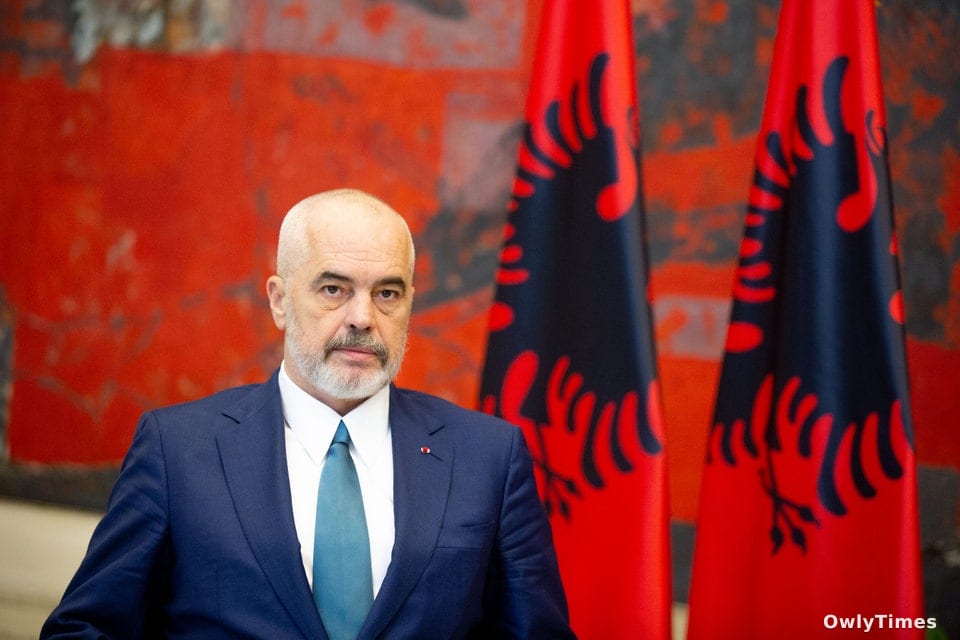

Beyond Condemnation: Rama’s Statement Signals a Shift in Balkan Alignment
Prime Minister Edi Rama’s unusually forceful condemnation of Iran’s recent missile attacks on the United Arab Emirates isn’t simply a display of diplomatic solidarity; it’s a calculated move to position Albania within a specific, emerging geopolitical alignment. While many nations have issued standard statements of concern, Rama’s language – characterizing the attacks as a blow to “the very idea” of a peaceful Middle East and directly labeling the Iranian government the “Khomeinist Republic” – goes further, signaling a willingness to take a firm stance against Tehran and, crucially, to align more closely with the UAE and its allies. This isn’t a spontaneous reaction, but a continuation of Albania’s increasingly pro-Western foreign policy, now extending to actively taking sides in regional power struggles.
The core strategic calculation here is risk mitigation. Albania, a NATO member with a historically complex relationship with Iran, has been actively courting investment and security partnerships with Gulf states, particularly the UAE. In 2023, trade between Albania and the UAE reached €180 million, a 35% increase year-over-year, driven largely by UAE investment in Albanian tourism and infrastructure. This economic dependence creates a clear incentive for Rama to publicly defend the UAE’s interests. However, the statement’s intensity suggests a deeper motivation: establishing Albania as a reliable partner for Western powers seeking to contain Iranian influence in the Balkans, a region historically vulnerable to external interference. Who benefits and who loses is starkly defined – the UAE and its allies gain a vocal advocate in a strategically important region, while Iran faces increased diplomatic isolation.
Drawn from euronews.al.
This robust defense of the UAE echoes historical precedents of smaller nations leveraging geopolitical tensions to secure advantageous partnerships. During the Cold War, Yugoslavia, despite its non-aligned status, frequently played both sides, extracting economic and political concessions from both the West and the Soviet bloc. Rama appears to be employing a similar tactic, using the current Iran-UAE conflict to solidify Albania’s position within the Western orbit. The phrasing – “state-sponsored aggression…cannot leave room for the Khomeinist Republic within the community of nations” – is particularly noteworthy. It’s a direct appeal to Western governments to consider stronger measures against Iran, framing the issue not as a regional dispute, but as a fundamental challenge to international norms.
The statement’s emphasis on the UAE as a “model of what a modern Middle East can look like” also reveals a deliberate ideological alignment. President Mohammed bin Zayed’s UAE has actively promoted a vision of economic liberalization, interfaith dialogue, and regional stability – a vision that directly contrasts with the revolutionary ideology of the Iranian regime. By explicitly endorsing this vision, Rama is signaling Albania’s commitment to a specific regional order, one that prioritizes economic integration and political moderation. This is a departure from Albania’s traditionally neutral stance on Middle Eastern conflicts and represents a significant shift in its foreign policy orientation.
The political chess move to watch next is whether Albania will translate this verbal solidarity into concrete action. Will Rama’s government support potential sanctions against Iran? Will Albania offer increased security cooperation with the UAE, perhaps through intelligence sharing or joint military exercises? The answer to these questions will reveal the true extent of Albania’s commitment to its new alignment and its willingness to navigate the complex geopolitical landscape of the Middle East. The coming weeks will demonstrate if this is merely a statement of principle, or the opening gambit in a more assertive foreign policy strategy.





