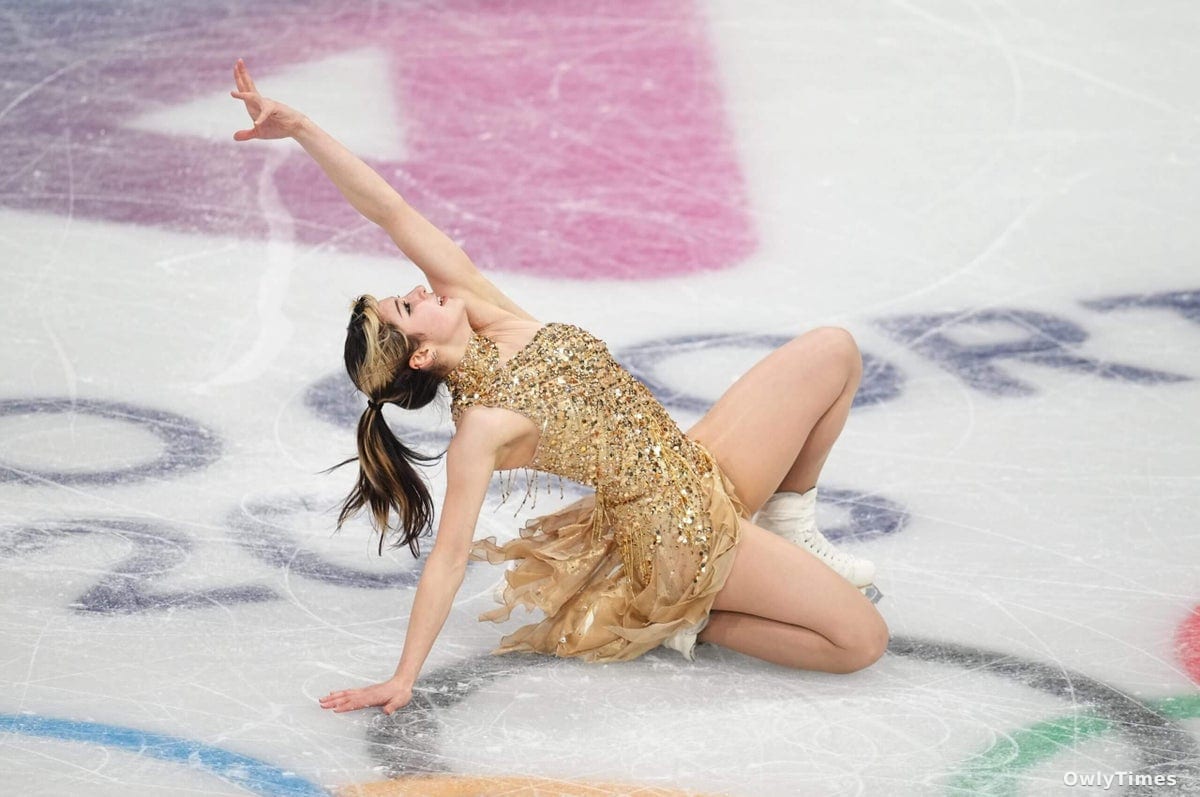

The strobe lights of the Milano Ice Skating Arena felt almost secondary to the shimmer radiating from Alysa Liu. Not from the flawless execution of her routine, though that was undeniably present, but from the custom, gold sequined dress she’d insisted on wearing. It wasn’t a declaration of confidence in winning, she explained, clutching her newly-minted gold medal, “I don’t need this. But what I needed was a stage, and I got that. So I was all good, no matter what.” This wasn’t about the prize; it was about the platform, the spectacle, the unapologetic self-expression. And in a sport historically defined by rigid tradition and a carefully curated image, Liu’s victory feels less like a sporting achievement and more like a cultural disruption.
The narrative around figure skating has long been one of delicate artistry, precise technique, and a certain…reserve. Champions were often molded into royalty, their public personas as polished and controlled as their triple axels. But Liu, the 20-year-old representing Oakland, California, doesn’t fit that mold. Her win – the first U.S. Olympic championship in women’s figure skating since Sarah Hughes in 2002, ending a 20-year drought for an individual medal – isn’t just a return to dominance for Team USA; it’s a full-throated challenge to the very foundations of the sport’s culture. It’s a moment where “swag” trumped subtlety, and a “hakuna matata aura” overwhelmed the pressure cooker atmosphere of Olympic competition.
Drawn from The New York Times.
This isn’t simply about a skater who smiles a lot. It’s about a skater who owns her joy, who prioritizes mental health over medals, and who embodies a distinctly Bay Area ethos of confidence and self-worth. “Joy is her brand,” her coach, Phillip DiGuglielmo, observed, “She pulls people out onto the ice with her and you experience that with her.” That pull isn’t accidental. It’s a deliberate rejection of the stoicism often expected of elite athletes, a vulnerability that resonates with a generation increasingly prioritizing authenticity. The fact that she clinched gold without even attempting a triple axel – a staple of competitive skating – speaks volumes. She didn’t need to conform to expectations; she thrived by leaning into her strengths, her artistry, and her sheer, infectious energy.
The impact extends far beyond the ice rink. Liu’s story is a powerful counter-narrative in a sport often criticized for its exclusionary practices. Her peak arriving at 20, an age when many skaters are already past their prime due to the physical demands and early maturation requirements of the sport, challenges the conventional timeline for success. She took a year away from skating to attend UCLA, a decision that, according to DiGuglielmo, was crucial to her eventual triumph. “I 100% believe that if she had not stepped away she would not be here right now,” he stated. This isn’t just about physical recovery; it’s about reclaiming agency and prioritizing personal growth. It’s a message that resonates deeply with young athletes facing immense pressure to specialize and sacrifice everything for their sport.
But the cultural significance is perhaps most keenly felt in her connection to Oakland. The Oakland Ice Center, a decidedly unglamorous facility operated by the San Jose Sharks, is a far cry from the opulent training grounds often associated with Olympic athletes. Yet, it’s precisely this scrappy, authentic environment that shaped Liu’s identity. “Oakland’s scrappy, right?” DiGuglielmo said. “And, like, she owns that.” This isn’t just about geography; it’s about a cultural identity rooted in diversity, resilience, and a fierce sense of self-reliance. Her father, Arthur Liu, arrived in the U.S. as a political refugee after the Tiananmen Square massacre, a history that informs her independent spirit and her willingness to challenge the status quo. She embodies the Bay Area’s unique blend of art, culture, and activism, a legacy of hustle that permeates every aspect of her being.
Liu’s exuberant declaration – “That’s what the f— I’m talking about!” – as she exited the ice wasn’t just a celebratory outburst; it was a statement of intent. It was a nod to the unapologetic energy of artists like Marshawn Lynch, and a signal that figure skating is entering a new era. The question now isn’t just whether Alysa Liu will continue to compete, but whether the sport will embrace the change she represents. Will figure skating adapt to accommodate a generation of athletes who prioritize authenticity, mental health, and self-expression? Or will it attempt to revert to its traditional, more restrictive norms? The future of the sport may very well depend on the answer.

