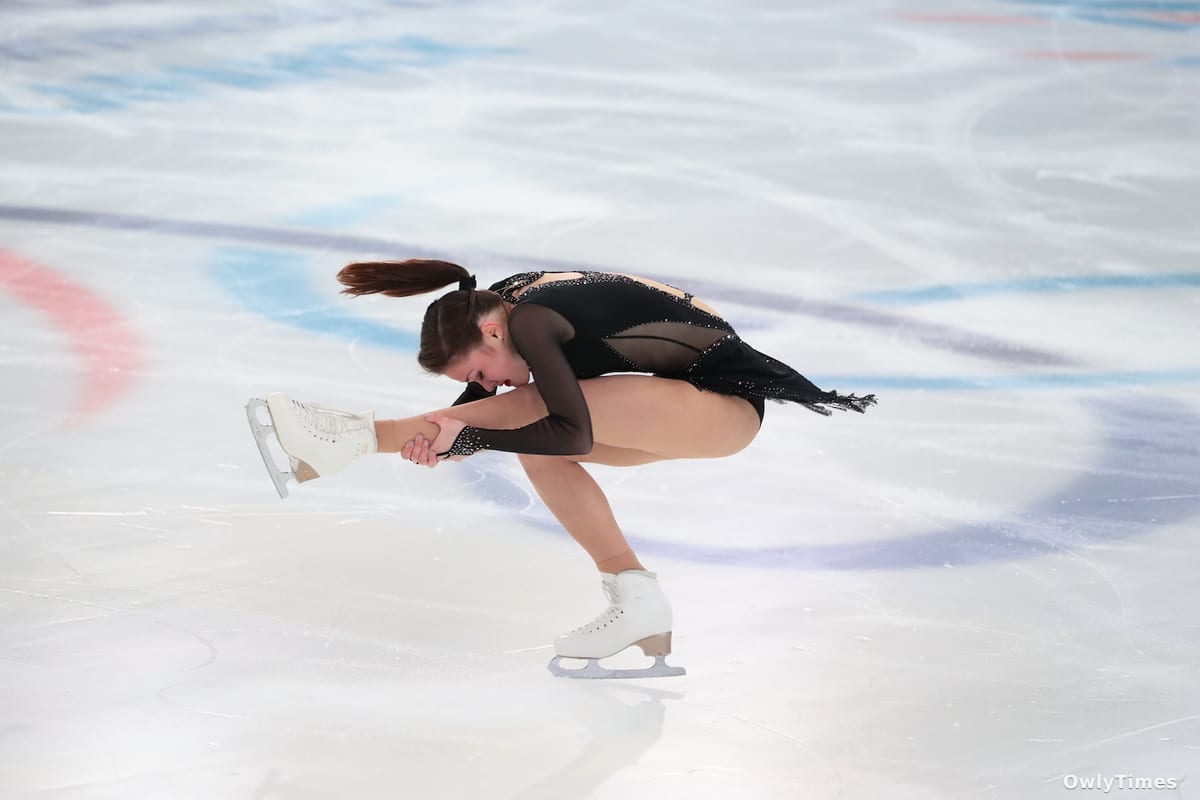

Beyond the Glitz: Unpacking the Biomechanics of Olympic Figure Skating
The captivated audiences at the Winter Olympics, mesmerized by the artistry and athleticism of figure skating, often witness feats that appear to defy physics. But beneath the sequins and soaring music lies a rigorous science, a complex interplay of biomechanics, physiology, and training. While headlines focus on record-breaking jumps like those performed by Ilia Malinin, the true story isn’t simply that these jumps are happening, but how – and what understanding those mechanics reveals about the limits of human performance. The recent discussion with Deborah King, a professor of exercise science and athletic training at Ithaca College, on Science Friday with Ira Flatow, offered a crucial glimpse into this often-overlooked dimension of the sport, and it’s a conversation that demands deeper consideration as we watch athletes push boundaries in Paris and beyond.
The Ankle’s Unexpected Burden
Much of the public’s attention, understandably, is drawn to the spectacular aerial maneuvers. However, Dr. King’s research highlights a surprising focal point of stress: the ankle joint. It’s easy to assume the forces involved in a quadruple jump are primarily impacting the legs upon landing, but the reality is far more nuanced. As skaters gain speed – and Olympic skaters reach considerable velocities – the forces acting on the ankle increase exponentially. Dr. King explained that skaters experience significant g-forces through their ankles simply from the act of skating itself, even before attempting a jump. These forces aren’t just compressive; they involve complex rotational movements that demand incredible stability from the surrounding ligaments and muscles. This isn’t merely about strength, but about precise neuromuscular control – the brain’s ability to coordinate muscle activation to maintain balance and prevent injury. The current focus on jump difficulty often overshadows the foundational importance of ankle stability, a potential oversight with long-term consequences for athlete health.
This article draws on reporting from sciencefriday.com.
Jumps as Controlled Falls: A Matter of Angular Velocity
The physics of a figure skating jump, as Dr. King detailed, can be understood as a carefully orchestrated “controlled fall.” Skaters don’t simply leap upwards; they generate angular velocity – a rate of rotation – by initiating a specific arm and leg movement during takeoff. This angular velocity is then conserved in the air, allowing the skater to complete multiple rotations. The key is minimizing air resistance and maximizing body control to maintain that rotation. What’s particularly remarkable about jumps like Malinin’s quad Axel – the first successfully landed in competition – isn’t just the number of rotations (four and a half), but the speed at which they are completed. This requires an extraordinary ability to tighten the body’s axis of rotation, effectively reducing the moment of inertia and increasing rotational speed. The precision needed is astonishing; even slight deviations can disrupt the rotation and lead to a fall. This isn’t intuitive, and it’s a level of physical control most people never experience.
Limitations to Consider: A Small Sample and the ‘Elite Athlete’ Problem
While Dr. King’s work provides valuable insights, it’s important to acknowledge the limitations inherent in studying elite athletes. The sample sizes are often small, given the limited number of individuals who reach this level of performance. This makes it difficult to generalize findings to the broader population, or even to all figure skaters. Furthermore, elite athletes are, by definition, outliers. Their bodies and nervous systems have adapted to extreme demands in ways that are not representative of the average person. This presents a challenge when attempting to understand the fundamental biomechanical principles at play, as it’s difficult to disentangle innate talent from the effects of training. The research also relies heavily on observational data and modeling, which, while sophisticated, are still approximations of the complex reality of human movement.
The Future of Skating Science: Injury Prevention and Beyond
The next crucial step in figure skating research isn’t simply to quantify the forces involved, but to understand how those forces contribute to injury risk. Dr. King’s work lays the groundwork for developing targeted training programs designed to strengthen the muscles and ligaments surrounding the ankle, and to improve neuromuscular control. But beyond injury prevention, there’s an opportunity to explore how biomechanical principles can be used to optimize technique and enhance performance. Imagine sensors embedded in skates that provide real-time feedback to skaters and coaches, allowing them to fine-tune their technique and maximize efficiency. Or the development of virtual reality training environments that allow skaters to practice complex maneuvers in a safe and controlled setting. As we look ahead to future Olympic competitions, the question isn’t just who will land the next groundbreaking jump, but how science will help them do it safely and sustainably. Will we see a shift in training methodologies prioritizing ankle stability alongside jump technique, or will the pursuit of ever-greater difficulty continue to outpace our understanding of the body’s limits?