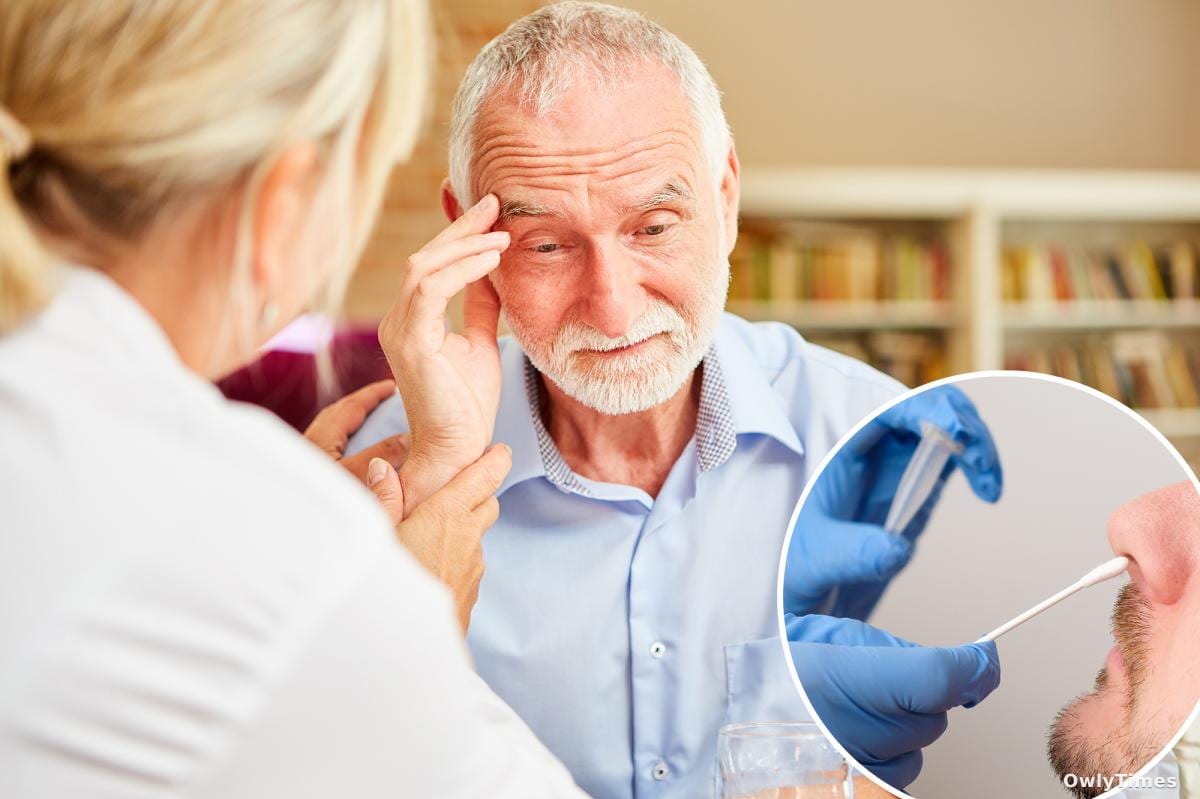

The persistent challenge of Alzheimer’s disease isn’t simply treating it, but recognizing its insidious beginnings. For decades, diagnosis has relied on cognitive assessments and, increasingly, biomarker tests performed on cerebrospinal fluid or blood – methods that often detect changes only after substantial neurological damage has occurred. A new study from researchers at Washington University in St. Louis, published in Nature Communications, proposes a radically different approach: detecting early signs of Alzheimer’s through a simple nasal swab. This isn’t about identifying the result of the disease, but potentially observing the very first biological shifts occurring within the nervous system, offering a window into the disease process previously unavailable to clinicians.
Beyond Blood: Accessing Neural Activity Directly
The core innovation lies in the location of the sample. While blood tests for Alzheimer’s focus on detecting proteins like amyloid beta and tau – hallmarks of the disease – these markers appear later in the disease progression. The nasal swab, however, targets olfactory nerve cells, specifically those responsible for our sense of smell. These neurons are unique because they are directly exposed to the environment and, crucially, are an extension of the brain itself. “Much of what we know about Alzheimer’s comes from autopsy tissue,” explains Vincent M. D’Anniballe, the study’s first author, highlighting the historical reliance on post-mortem analysis. “Now we can study living neural tissue, opening new possibilities for diagnosis and treatment.” The team, led by corresponding author Bradley J. Goldstein, gently collected cells from the nasal passages of 22 participants – a group including individuals with confirmed Alzheimer’s, those with lab evidence of the disease but no symptoms, and healthy controls.
Reporting from the New York Post informs this analysis.
The researchers weren’t looking for a single “Alzheimer’s marker” in the swab samples. Instead, they employed a sophisticated analysis technique to identify patterns of gene expression within the olfactory nerve cells. This approach, examining the activity of hundreds of genes simultaneously, revealed distinct profiles that reliably differentiated between individuals with early-stage Alzheimer’s and those without. This is a critical distinction from relying on single biomarker levels, which, as Suzanne Schindler, an associate professor of neurology at Washington University in St. Louis, points out, can be unreliable. “Some of the blood tests are accurate and some are not, and doctors don’t know which tests to use,” she stated, underscoring the need for more definitive diagnostic tools. The study didn’t simply confirm a known link between smell loss and Alzheimer’s – anosmia, or the loss of smell, has long been recognized as an early symptom – it identified specific neural changes underlying that loss, potentially offering a more sensitive and precise detection method.
What the Swab Reveals – and Doesn’t
It’s vital to understand what this study actually found versus the more sensational headlines proclaiming a “breakthrough test.” The research demonstrated a clear ability to distinguish between groups, but it did not establish a definitive diagnostic threshold. The sample size of 22 participants is relatively small, and the identified gene expression patterns require validation in much larger, more diverse populations. Furthermore, the study focused on identifying differences between groups, not predicting who will develop Alzheimer’s based on swab results alone. The current findings suggest the swab can identify individuals already on a trajectory toward the disease, even before cognitive symptoms manifest, but it doesn’t offer a crystal ball for future risk. The team also hasn’t yet determined the extent to which other factors – such as nasal inflammation or exposure to environmental toxins – might influence the gene expression patterns observed in the swab samples.
Limitations to Consider: From Lab to Clinic
Several limitations warrant careful consideration. The study population was relatively homogenous, potentially limiting the generalizability of the findings to different ethnic or racial groups. The method of gene expression analysis is complex and requires specialized equipment and expertise, raising questions about its feasibility for widespread clinical implementation. Finally, the study did not investigate the correlation between the nasal swab results and other established Alzheimer’s biomarkers, such as amyloid and tau levels in cerebrospinal fluid or brain imaging data. Establishing this correlation is crucial for validating the swab test and integrating it into existing diagnostic pathways. It’s also important to remember that Alzheimer’s is a complex disease with multiple contributing factors, and a single biomarker – even a highly sensitive one – is unlikely to provide a complete picture.
The research team is already addressing these limitations by expanding their study to include a larger cohort of participants and investigating the potential of the nasal swab to track treatment response. This latter aspect is particularly exciting. If the swab can reliably detect changes in neural activity, it could become a valuable tool for monitoring the effectiveness of new therapies and personalizing treatment strategies. The next critical step will be to determine whether the identified gene expression patterns can serve as a reliable predictor of future cognitive decline, and to explore the underlying mechanisms driving these changes. Will a simple nasal swab become a routine part of preventative healthcare, identifying individuals at risk decades before symptoms appear? That remains to be seen, but this study offers a compelling glimpse into a future where early detection – and potentially, early intervention – transforms the landscape of Alzheimer’s disease.





