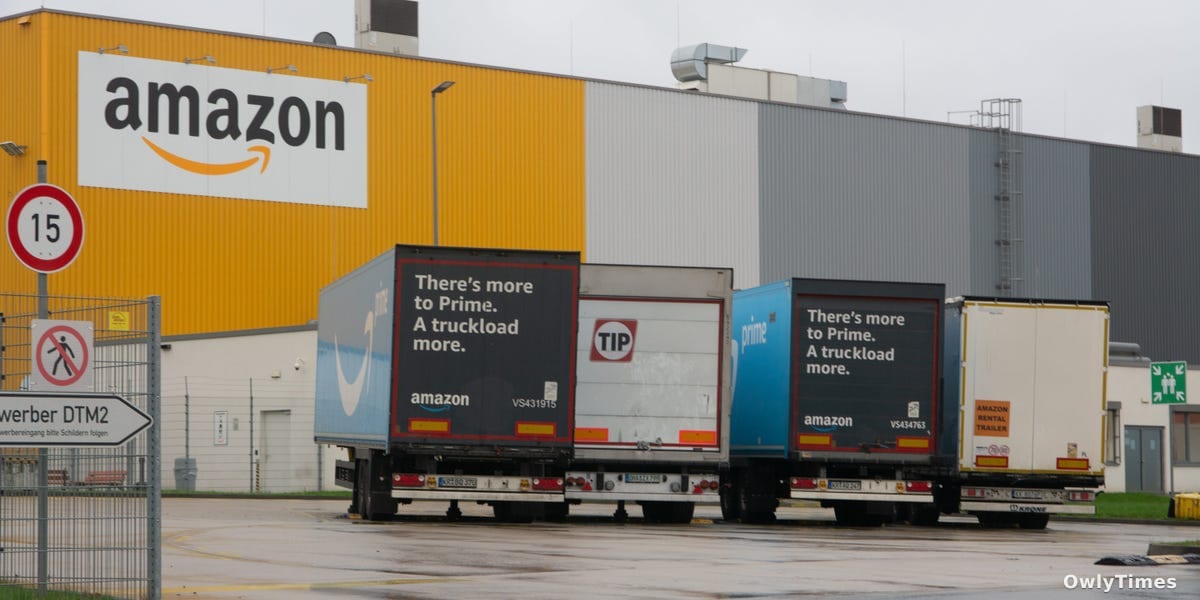

Is Amazon’s relentless pursuit of speed actually breaking its own e-commerce empire? The recent wave of outages, impacting millions of orders and exposing critical vulnerabilities in its systems, isn’t simply a series of unfortunate glitches. The real story here isn’t about temporary website hiccups – it’s about the inherent tension between Silicon Valley’s “move fast and break things” ethos and the demands of running a global retail operation where even a few minutes of downtime translates to colossal financial and reputational damage.
Dave Treadwell, Amazon’s SVP of e-commerce services, laid bare the problem in an internal document obtained by Business Insider: a “trend of incidents” escalating since the third quarter of 2025, culminating in “several major” disruptions in recent weeks. These weren’t isolated events; they were symptoms of a system straining under the weight of its own ambition, and increasingly, the influence of artificial intelligence. One outage on March 2nd alone resulted in nearly 120,000 lost orders and 1.6 million website errors, directly linked to the company’s AI coding assistant, Q. Another on March 5th saw a 99% drop in North American orders, totaling 6.3 million lost transactions. These aren’t rounding errors; they represent a tangible loss for both Amazon and its customers.
The core issue, as Treadwell outlined, is “high blast radius changes” – software updates spreading rapidly due to insufficient safeguards in Amazon’s “control planes” (the systems governing data flow). Imagine a plumbing system where a single faulty valve can flood the entire building. That’s essentially what’s happening at Amazon, but with code instead of water. The speed promised by AI coding tools like Q, Claude Code, and Kiro is exacerbating this risk. Engineers can produce code faster than ever before, but the traditional review processes are struggling to keep pace, creating a bottleneck where potential errors slip through the cracks. It’s a classic case of scaling output without adequately scaling quality control.
This piece references the Business Insider report.
Amazon’s response is a 90-day “safety reset,” imposing stricter code review protocols and requiring multiple approvals for changes to critical “Tier-1” systems – those directly impacting consumers. This is a significant admission of failure, a forced deceleration in a company obsessed with velocity. The company is also attempting to balance the risks of AI with “deterministic” (rules-based) systems alongside “agentic” (AI-driven) tools. This distinction is crucial. AI models aren’t always predictable; they can generate different outputs for the same input, a fatal flaw for systems requiring 100% accuracy, like those handling financial transactions or inventory management. The attempt to shoehorn inherently probabilistic technology into deterministic processes is a high-stakes gamble.
But let’s be clear: this isn’t just an Amazon problem. It’s a harbinger of challenges to come as generative AI becomes increasingly integrated into software development across the industry. We’re entering an era where the sheer volume of code generated will overwhelm traditional review methods, demanding entirely new approaches to software validation and security. The focus isn’t simply on finding bugs, but on preventing them from being created in the first place. The Amazon situation highlights the fact that AI-assisted coding isn’t a magic bullet; it’s a powerful tool that requires equally powerful safeguards. The average consumer doesn’t care about control planes or deterministic systems, they just want their package to arrive on time. But these technical details are precisely what determine whether that happens.
The immediate impact of Amazon’s 90-day reset will likely be slower deployment of new features and potentially some temporary inconveniences for developers. But the longer-term question is whether this is a genuine course correction or a temporary band-aid. Watch closely for whether Amazon invests significantly in developing robust, AI-powered testing and validation tools, and whether they’re willing to prioritize reliability over speed, even if it means sacrificing some of their competitive edge. My prediction? Within the next 18 months, we’ll see a new category of “AI safety engineers” emerge, specializing in auditing and securing code generated by AI, and Amazon will be one of the first companies to aggressively recruit them. The future of software isn’t just about writing code, it’s about trusting it.