
Is our obsession with “new” materials blinding us to the brilliance of the old? We’re pouring billions into 3D-printed this and self-healing that, while ignoring a building material that’s been demonstrably self-healing – and standing the test of time – for over two millennia. The real story here isn't the search for futuristic construction techniques, it’s the rediscovery of ancient Roman concrete and what it reveals about our own flawed approaches to building.
For years, Admir Masic, an Associate Professor at MIT, has been quietly dismantling assumptions about Roman engineering. His work, initially published in 2023, posited that the extraordinary longevity of Roman concrete wasn’t a matter of superior ingredients, but a surprisingly simple manufacturing process: “hot-mixing.” This involved combining lime fragments with volcanic ash and other dry ingredients before adding water, triggering a chemical reaction that created self-healing properties. Now, three years later, and after a crucial confirmation at a remarkably preserved construction site in Pompeii, Masic is putting theory into practice, launching a concrete business – DMAT – built on the principles of Roman durability.
This article draws on reporting from goodnewsnetwork.org.
The scale of Roman architectural achievement is almost unfathomable. They built structures – aqueducts, bridges, harbors, and monumental buildings – that continue to function today, two thousand years after their creation. Modern concrete, by comparison, typically requires significant repairs within 50-100 years. In 2022, the US spent an estimated $177.8 billion on concrete repair and maintenance, a figure that dwarfs investment in preventative, long-lasting materials. The difference isn’t just about cost; it’s about the embedded carbon in constantly replacing infrastructure.
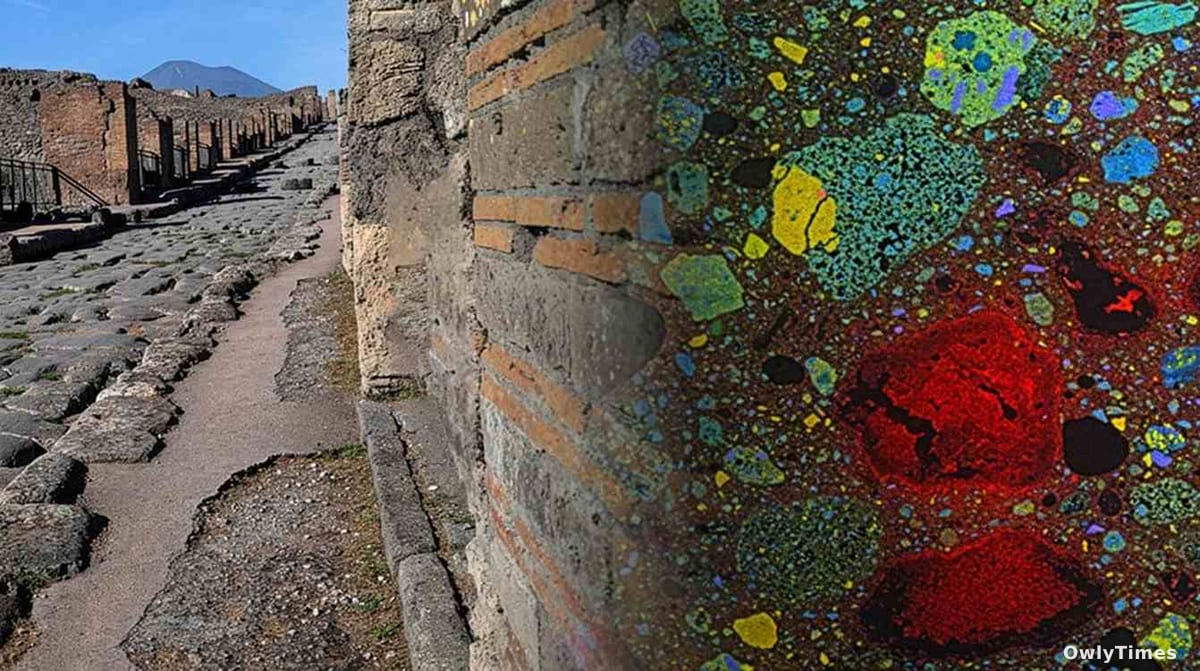
The initial breakthrough came from analyzing samples from a 4th-century BCE city wall in Priverno, Italy. But questions lingered about whether that wall was representative. The eruption of Mount Vesuvius in 79 CE, which buried Pompeii, provided an unparalleled opportunity. Archaeologists unearthed an active construction site, complete with raw materials and tools, essentially a Roman concrete factory frozen in time. Analysis of these pre-mixed dry materials, partially constructed walls, and even repairs to existing structures confirmed Masic’s hot-mixing hypothesis. The team found intact quicklime fragments mixed with other ingredients, a clear indication of the process.
What’s particularly fascinating is how this discovery challenges the writings of Vitruvius, the 1st-century BCE Roman architect whose treatise, De Architectura, is considered the foundational text on architectural theory. Vitruvius described a process of adding water to lime before mixing it with other ingredients. Masic admits it was “difficult to suggest that his description may be inaccurate,” given Vitruvius’s influence. But the Pompeii site provides irrefutable evidence that hot-mixing was, in fact, the Roman method. This isn’t just a historical correction; it’s a lesson in the fallibility of even the most revered sources.
Beyond the hot-mixing process, the analysis of volcanic ash – specifically pumice, abundant in the Pompeii region – revealed another key to Roman concrete’s resilience. The pumice particles underwent a chemical reaction over time, creating new mineral deposits that further strengthened the material. This dynamic, self-reinforcing process is what Masic describes as a “dream process” to translate into modern materials. He points out that calcium, a key component in both ancient and modern concrete, reacts in fascinating ways over time, offering insights into improving the durability of our current building materials.
This isn’t about abandoning modern cement altogether. It’s about learning from the past to build a more sustainable future. The current cement industry accounts for approximately 8% of global carbon dioxide emissions. Extending the lifespan of concrete structures, even by a few decades, would have a significant environmental impact. Masic’s company, DMAT, aims to do just that, by incorporating the principles of hot-mixing and reactive volcanic ingredients into modern concrete formulations.
The implications extend far beyond grand monuments. Think about the crumbling sidewalks in your neighborhood, the pothole-ridden roads, the aging bridges. The cost of maintaining this infrastructure is staggering, and the environmental impact is substantial. The Roman example suggests a path towards building structures that require less maintenance, last longer, and ultimately, cost less in the long run.
Watch for a shift in building codes over the next five years. As DMAT and other companies demonstrate the viability of Roman-inspired concrete, pressure will mount to incorporate these techniques into standard construction practices. The question isn’t if we’ll learn from the Romans, but how quickly we’ll adapt their ancient wisdom to address the challenges of modern infrastructure.