
The impending Artemis missions aren’t simply a return to the moon; they’re a recalibration of our understanding of its history, and potentially, the history of planetary habitability. While headlines proclaim a “fresh take” on the lunar magnetic field, the nuance of a new study from the University of Oxford, published in Nature Geoscience, reveals a far more complex picture than previously assumed – one where the moon’s magnetic strength wasn’t a sustained force, but a series of intense, fleeting events. This isn’t a dismissal of earlier research, but a critical refinement, highlighting how geographically limited the Apollo samples were and how that shaped initial interpretations.
For decades, scientists believed the moon possessed a relatively stable, though weaker than Earth’s, magnetic field for extended periods billions of years ago. This conclusion stemmed from analyzing rocks brought back during the Apollo missions (1969-1972). These rocks exhibited magnetic signatures suggesting prolonged exposure to a substantial magnetic field. However, Claire Nichols, lead author of the Oxford study, and her team re-examined this data, focusing on the correlation between titanium content and magnetic activity. They discovered that the highest magnetic readings consistently came from rocks with exceptionally high titanium levels – specifically, those from the Apollo 11 and Apollo 17 landing sites. This isn’t a coincidence; the researchers propose that melting titanium-rich rocks deep within the moon generated these localized, but incredibly powerful, magnetic spikes.
Original reporting: the Los Angeles Times.
The study estimates these spikes lasted no more than 5,000 years, and potentially as little as a few decades, occurring between 3 and 4 billion years ago. To put that into geological perspective, Earth’s magnetic field has been consistently active for billions of years, providing a continuous shield against harmful solar and cosmic radiation. The moon’s magnetic activity, according to this new research, was episodic – intense bursts followed by long periods of weakness. This challenges the notion of a consistently protective magnetic environment during the moon’s early history, raising questions about its potential to support early life, or even retain a substantial atmosphere. The strength of these spikes even exceeded Earth’s magnetic activity during those brief periods, a surprising finding that underscores the unusual conditions required for their formation.
The Apollo Anomaly and Artemis’s Opportunity
The significance of this finding isn’t simply about rewriting lunar history; it’s about acknowledging the limitations of the data we’ve relied on. The Apollo missions, while groundbreaking, were constrained by landing sites concentrated in the lunar low-latitude lava plains. These areas, rich in titanium, aren’t representative of the entire lunar surface. The researchers explicitly state that the Apollo samples may have created a biased view of the moon’s magnetic past. This is a crucial methodological point often lost in popular science reporting. It’s not that the Apollo data was wrong, but that it presented an incomplete picture.
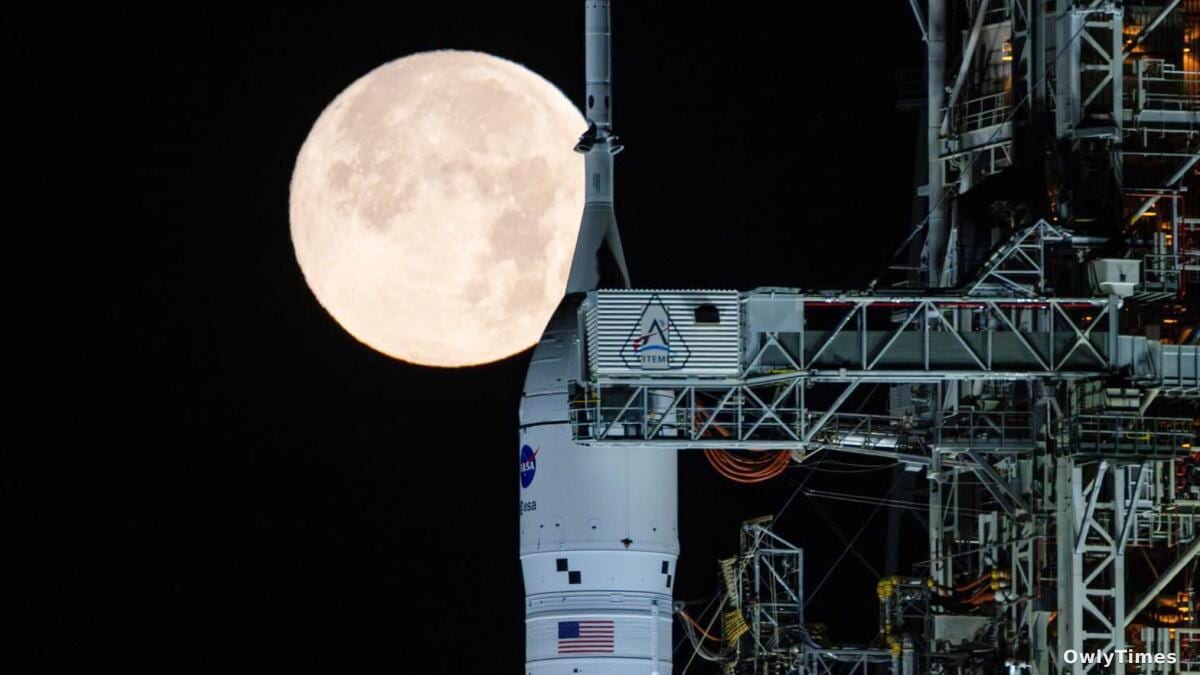
This is where the Artemis program becomes pivotal. Unlike the Apollo missions, Artemis will focus on exploring the moon’s south polar region, specifically permanently shadowed craters believed to contain water ice. These craters are geologically distinct from the Apollo landing sites, offering access to rocks from different lunar environments and potentially revealing a more comprehensive record of the moon’s magnetic history. The presence of water ice itself is a significant factor, as water can preserve magnetic signatures over long periods, providing another avenue for investigation.
Implications for Planetary Science and Habitability
Understanding the moon’s magnetic field, even its intermittent nature, has implications far beyond lunar science. Magnetic fields play a critical role in shielding planets from harmful radiation, a key factor in planetary habitability. If the moon experienced only brief periods of strong magnetic activity, it suggests that the conditions necessary for generating and sustaining a magnetic field may be more fragile and less common than previously thought. This has implications for our search for habitable exoplanets – we may need to revise our criteria for identifying potentially life-supporting worlds. Nichols herself emphasizes that understanding the moon’s magnetic shield is “critical for thinking about planetary habitability.”
Limitations to Consider
While the Oxford study offers a compelling new perspective, it’s important to acknowledge its limitations. The analysis relies on re-interpreting existing data from the Apollo samples, rather than new direct measurements. While the correlation between titanium content and magnetic activity is strong, it doesn’t definitively prove that titanium melting caused the magnetic spikes. Other factors could be at play. Furthermore, the precise duration of these spikes – whether they lasted 5,000 years or just a few decades – remains uncertain. The study also doesn’t fully explain why these titanium-rich rocks melted in the first place, leaving a gap in our understanding of the underlying geological processes.
The upcoming Artemis missions, scheduled to launch as early as April, represent the next crucial step. Specifically, scientists will be looking for evidence of magnetic signatures in rocks from the south polar region that are independent of titanium concentration. If these samples reveal a different magnetic history, it will further support the Oxford team’s hypothesis. But if they confirm a more sustained magnetic field, it will necessitate a re-evaluation of the current model. The question isn’t simply whether the moon had a magnetic field, but how it evolved, and what that evolution tells us about the potential for habitability – not just on our moon, but on worlds beyond.