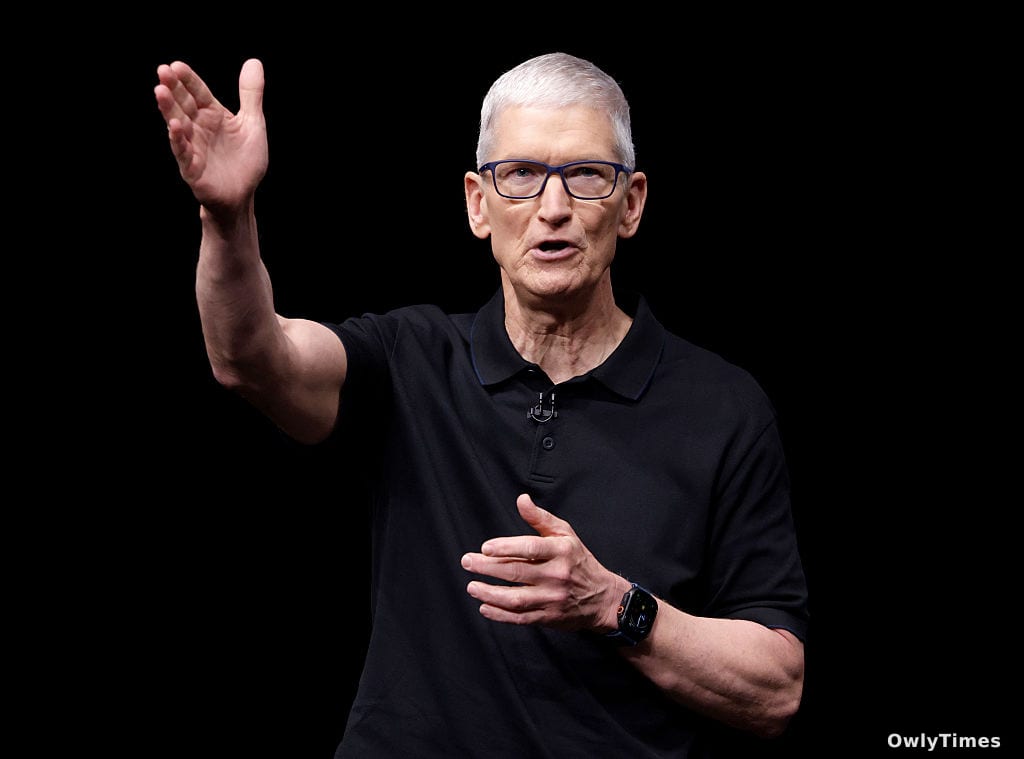

Is Apple finally admitting the iPhone isn’t enough? For years, Tim Cook and his team have insisted the iPhone remains the central hub of their ecosystem, a perfectly polished rectangle capable of handling everything a user needs. But the flurry of reports – an AI pin, accelerated smart glasses development (code-named N50), and AI-enhanced AirPods – suggests a quiet panic is setting in. The real story here isn’t about Apple innovating new gadgets; it’s about acknowledging the limitations of a screen-centric world and scrambling to catch up to a future where computing happens around you, not just in your hand.
Beyond the Rectangle: Why Apple is Suddenly Everywhere
The details, as reported by The Information and Bloomberg, are revealing. An AirTag-sized pendant with a camera, clipped to your shirt, sounds less like a revolutionary product and more like a desperate attempt to offload processing power from a device that’s already maxed out. We’re talking about a wearable constantly recording, analyzing, and responding to the world around you – a concept Meta has been pushing with its smart glasses for years, albeit with limited mainstream success. The fact that Apple is now pursuing this, and reportedly accelerating development, speaks volumes. It’s not about being first; it’s about not being left behind. Consider the context: Apple’s Q4 2025 earnings showed iPhone sales were flat, a significant departure from the double-digit growth the company enjoyed for much of the last decade. The market is saturated, and incremental upgrades aren’t cutting it anymore.
See the original TechCrunch story for the full account.
The Smart Glasses Gamble: More Than Just a Fashion Statement
The N50 smart glasses, slated for potential production in December 2026 and a 2027 release, are positioned as the “upscale” option. This is crucial. Snap’s upcoming “Specs” are aiming for a younger, social media-focused demographic. Meta, meanwhile, is trying to establish a foothold in enterprise applications. Apple, predictably, is aiming for the premium end, suggesting a price point that will likely make these glasses inaccessible to most consumers. But the inclusion of a “high-resolution camera” isn’t just about taking better photos. It’s about enabling real-time image recognition, object tracking, and augmented reality experiences. Imagine walking into a store and having product information overlaid onto the shelves, or receiving turn-by-turn directions projected onto the sidewalk. This isn’t science fiction; it’s the direction Apple is clearly heading, and it’s a direct response to the growing capabilities of competitors.
Siri's Second Act: The AI Glue Holding It All Together
What binds these disparate devices together? Siri. Apple is doubling down on its virtual assistant, integrating it as a core component of the user experience across the AI pin, glasses, and AirPods. This is a smart move, but also a risky one. Siri has long been criticized for being less capable than rivals like Google Assistant and Amazon’s Alexa. Simply slapping Siri onto new hardware won’t magically fix its shortcomings. Apple needs to fundamentally improve its AI algorithms and natural language processing capabilities if it wants these devices to feel truly intelligent. The success of this entire strategy hinges on Siri’s ability to seamlessly connect and control these devices, anticipating user needs and providing genuinely helpful assistance. The current iteration of Siri, frankly, isn’t up to the task.
The User Cost: Privacy and the Always-On Future
Let’s be clear: this isn’t about making our lives easier. It’s about collecting more data. An AI pin constantly recording your surroundings, smart glasses tracking your gaze, and AirPods listening to your conversations – it’s a privacy nightmare waiting to happen. Apple has historically positioned itself as a privacy advocate, but these devices represent a fundamental shift in its approach. The convenience of an always-on, AI-powered world comes at a steep cost: the constant surveillance of our lives. And while Apple may promise robust encryption and data anonymization, the potential for abuse is undeniable. The average user isn’t thinking about differential privacy or federated learning; they’re thinking about whether their glasses will look cool. That’s where the real danger lies.
Here’s what to watch for: by late 2027, we’ll see if Apple can deliver on its promise of seamless integration between these devices and the iPhone. But more importantly, we’ll see if consumers are willing to trade their privacy for convenience. If the N50 glasses fail to gain traction, it won’t be a product failure; it will be a referendum on the future of wearable AI.