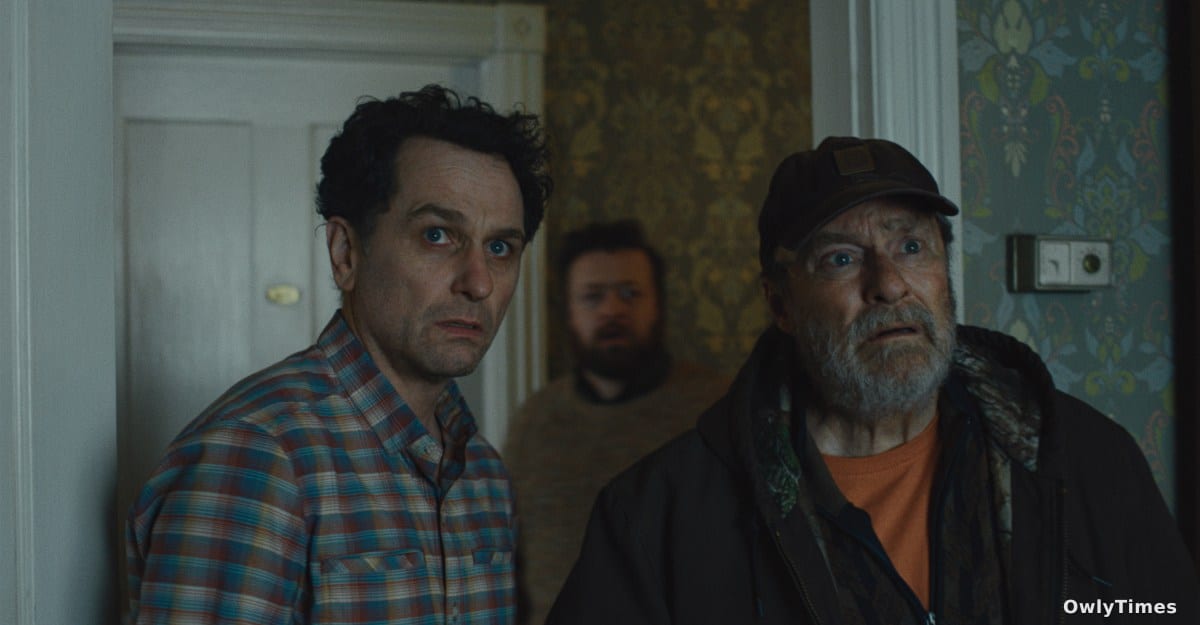

The fog creeping over the jagged New England coastline in Widow’s Bay isn’t just a stylistic choice; it is a manifestation of the show’s central, messy ambition. As the thick mist rolls into the town, obscuring the dark secrets of its haunted history, the mayor, Tom Loftis, played by Matthew Rhys, is too preoccupied with securing a glowing write-up from a New York Times travel writer to notice. It is a quintessential moment of modern satire: a leader so obsessed with branding and tourism that he would willfully ignore the supernatural rot beneath his feet.
This collision of high-stakes horror and mundane ambition defines Widow’s Bay, which begins streaming on Apple TV on April 29th. The show explores a town cursed by a legend that dictates anyone born on the island is doomed if they attempt to leave. While the premise drips with gothic dread, the series—the latest project from showrunner Katie Dippold—insists that the terror is best served with a side of absurdity.
The Comedy-Horror Tightrope
Dippold is a veteran of the comedy landscape, having sharpened her instincts on Mad TV and Parks & Recreation, and penning scripts for films like The Heat and the 2016 Ghostbusters reboot. For her, the transition to horror isn't as jarring as the industry usually assumes. She views the two genres as siblings, both relying on the element of surprise to force a visceral reaction from the audience. Citing An American Werewolf in London as her North Star, Dippold emphasizes the necessity of keeping characters grounded. If the characters react truthfully to a supernatural threat, the humor emerges naturally from the sheer insanity of their situation.
The cast seems to have embraced this philosophy of "playing the reality." Stephen Root, who portrays the town’s skeptical-turned-believer fisherman, notes that the success of the hybrid format hinges on abandoning the pressure to "play" a genre. Instead, the focus remains on the internal logic of the characters. When Kate O’Flynn, the series star, describes the feeling of being terrified, she hits on the exact neurological link Dippold is chasing: "When I’m scared, I laugh manically. It comes out as laughter. I think it’s this tightrope of hysteria."
From Sketch Comedy to Cinematic Dread
Dippold isn't alone in her pivot. The industry has seen a notable trend of comedy writers and directors moving into the horror space, bringing a heightened sense of playfulness to the genre. Figures like Jordan Peele and Zach Cregger have proven that a background in sketch comedy—where timing and setup are everything—is a potent training ground for building suspense.
Across its 10 episodes, Widow’s Bay operates as a sprawling anthology that dips its toes into various horror subgenres. From the claustrophobia of a haunted hotel where time moves at a crawl to the more overt tropes of slashers and creature features, the series keeps its audience on edge by refusing to settle into a single tone. It is a bold experiment in tonal fluidity that asks viewers to trust the narrative as it shifts from local politics to supernatural carnage.
Why the Genre Blur Matters
At a time when audiences are increasingly fatigued by predictable genre tropes, the willingness to subvert expectations is the industry’s most valuable currency. Widow’s Bay matters because it challenges the notion that a story must be purely one thing or another. By insisting that comedy can amplify tension rather than undercut it, Dippold is attempting to modernize the horror-comedy hybrid. Whether the audience responds to this specific blend of existential dread and small-town vanity will be clear once the series hits the platform, as the reception of its 10-episode run will serve as a bellwether for how much tonal whiplash the current streaming audience is willing to endure.