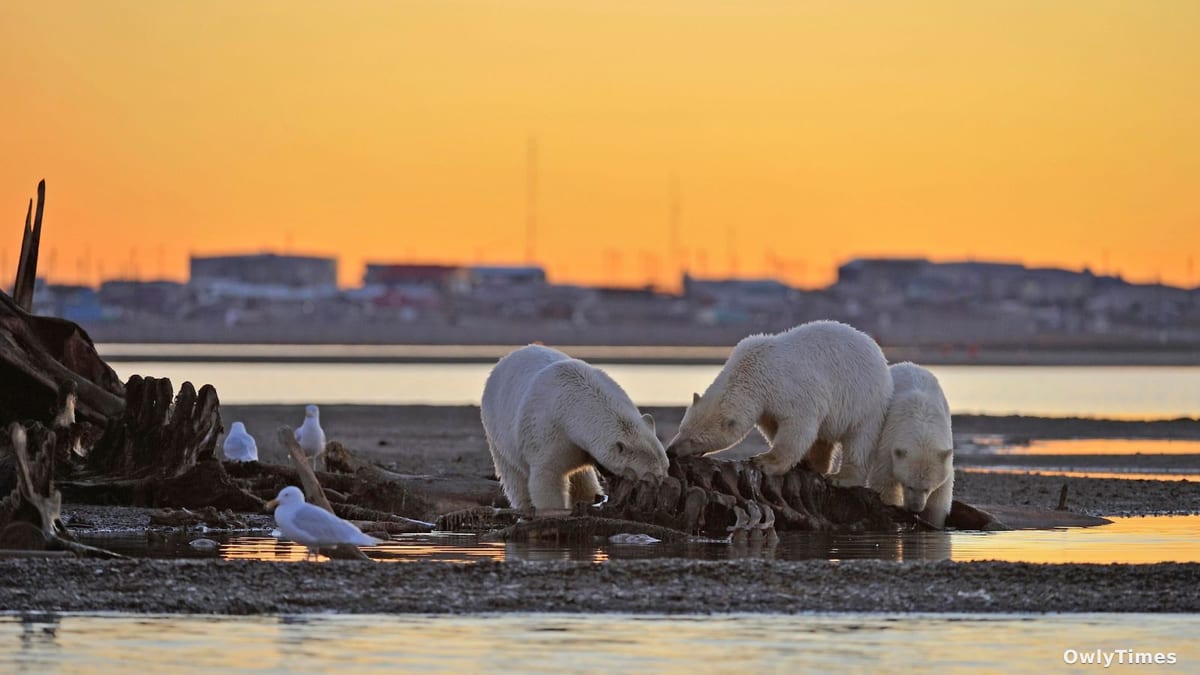

The fundamental question of Arctic conservation has long been whether a warming climate is driving polar bears into dangerous proximity with humans out of sheer, desperate hunger. As sea ice recedes, the narrative has held that starving, underweight bears are increasingly forced ashore, leading to a spike in human-bear interactions. However, recent data collected by researchers at the invitation of Parks Canada suggests our understanding of this behavioral shift is far from complete. By analyzing hundreds of site visits, we are beginning to see that the relationship between environmental stress and animal behavior is more nuanced than previously assumed.
Assessing the Drivers of Arctic Encounters
The impetus for this research arose when newly constructed field camps at Broad River and Owl River began recording a frequency of polar bear visits that exceeded initial projections. Because these sites were deliberately positioned away from the coast to minimize wildlife contact, the unexpected arrivals prompted an immediate investigation. Researchers sought to determine if human activity levels at the camps or the shifting duration of the ice-free season were the primary catalysts for these visits.
The methodology relied on camera traps, which captured 580 bear visits between July and November—the peak months for bear presence in the region. To gauge the physical health of the animals, researchers utilized an established fatness index, which was applicable to approximately 80% of the observed visits. This rigorous visual data allowed the team to move beyond speculation and correlate specific environmental variables with actual animal behavior.
Challenging the Hunger Hypothesis
The study’s findings present a significant departure from the prevailing scientific narrative. Contrary to expectations, the presence of human activity at the camps and the CNSC did not correlate with the number of bear visits. Instead, the data revealed that the primary driver is the duration of the ice-free season in western Hudson Bay. When the bay remains ice-free for longer periods, bear visits to study sites increase, regardless of the individual animal's nutritional health.
This discovery introduces a vital distinction between the frequency of visits and the nature of the encounters. While existing literature has long posited that underweight bears are the most likely to seek out human-sourced food, the study found that bears of all body conditions were equally likely to approach the camps. This suggests that while hunger may not necessarily drive the initial approach, it likely plays a critical role in how an interaction escalates. A nutritionally stressed bear may be more prone to aggressive behavior once an encounter has already begun, even if its presence at the site was not explicitly motivated by a search for human food.
Limitations and Future Research
It is important to consider the limitations inherent in this study, particularly regarding the demographic profile of the bears observed. The researchers noted a surprising scarcity of lone sub-adult bears, a group typically known for higher rates of human-wildlife conflict. This absence is likely a reflection of broader population trends; as the ice-free season in western Hudson Bay has lengthened, the survival rates of juvenile bears have seen a documented decline.
The next steps for this research involve shifting the focus from simply identifying when bears visit to understanding what factors determine the outcome of those visits. By moving away from the assumption that all human-bear interactions are driven by thin, hungry bears, conservationists can better refine safety protocols for those living and working in the Arctic. The future direction of this work will depend on the next readings of ice-free season duration and the corresponding monitoring of bear body conditions, which together will clarify whether these visits are becoming more frequent as climate conditions continue to fluctuate. Ultimately, this study serves as a necessary correction to established wisdom, aligning scientific inquiry more closely with the long-standing observations of local and Indigenous communities who have known for some time that a bear’s physical condition is not always the primary predictor of its proximity to human settlements.





