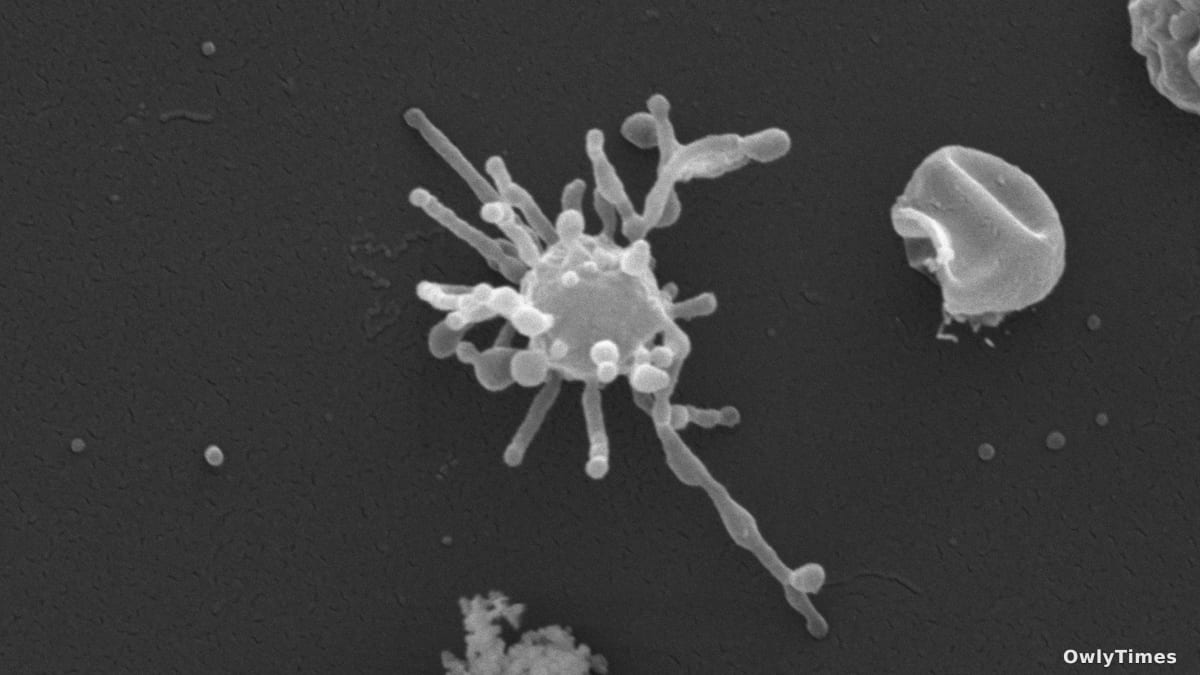

The Unexpected Oxygen Tolerance of Life’s Ancient Ancestors
For decades, the story of complex life’s emergence has hinged on a dramatic, yet conceptually difficult, partnership: an archaeal host cell engulfing a bacterium, eventually leading to the mitochondria that power our cells today. But a fundamental question has lingered – how could a host cell, thought to thrive in an oxygen-poor world, accommodate a bacterium requiring oxygen to function? New research, published February 18th in Nature, isn’t rewriting that story, but it’s adding a crucial, and surprising, detail: the archaeal ancestors of complex life may have been far more comfortable with oxygen than previously imagined. This isn’t a claim that oxygen was abundant when the partnership began, but rather that the capacity to deal with oxygen wasn’t a later adaptation, but potentially a pre-existing condition in the host cell.
The research, led by Brett Baker, an associate professor of marine science at the University of Texas at Austin, and Kathryn Appler, a postdoctoral researcher at the Institut Pasteur in Paris, centers on a group of microbes called Asgard archaea. Discovered in 2015 near the Loki’s Castle hydrothermal vent, these archaea are considered the closest known prokaryotic relatives to all eukaryotic life – organisms with complex cells containing a nucleus. Initial studies focused on Asgards found in oxygen-deprived environments, reinforcing the idea that the ancestral host was an anaerobe. However, this picture began to shift as researchers realized that many earlier studies suffered from limited genomic data. The new work addresses this directly, representing a massive undertaking in environmental genomics.
Reporting from Live Science informs this analysis.
To build a more complete picture, the team embarked on a “deep-sea journey,” collecting samples from the Bohai Sea and the Guaymas Basin – environments ranging from shallow coastal sediments to depths of over 6,500 feet. They then analyzed a staggering 15 terabytes of environmental DNA, reconstructing over 13,000 microbial genomes, and isolating hundreds of genetic sequences belonging to the Asgards. This scale of data is critical; as Appler points out, “These Asgard archaea are often missed by low-coverage sequencing.” The sheer volume of information allowed the team to identify patterns previously obscured, revealing a surprising abundance of genes associated with aerobic respiration – the process of using oxygen to generate energy – within certain Asgard lineages.
The most compelling evidence centers on a specific branch of the Asgards, the Heimdallarchaeia (named after the Norse god who watches for threats). Researchers found that many Heimdallarchaeia genomes contain the genetic machinery for electron transport chains, essential for oxygen-based energy production, and enzymes that detoxify harmful byproducts of oxygen metabolism. To bolster these genetic findings, the team employed AlphaFold2, an AI tool capable of predicting protein structures from their genetic code. This allowed them to confirm that the predicted proteins were structurally consistent with oxygen-handling capabilities. This isn’t proof that these Asgards actively used oxygen in the same way we do, but it demonstrates they possessed the molecular tools to tolerate and potentially utilize it.
It’s important to clarify what this study doesn’t show. Headlines proclaiming that early life “breathed” oxygen are misleading. The research doesn’t suggest a highly oxygenated early Earth. Instead, it suggests that the ancestral archaeon wasn’t necessarily harmed by oxygen exposure, and may have even benefited from limited oxygen availability. This reframes the symbiotic event that birthed complex life. Instead of a reluctant host accepting a demanding partner, the scenario becomes more plausible: a host cell already equipped to manage oxygen, forming a mutually beneficial relationship with a bacterium that excelled at oxygen-based energy production. This doesn’t eliminate the challenges of the endosymbiotic theory, but it removes a significant conceptual hurdle.
Limitations to Consider
While the genomic evidence is compelling, it’s crucial to acknowledge the limitations. The study relies on reconstructing genomes from environmental DNA, meaning researchers haven’t yet isolated and cultured these Asgards in a laboratory setting. This makes it difficult to directly observe their metabolic processes and confirm their oxygen-handling capabilities. Furthermore, the presence of genes doesn’t guarantee their expression or function. It’s possible that some of these genes are remnants of past adaptations, no longer actively used by the organism. The reliance on predictive protein modeling, while powerful, also introduces a degree of uncertainty. AlphaFold2 is remarkably accurate, but its predictions aren’t infallible.
The Next Steps in Unraveling Life’s Origins
The next crucial step is to cultivate these Asgards in the lab. This will allow researchers to directly measure their metabolic rates, observe their response to varying oxygen levels, and confirm the function of the genes identified in the genomic analysis. Baker’s team, along with others in the field, are actively pursuing this goal, a notoriously difficult task given the specialized conditions these microbes require. Beyond cultivation, future research should focus on exploring the diversity of Asgard archaea in different environments, searching for additional clues about their evolutionary history and metabolic capabilities.
Specifically, we should watch for research investigating the prevalence of these oxygen-handling genes across different Asgard lineages. If these genes are widespread, it strengthens the argument that oxygen tolerance was a characteristic of the ancestral archaeon. Conversely, if they are limited to specific groups, it suggests that oxygen adaptation occurred later in Asgard evolution. Ultimately, understanding the relationship between Asgard archaea and oxygen is not just about rewriting the history of life on Earth; it could also inform our search for life on other planets, where the presence or absence of oxygen may be a key determinant of habitability.





