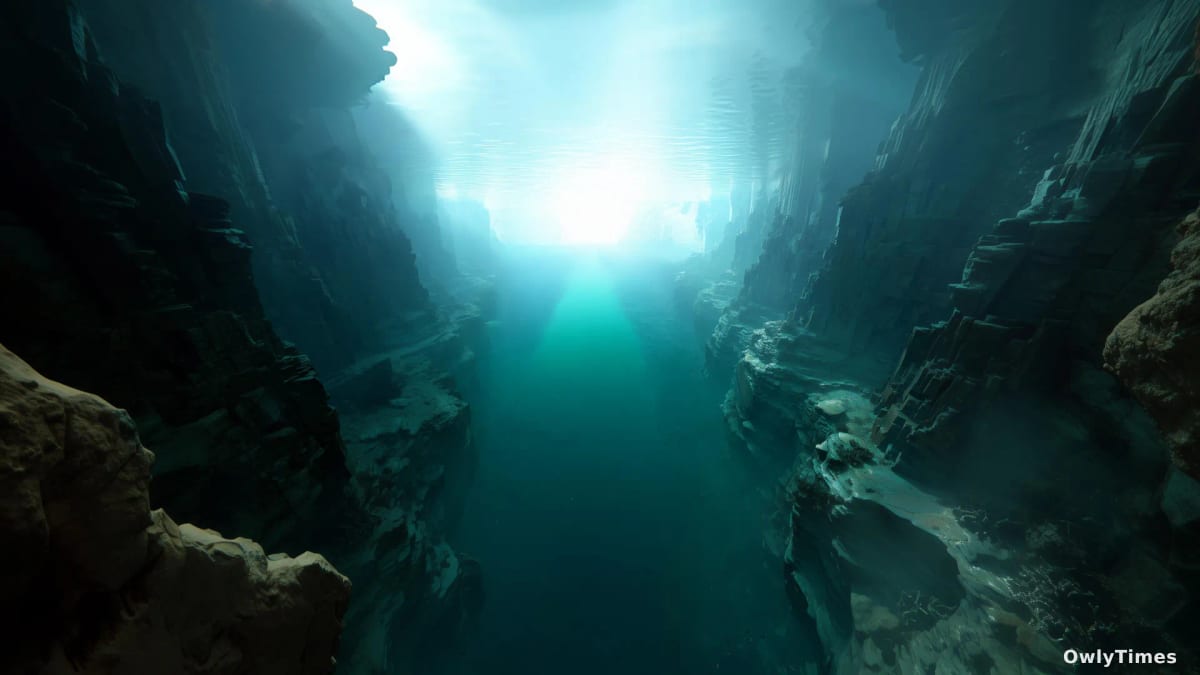

The Hidden Scars of Continental Drift: How Ancient Mantle Plumes Shaped the Atlantic Floor
We’re accustomed to thinking of canyons as features carved by rivers, dramatic gashes in the land like the Grand Canyon. But the ocean floor, lacking those rushing waterways, holds geological secrets of its own – structures that dwarf even the most impressive terrestrial canyons. A newly published study, appearing in Geochemistry, Geophysics, Geosystems (G-Cubed), isn’t simply revealing a massive underwater canyon system; it’s demonstrating how seemingly disparate geological forces – deep mantle activity and the slow, grinding movements of tectonic plates – can conspire to shape the very architecture of our planet. The significance isn’t just about understanding the past, but recognizing that these processes may still be actively reshaping the Atlantic Ocean today.
About 1,000 kilometers west of Portugal lies the King’s Trough Complex, a sprawling network of trenches and basins stretching roughly 500 kilometers. At its easternmost point lies Peake Deep, a particularly profound depression in the Atlantic seabed. For years, geologists suspected tectonic activity was responsible for its formation, but pinpointing how and why it developed in this specific location remained elusive. The research led by Dr. Antje Dürkefälden at the GEOMAR Helmholtz Centre for Ocean Research Kiel provides the most detailed explanation yet, and it hinges on a story of ancient continental rifting and a hidden plume of hot rock rising from Earth’s mantle. It’s crucial to note that headlines proclaiming a simple “discovery” of the canyon’s origin are misleading; the study doesn’t present a wholly new idea, but rather provides the first robust evidence supporting a long-held hypothesis and, crucially, establishes a timeline for its formation.
Source material: sciencedaily.com.
The team’s findings center on a period between approximately 37 and 24 million years ago, when the boundary between the European and African tectonic plates temporarily shifted, passing directly through the area now occupied by the King’s Trough. This isn’t a case of a river carving a canyon, but of the Earth’s crust being stretched and fractured as the plates pulled apart – a process akin to unzipping. However, the researchers discovered that the crust in this region wasn’t simply a passive recipient of tectonic stress. Prior to the arrival of the plate boundary, the oceanic crust was already unusually thick and heated due to a mantle plume, a rising column of molten rock originating deep within the Earth. Dr. Dürkefälden explains, “Our results now explain for the first time why this remarkable structure developed precisely at this location.” This plume, the team believes, was an early manifestation of the Azores mantle plume, still active today.
This pre-existing weakness, created by the heated and thickened crust, essentially guided the plate boundary, making it “preferentially” shift to this location, as explained by co-author PD Dr. Jörg Geldmacher. Once the plate boundary moved south, towards the modern Azores, the formation of the King’s Trough ceased. The study’s methodology involved a detailed mapping of the seafloor using high-resolution sonar during the 2020 M168 research expedition aboard the vessel METEOR. This mapping was then complemented by the analysis of volcanic rock samples retrieved from the trench system, with precise dating conducted at the University of Madison (Wisconsin, USA). The integration of bathymetric data from the Portuguese research centre EMEPC and contributions from researchers at Kiel University and Martin Luther University Halle-Wittenberg further strengthened the study’s conclusions.
However, it’s important to acknowledge the limitations to consider. While the rock samples provide a strong chronological framework, the resolution of dating techniques means the timeline of events remains somewhat broad. Furthermore, the study focuses on a specific region of the North Atlantic; extrapolating these findings to other underwater canyon systems requires further investigation. The reliance on sonar data, while providing excellent detail, is still indirect evidence – direct observation of the underlying geological structures remains a challenge. The team also acknowledges that the precise relationship between the mantle plume and the plate boundary shift is complex and requires further modeling.
Looking ahead, the research team is now focusing on the Terceira Rift, a comparable trench system forming near the Azores. This region also exhibits unusually thick oceanic crust, suggesting similar processes may be at play. The question now is: are we witnessing a repeating pattern of mantle plume activity predisposing regions to tectonic fracturing? Understanding this interplay is critical not only for reconstructing the geological history of the Atlantic, but also for assessing potential future seismic and volcanic activity in the region. If the Azores mantle plume continues to influence crustal thickness and weakness, could we anticipate further rifting and the formation of new underwater structures in the years to come? That’s a question oceanographers and geologists will be actively pursuing.





