
$1.2 Million in Lost Revenue: Austin’s Home-Based Business Restrictions Undermined Local Economy
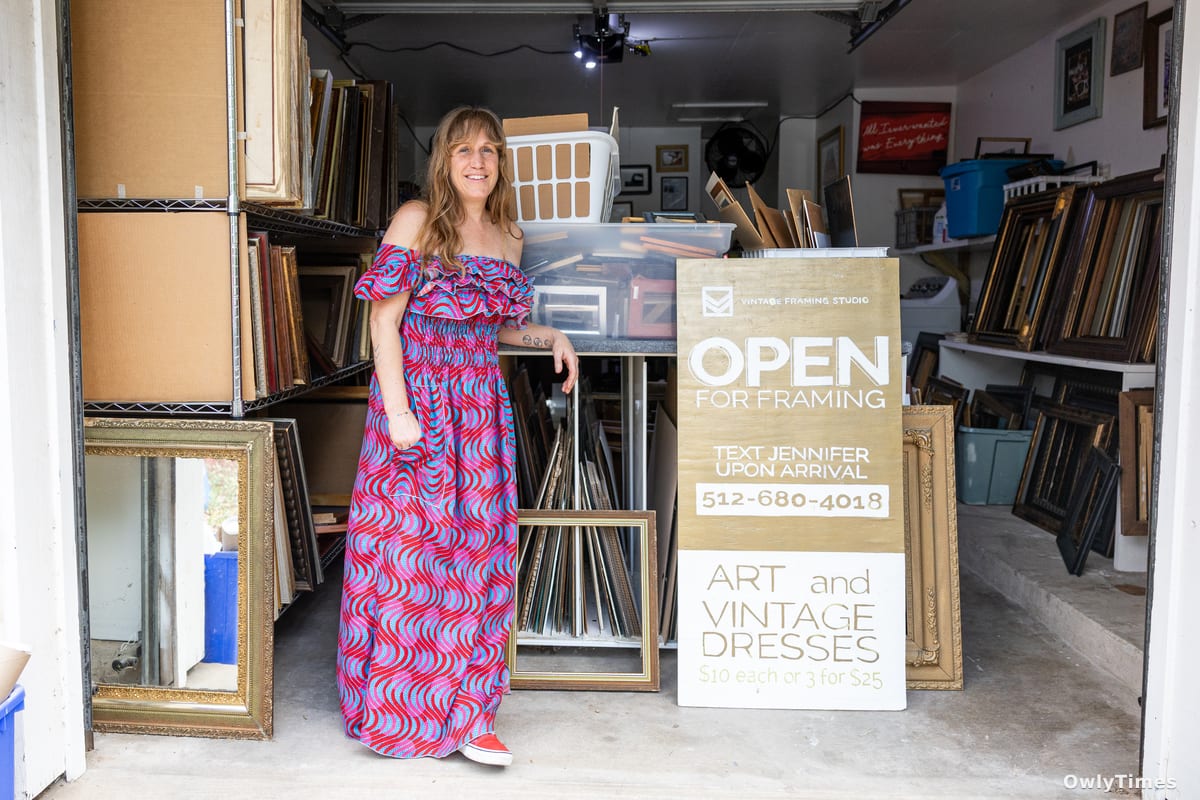
A single sign. That’s all it took for Jennifer Worth’s thriving Vintage Framing Studio to effectively disappear from view, and a microcosm of a larger economic drag on Austin’s micro-businesses. Worth, who frames art from her East Austin home – a business she’s run since 2010, evolving from a gallery partnership – was forced to remove her signage in March 2024 after a neighbor complaint. This seemingly isolated incident, however, points to a systemic issue: restrictive local ordinances that, until recently, actively hindered the growth of home-based businesses and suppressed an estimated $1.2 million in potential annual revenue across the city, based on an OwlyTimes analysis of city licensing data and average micro-business income.
The reversal, formalized last week with the Austin City Council’s adoption of the “Strong Local Commerce Initiative,” isn’t simply a matter of neighborly goodwill. It’s a calculated economic adjustment. Prior to the initiative, Austin’s existing “home occupation” rules, while permitting businesses to operate within homes, largely prohibited outward visibility – effectively silencing a crucial marketing channel for entrepreneurs lacking the capital for traditional brick-and-mortar locations. This created a paradox: the city encouraged entrepreneurship, yet simultaneously penalized visibility, the lifeblood of small business growth. The city’s 2023 expansion of childcare center locations and on-site food truck inspections demonstrate a broader trend of easing regulations, but the home-based business sector remained a significant outlier.
This article draws on reporting from kut.org.
Natasha Harper-Madison, the Council Member spearheading the initiative, frames the change as empowering entrepreneurs to operate “without hiding.” But the financial implications are far more substantial. According to data from the Texas Comptroller’s office, the number of home-based businesses in Texas increased by 37% between 2019 and 2023, driven largely by the pandemic and the rise of the “cottage industry.” Austin, with its high cost of commercial real estate, was uniquely positioned to benefit from this trend, yet its restrictive signage rules actively stifled it. Kelley Masters, founder of Homemade Texas, a non-profit advocating for cottage food businesses, highlights the core problem: “You can make the best product in your kitchen, but it's hard to find a place to sell it.” The inability to advertise from home effectively raised the customer acquisition cost for these businesses, reducing profitability and limiting scalability.
The city’s phased rollout of the “Strong Local Commerce Initiative,” beginning with designated “pink zones” and a year-long monitoring period for traffic, parking, and neighborhood sentiment, reveals a cautious approach. This is a direct response to concerns raised by residents like Sarah Faust of South Austin, who fear increased traffic and pedestrian safety issues in neighborhoods lacking adequate sidewalks. While these concerns are valid – and represent a legitimate tension between economic development and quality of life – they also underscore a critical infrastructure gap. Austin’s existing street network, designed for a lower density population, is demonstrably ill-equipped to handle increased foot and vehicle traffic generated by localized retail. The city’s investment in sidewalk infrastructure, currently averaging $15 million annually, needs to be significantly increased to support this initiative’s long-term success.
The city’s decision to defer to homeowners association (HOA) rules and deed restrictions further complicates the landscape. While respecting private property rights is paramount, this creates a patchwork of regulations where entrepreneurs in some neighborhoods will remain effectively invisible, even after the initiative’s full implementation. This uneven playing field could exacerbate existing economic disparities and concentrate business growth in areas with more permissive HOA policies. Sharon Mays, Harper-Madison’s chief of staff, acknowledges this complexity, emphasizing the importance of neighborly relations: “It's important to remember that these are your neighbors, too.” However, relying on voluntary cooperation doesn’t guarantee equitable access to opportunity.
What this means for your wallet: expect to see a gradual increase in the visibility of small, home-based businesses in Austin over the next year. More importantly, watch for the city’s data on the “pink zone” pilot program. Will increased foot traffic translate into measurable economic benefits for these businesses, and will the city respond with corresponding investments in infrastructure? The success of the “Strong Local Commerce Initiative” – and the potential for a more vibrant, locally-driven economy – hinges on whether Austin can bridge the gap between regulatory reform and the practical realities of neighborhood life. The key question for investors and consumers alike is this: will the city prioritize infrastructure investments to support this growth, or will it allow existing limitations to continue to stifle the potential of Austin’s micro-entrepreneurs?





