
The assumption that health insurance automatically equates to healthcare access is being starkly challenged in California, where a significant portion of the state’s 180,000 unhoused residents are enrolled in Medi-Cal. While headlines proclaim potential coverage losses under new federal rules, the deeper concern isn’t simply about numbers dropping from enrollment rolls – it’s about the erosion of a fragile system of care painstakingly built to reach a population facing systemic barriers to health and stability. The coming changes to Medi-Cal eligibility, stemming from former President Trump’s “One Big Beautiful Bill,” aren’t just an administrative hurdle; they represent a potential reversal of hard-won gains in providing care to those who need it most, and a test of whether policy can truly address the complexities of homelessness and health.
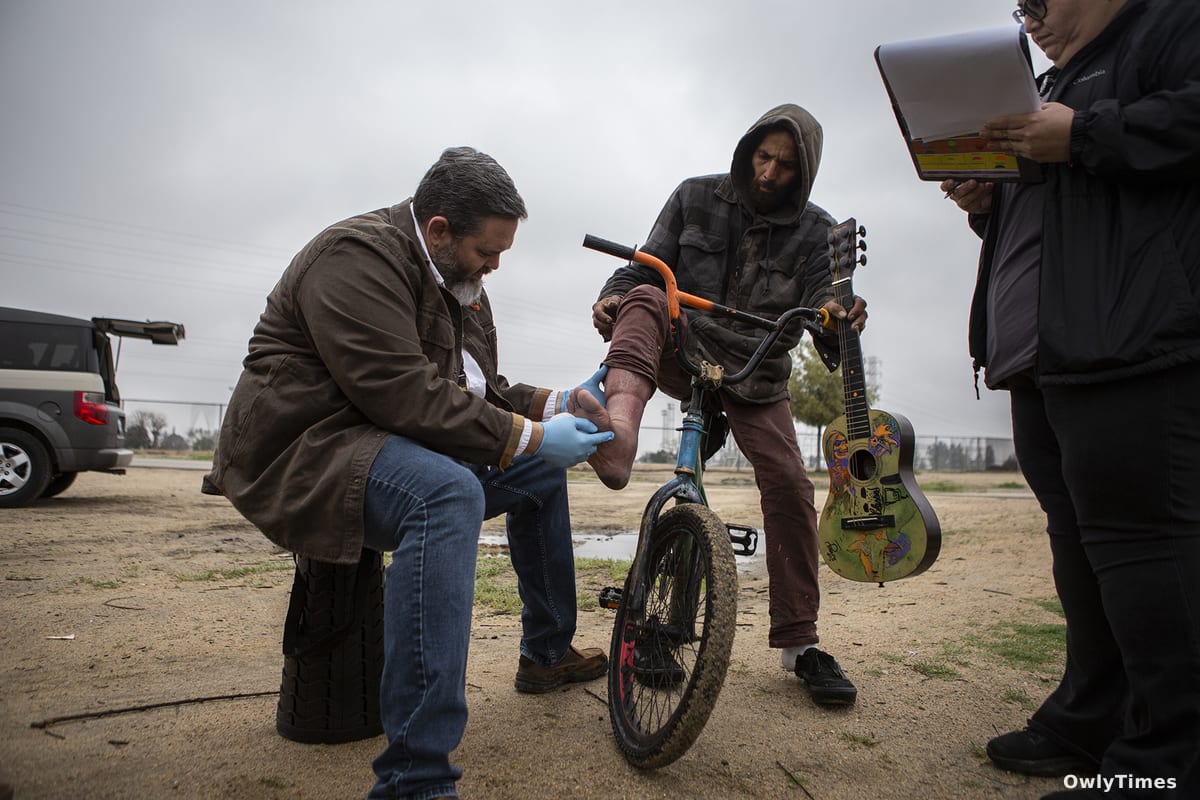
On a January morning in Los Angeles, Brett Feldman, a physician assistant with the USC Keck School of Medicine’s street medicine team, was already navigating this reality. Searching for patients amongst cars and tents after a recent storm, Feldman embodies the proactive approach that has defined California’s efforts to reach its unhoused population. His team provides primary care directly where people live, addressing chronic conditions, mental health needs, and acute medical issues. But this outreach, and the care it delivers, is now threatened by new work requirements set to take effect in 2027, potentially stripping insurance from over 90% of his unhoused patients, according to his estimates. The core of the new law mandates that able-bodied adults under 65 without dependents must demonstrate 80 hours of work per month to maintain Medicaid eligibility – a requirement that seems fundamentally at odds with the realities of homelessness.
Original reporting: calmatters.org.
The impending changes aren’t simply about a work mandate; they represent a shift in the burden of proof. States will now be required to verify eligibility criteria every six months, a significant increase from the previous annual check-in. While state officials project up to 2 million Medi-Cal recipients – roughly 14% of the total – could lose coverage due to non-compliance or administrative hurdles, the impact on the homeless population is disproportionately high. Research consistently demonstrates that individuals experiencing homelessness face significantly worse health outcomes, with a lifespan nearly 20 years shorter than the general population. This isn’t a population that can simply “work their way” into healthcare; they are often grappling with complex health challenges – including substance use disorders and mental illness – that actively impede their ability to secure and maintain employment.
The law does include exemptions for those unable to work due to disability, mental health conditions, or other qualifying factors. However, accessing these exemptions requires documentation and, crucially, a physician’s certification. Data from the UCSF Benioff Housing and Homelessness Initiative reveals that nearly half of unhoused Californians have complex behavioral health needs, and 60% report at least one chronic condition. Yet, only half of insured unhoused individuals regularly receive care, and a mere 39% have a primary care provider. In Los Angeles, that number plummets to 7%, meaning a vast majority lack the established medical relationship necessary to certify an exemption. This creates a cruel paradox: those who most need healthcare are least likely to have access to the documentation required to keep their healthcare. The story of Samantha Randolph, a 37-year-old pregnant woman living on the streets of Los Angeles, illustrates this perfectly. Despite qualifying for an exemption, her insurance lapsed due to a mailing error, highlighting the administrative fragility that can derail access to care.
State officials are attempting to mitigate the damage through an automated eligibility verification system, aiming to leverage data from employment records, universities, and medical diagnosis codes to streamline the process. Tyler Sadwith, state Medicaid director at the Department of Health Care Services, emphasizes that minimizing harm to members is a “top priority.” However, significant gaps remain. Volunteer work, for example, lacks a centralized database, and the federal government hasn’t clarified whether medical diagnosis codes will require ongoing provider verification. Past implementations of similar work requirements in other states have consistently resulted in eligible individuals falling through the cracks, a reality acknowledged by state officials. Matt Beare, a street medicine physician in Kern County, succinctly captures the core issue: “The cost of falling through the cracks is likely human life.”
The potential consequences extend beyond individual health outcomes. California has invested heavily in street medicine teams and other innovative programs to address homelessness, and these investments are predicated on the assumption of continued insurance coverage. Losing Medi-Cal could not only dismantle these programs but also increase reliance on costly emergency room care and jeopardize access to housing and other vital social services often tied to Medi-Cal eligibility. The question isn’t simply whether people will lose insurance, but whether this policy will actively increase homelessness and exacerbate the existing healthcare crisis. As Kelly Bruno-Nelson of CalOptima points out, the financial sustainability of these programs is directly linked to continued Medi-Cal enrollment.
The successful re-enrollment of Randolph in Medi-Cal, secured by Feldman’s team, offers a glimmer of hope, but it’s a hard-won victory that underscores the immense effort required to navigate a complex system. Looking ahead, the critical question isn’t whether the state can implement an automated system, but whether that system can accurately and equitably identify and protect the most vulnerable populations. Will the state be able to proactively identify individuals eligible for exemptions before they lose coverage, or will we see a surge in preventable hospitalizations and a reversal of progress in addressing homelessness? The coming years will reveal whether policy can truly prioritize health and stability for those who need it most, or if bureaucratic hurdles will once again prove insurmountable.