
Beyond Honks: The Strategic Re-Emergence of Joyful Protest
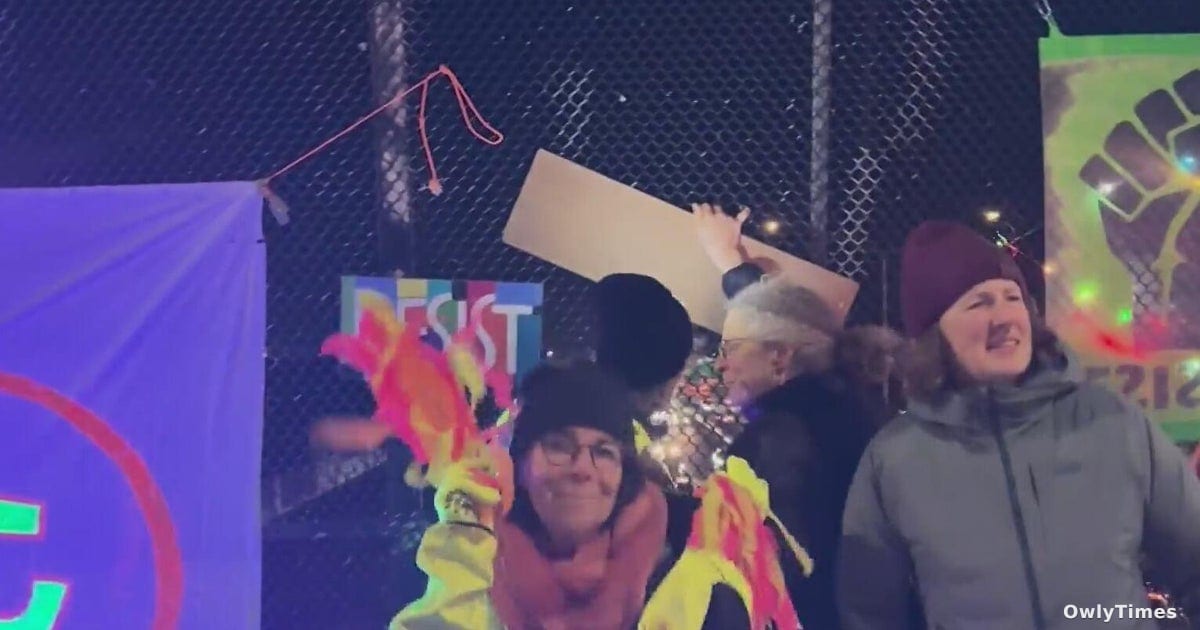
The weekly “NICE” gatherings on a Berkeley overpass aren’t simply spontaneous displays of civic engagement; they represent a calculated shift in protest strategy, a recognition that sustained political pressure requires more than anger – it demands the cultivation of broad, even joyful, participation. Initiated by Jennifer Quinn as a Halloween “costume joke,” the event’s evolution into a regular “overpass visibility dance party” signals a deliberate attempt to counter the escalating polarization that has come to define American politics, and to reclaim the narrative of dissent. The strategic brilliance lies in its accessibility: it doesn’t demand hours of commitment, specialized knowledge, or even a firm ideological stance, only a willingness to wave a sign and acknowledge a passing car.
The core calculus at play here is expanding the base of political expression beyond those already actively engaged. Traditional protest models, reliant on marches and rallies, often attract a committed core but struggle to reach those alienated by the perceived intensity or exclusivity of activist circles. Quinn’s framing of NICE – “Now It Counts Everyone” – is not merely a slogan, but a direct appeal to a wider demographic. This is particularly potent in California, where disillusionment with national politics is high, yet civic engagement remains comparatively strong. The 2024 voter turnout, at 78.2% – 12 points above the national average – demonstrates a pre-existing appetite for participation, but also a potential vulnerability to apathy if engagement feels unproductive or overly confrontational. NICE taps into that existing energy, offering a low-barrier entry point.
This piece references the CBS News report.
Who benefits and who loses from this shift in tactics? The immediate beneficiaries are local progressive organizations seeking to broaden their reach and normalize consistent, visible dissent. The event’s stated focus on immigration policy reform, a key issue for California’s diverse population, provides a clear policy anchor. Conversely, those invested in maintaining the status quo – particularly those benefiting from heightened political division – stand to lose. The tactic’s success hinges on its ability to depoliticize the act of protest itself, making it less susceptible to the “radical” label often used to discredit dissenting voices. This is a direct challenge to the established playbook of conservative media, which frequently frames protests as disruptive and illegitimate.
Historically, this approach echoes the tactics employed by the Civil Rights Movement. While iconic images of sit-ins and marches often dominate the narrative, the movement also relied heavily on community building and everyday acts of resistance – voter registration drives, freedom schools, and even social gatherings – to sustain momentum and broaden support. The emphasis on nonviolence, as articulated by activist Sarah Donaldson (“We got to be peaceful all the time. No violence”), is not simply a moral imperative, but a strategic one. Violence, even in response to perceived injustice, provides justification for repression and undermines public sympathy. The 1965 Selma to Montgomery marches, while ultimately successful, were met with brutal force, highlighting the inherent risks of confrontational tactics. NICE, by prioritizing a “lighthearted tone” and aiming to “cut through the intensity,” attempts to preemptively neutralize that risk.
The success of NICE, however, isn’t guaranteed. Its longevity will depend on its ability to maintain momentum and avoid co-option. The risk of becoming a feel-good spectacle, divorced from concrete political action, is real. The challenge for organizers will be to translate the energy generated on the overpass into tangible policy gains. The next political chess move to watch is whether NICE can evolve beyond visibility and begin to actively engage with local and state-level political processes – lobbying elected officials, supporting progressive candidates, and advocating for specific legislative changes. Will the honks translate into votes, and will the dance party become a launching pad for sustained political power?