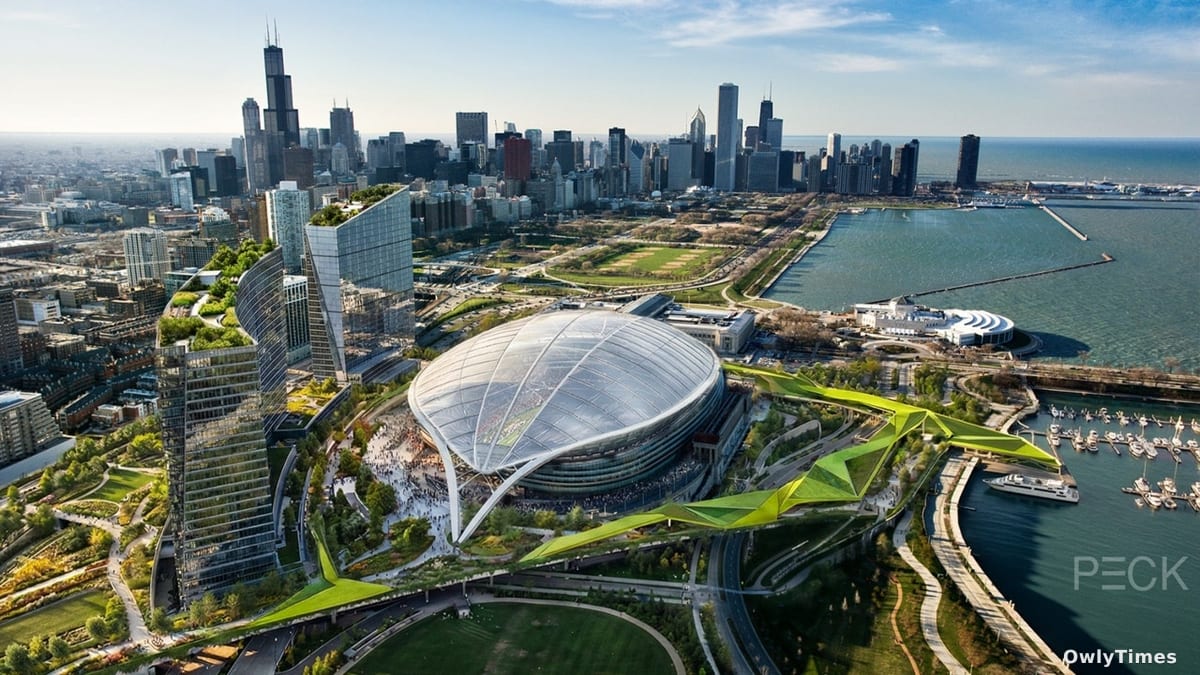

The wind whipping off Lake Michigan felt particularly brutal on Thursday, even for a March afternoon in Chicago. It mirrored the uncertainty swirling around the Chicago Bears’ future, a future seemingly destined for the sprawling suburbs of Arlington Heights. Then, a different vision emerged: not escape, but reinvention. Edward Peck Design unveiled a proposal to transform Soldier Field, not demolish it, into a year-round entertainment powerhouse, complete with a transparent roof and a bustling lakefront district. This isn’t just about football; it’s a referendum on Chicago’s identity, its willingness to embrace bold solutions, and the increasingly complex relationship between professional sports and the cities that host them.
A Stadium Stuck in Time, and a City at a Crossroads
Soldier Field, a landmark steeped in history, is also a relic. Built in 1924 and significantly renovated in the early 2000s – a renovation many fans still resent for its jarring aesthetic – the stadium struggles to compete with the modern amenities demanded by today’s fans and the revenue streams expected by a multi-billion dollar franchise. The Bears’ flirtation with Arlington Heights, purchasing the 326-acre site of the former Arlington International Racecourse, felt like a natural progression. But the devil, as always, is in the details: stalled negotiations over property taxes and public funding have left that project in limbo. Simultaneously, Northwest Indiana is aggressively courting the team, dangling the promise of new development and a potentially more favorable financial landscape. This is where the Edward Peck Design proposal enters the fray, offering a third path – one that acknowledges the stadium’s shortcomings while championing its irreplaceable location. The plan proposes increasing capacity to approximately 72,000 seats, adding 1,800 luxury suites and 8,700 general seating spots, but the real game-changer is the proposed ETFE roof, a lightweight, transparent material designed to allow natural light while shielding fans from the elements.
This article draws on reporting from fox32chicago.com.
Beyond the Bleachers: The Rise of the “Experience Economy”
The architectural firm isn’t simply proposing a stadium upgrade; they’re envisioning an “experience.” The plan extends beyond the field, literally, with a deck built over Lake Shore Drive and the adjacent rail lines. This elevated platform would house restaurants, retail spaces, hotels, apartments, and public gathering areas, transforming the area into a destination even when the Bears aren’t playing. This reflects a broader trend in sports and entertainment: the shift from passively consuming a game to actively seeking a curated experience. Modern stadiums are no longer just places to watch a contest; they’re entertainment districts, social hubs, and economic engines. Consider the success of The Battery Atlanta surrounding Truist Park, home of the Atlanta Braves, or the developments around Globe Life Field in Arlington, Texas. These projects demonstrate that a stadium can be a catalyst for significant economic growth and community development, but only if integrated thoughtfully into the surrounding urban fabric. Edward Peck, managing director of the firm, stated their client “believes the existing Soldier Field site is the ideal location for a world-class venue,” a sentiment echoed by a season ticket holder quoted in the release who called Soldier Field “part of Chicago’s soul.”
The Unanswered Questions and the Shadow of Funding
Despite the ambitious vision, significant questions remain. Crucially, who is the “client” driving this proposal? Edward Peck Design has remained tight-lipped, and neither the Bears nor Chicago Mayor Brandon Johnson’s office have publicly commented on whether they’ve even seen the plans. This opacity raises immediate concerns. Is this a genuine attempt to find a solution, or a pressure tactic designed to force the city’s hand in negotiations? The cost of the project is also unknown, as is the proposed funding mechanism. Given the ongoing debates surrounding public financing for sports stadiums – debates fueled by concerns about diverting resources from essential services – securing funding for such a massive undertaking will be a monumental challenge. The Arlington Heights deal stalled, in part, due to disagreements over property tax assessments, and a similar battle is likely to erupt if the city pursues the Soldier Field overhaul. The firm highlights the sustainability benefits of reusing the existing structure, but that argument may not be enough to overcome the financial hurdles.
What’s Next for the Bears – and for Chicago’s Future?
The Bears are playing a dangerous game of leverage, simultaneously exploring multiple options while keeping all parties guessing. This strategy, while understandable from a business perspective, is creating uncertainty and frustration for fans and local communities. The Edward Peck Design proposal injects a new level of complexity into the equation, forcing the city and the team to confront a viable alternative to relocation. But the success of this plan hinges on transparency, collaboration, and a willingness to compromise. The question isn’t simply whether Soldier Field can be renovated, but whether Chicago is willing to invest in a vision that prioritizes both its sporting heritage and its future as a world-class city. As the Bears continue to weigh their options, watch closely for who steps forward to champion – and fund – this ambitious proposal. Will a private investor emerge? Will the city offer a compelling financial package? Or will the lure of a fresh start in the suburbs or across state lines ultimately prove too strong? The answer will not only determine the future of the Chicago Bears, but also signal a great deal about Chicago’s commitment to preserving its iconic landmarks and embracing innovative solutions in a rapidly changing world.

