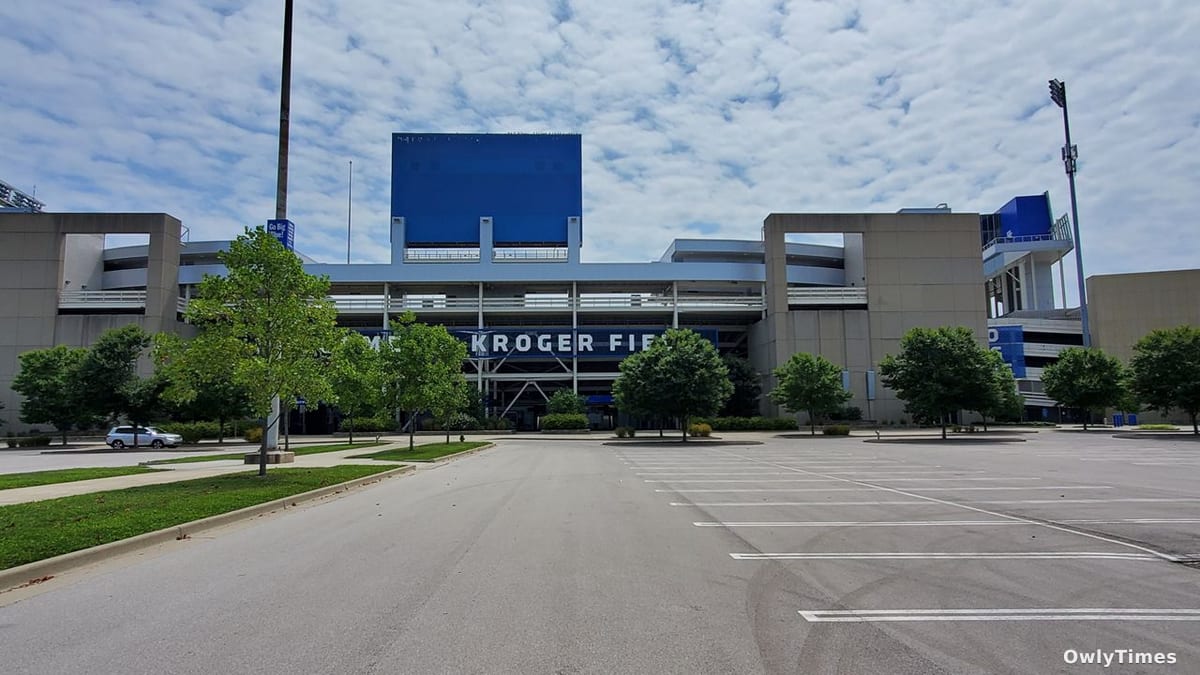

The scent of frying food, usually reserved for game days, hung faintly in the air even on a frigid January afternoon near Kroger Field. But this wasn’t the aroma of tailgate burgers; it was the imagined scent, a phantom promise of what’s to come. The University of Kentucky, through its nonprofit arm Champions Blue, isn’t just upgrading its football stadium – it’s attempting a radical reimagining of the 900-acre campus periphery, aiming to transform a congested, underserved area into a year-round entertainment district. It’s a bold move, fueled by an $110 million internal loan, and one that speaks to a larger trend: universities increasingly acting as urban developers, seeking to monetize their assets and cultivate a permanent, vibrant community beyond the academic calendar.
Beyond Game Day: The University as Town Square
For decades, college towns have lived a bifurcated existence. Nine months of academic focus punctuated by a frenetic few months of athletic fervor. Champions Blue’s plan, spearheaded by UK architect Kevin Locke, directly confronts this seasonality. The project isn’t simply about adding more luxury suites to Kroger Field – though that’s part of it. It’s about creating a destination, a draw that extends beyond Saturdays in the fall. This isn’t unique; universities like Auburn and Texas A&M have undertaken similar initiatives, but the scale of UK’s investment, and the explicit focus on addressing local needs, sets it apart. The $110 million, approved by the UK Board of Trustees in June, represents a significant commitment, especially when compared to the average university capital improvement budget of around $35 million according to a 2022 study by the Association of College and University Facilities Managers.
See the original spectrumnews1.com story for the full account.
Addressing a "Food Desert" with Retail and Community
The heart of the plan centers on the Cooper Drive corridor, a stretch Locke bluntly describes as a “food desert with heavy traffic.” This isn’t just architectural jargon. It’s an acknowledgement of a real problem: a lack of accessible, healthy food options for residents and students alike. The proposed development aims to rectify this, weaving in retail and potentially housing alongside entertainment venues. This is where the project’s ambition becomes particularly interesting. It’s not simply about attracting revenue; it’s about fulfilling a social responsibility. The “linear connector” along University Drive and Cooper Drive, as Locke explained, is designed to physically and socially bridge the South Campus with the rest of the university and the city of Lexington. But the success of this integration hinges on more than just brick and mortar.
The Sasaki Blueprint and the Authenticity Question
Champions Blue has partnered with the design firm Sasaki to bring the vision to life. Locke praises their “breadth of knowledge” and “expertise in these types of planning arrangements,” but the reliance on outside consultants raises a crucial question: how does UK ensure the development remains authentically Lexington, and not a generic, cookie-cutter entertainment district? Locke insists the team is studying similar projects at other universities, but actively working to avoid replicating them wholesale. “You don’t want to just turn the project over to a developer and say, ‘Hey, you guys go for it,’ and you end up with something that is not unique and beneficial for the University of Kentucky and the city,” he said. This sentiment is reassuring, but the devil will be in the details. Will the retail spaces prioritize local businesses, or national chains? Will the housing be affordable for students and residents, or geared towards high-income earners?
The Future of the College Town Ecosystem
The project is currently in phase two, with concept designs expected by mid-spring and the entire planning process wrapping up by the end of June. The speed of development is notable, reflecting a sense of urgency to capitalize on the momentum and address the identified needs. But beyond the timelines and blueprints, this initiative represents a fundamental shift in the role of the modern university. It’s no longer enough to be a center of learning; universities are increasingly expected to be engines of economic development, community builders, and even lifestyle curators. The question now isn’t if other universities will follow suit, but how. Will they prioritize profit over purpose? Will they genuinely engage with the surrounding community, or simply impose their vision upon it? The outcome at UK will serve as a crucial case study, a blueprint – or a cautionary tale – for the future of the college town ecosystem.