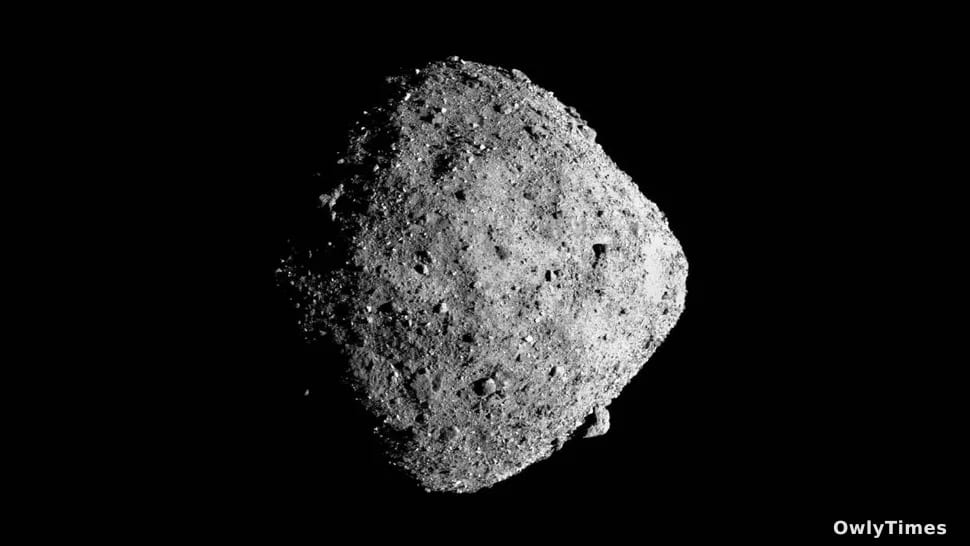

The discovery of amino acids on the asteroid Bennu last year ignited headlines proclaiming evidence of life’s origins in space. While technically accurate – the presence of these building blocks does support the theory of extraterrestrial delivery of life’s ingredients to Earth – the narrative quickly simplified a far more nuanced scientific question: not that life’s components came from space, but how they formed there. New research from a team led by Allison Baczynski, assistant research professor of geosciences at Penn State, suggests that the conditions for amino acid formation in the early Solar System were far more diverse, and potentially colder, than previously imagined, challenging decades of assumptions about prebiotic chemistry.
The Bennu samples, collected by NASA’s OSIRIS-REx mission in 2023, represent a time capsule from the Solar System’s infancy – roughly 4.6 billion years ago. Scientists have long theorized that asteroids and comets seeded early Earth with the necessary components for life. The confirmation of amino acids within Bennu was a major step, but it didn’t explain the mechanism of their creation. Baczynski’s team, collaborating with astrophysicists and geologists from institutions including the Catholic University of America and NASA’s Goddard Space Flight Center, focused on glycine, the simplest amino acid, to unravel this mystery. Their work, published in the Proceedings of the National Academy of Sciences, hinges on a sophisticated analysis of isotopic ratios – subtle variations in atomic mass that act as fingerprints of the environment in which a molecule formed.
This piece references the universetoday.com report.
What sets this research apart is the technology employed. As Baczynski explained in a Penn State release, “Without advances in technology and investment in specialized instrumentation, we would have never made this discovery.” The team modified existing instruments to detect incredibly small amounts of organic compounds, allowing them to analyze the glycine within the Bennu samples with unprecedented precision. This analysis revealed a surprising isotopic signature, one that doesn’t align with the dominant theory of amino acid formation – the Strecker synthesis. This process requires liquid water, ammonia, hydrogen cyanide, and aldehydes or ketones, and was considered the primary pathway for glycine creation. Instead, the Bennu glycine appears to have formed in icy conditions, exposed to radiation in the outer reaches of the early Solar System.
This isn’t to say the Strecker synthesis is incorrect, but rather that it isn’t the only pathway. To contextualize this finding, the team compared the Bennu glycine to that found in the Murchison meteorite, a carbonaceous chondrite that fell in Australia in 1969 and has been a cornerstone of prebiotic chemistry research for over half a century. The Murchison amino acids do exhibit the isotopic signature expected from Strecker synthesis – warmer temperatures and the presence of liquid water. As Ophélie McIntosh, a postdoctoral researcher at Penn State and co-lead author, pointed out, “One of the reasons why amino acids are so important is because we think that they played a big role in how life started on Earth. What’s a real surprise is that the amino acids in Bennu show a much different isotopic pattern than those in Murchison, and these results suggest that Bennu and Murchison’s parent bodies likely originated in chemically distinct regions of the solar system.” This suggests that different regions of the early Solar System fostered different chemical environments, and therefore, different routes to the creation of life’s building blocks.
A Puzzle Within the Puzzle: Mirror Images and Nitrogen Values
The research also uncovered an unexpected anomaly within the glutamic acid found in the Bennu sample. Amino acids exist in two mirror-image forms, known as enantiomers. Previously, scientists assumed these forms would have identical isotopic signatures. However, the Bennu glutamic acid revealed significantly different nitrogen values between the two enantiomers. This finding throws another wrench into existing models and suggests that the processes governing the formation of these molecules are even more complex than previously understood. It’s a detail that highlights the limitations of our current understanding and the need for further investigation.
Limitations to Consider
It’s crucial to remember that the Bennu sample represents a single data point. While incredibly valuable, it’s a localized snapshot of a vast and diverse early Solar System. The isotopic analysis, while highly precise, is still subject to interpretation. Furthermore, the team focused primarily on glycine and glutamic acid; other amino acids may reveal different formation pathways. The conclusions drawn are therefore probabilistic, not definitive. The team is also working with extremely small sample sizes, which introduces inherent challenges in statistical analysis.
What’s Next for Asteroid Chemistry?
Baczynski and her team are now turning their attention to analyzing amino acids from a wider range of meteorites, hoping to determine whether the Bennu signature is unique or representative of a broader trend. “We have more questions now than answers,” she admitted. The key question now is whether this diversity in amino acid formation pathways is widespread throughout the Solar System, or if Bennu represents an unusual case. If other asteroids and meteorites exhibit similar isotopic signatures, it would suggest that icy, radiation-exposed environments were a significant incubator for prebiotic molecules, fundamentally altering our understanding of life’s origins. The search for these patterns will require continued investment in advanced analytical instrumentation and a sustained effort to collect and analyze samples from diverse sources across the Solar System. Will future analyses confirm a broader pattern of diverse amino acid formation, or will Bennu remain an outlier, a unique chemical anomaly in the cosmic story of life?





