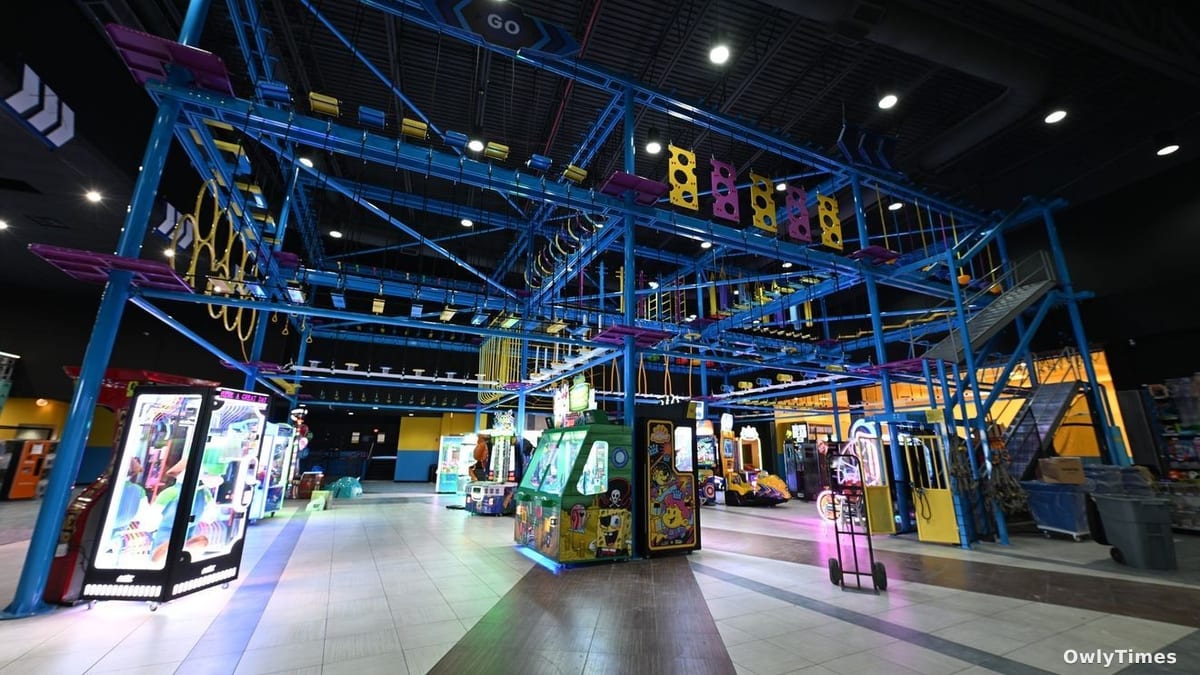

The scent of popcorn and anticipation has officially been replaced by the roar of engines and the squeals of delighted (and slightly terrified) children at Northgate Mall. On Monday, Epic Entertainment Center threw open its doors, not with a new blockbuster, but with a multi-level go-kart track, a towering ropes course, and enough flashing arcade lights to rival a Vegas casino. It’s a dramatic shift for the Colerain Township landmark, and a telling sign of how dramatically our leisure habits are evolving – and what that means for the future of the American mall. This isn’t simply about a business changing hands; it’s about a cultural reckoning with how we spend our downtime, and a desperate attempt to fill the void left by a dying industry.
The Rise of “Experiential Retail” and the Mall’s Last Stand
The 58,000-square-foot space, formerly home to a movie theater, now pulses with a different kind of energy. Forget passively absorbing a story on screen; Epic Entertainment is selling active participation. Dozens of arcade games, trampoline dodgeball, and a two-story climbing structure are all designed to be done, not just watched. This is “experiential retail” in full force, a trend that’s been gaining momentum for years as online shopping continues to erode traditional brick-and-mortar sales. According to a 2025 report by the International Council of Shopping Centers, entertainment-based tenants now occupy 15% of mall space nationally, up from just 8% in 2019. Northgate Mall, like many of its peers, is betting big on this shift to survive. But is it enough? The mall has seen a 12% decrease in foot traffic over the last five years, even before the pandemic accelerated the decline of department stores.
This piece references the local12.com report.
Safety and Supervision: A New Layer of Responsibility
The transformation isn’t just about fun and games. Epic Entertainment is acutely aware of the anxieties surrounding public spaces, particularly for families. The company has invested heavily in security measures – security cameras, on-site personnel, and even off-duty police officers – a response to a growing national concern about safety in recreational venues. More significantly, the requirement that minors under 18 be accompanied by a parent or legal guardian speaks to a broader societal trend: the increasing expectation of constant adult supervision. This isn’t necessarily a criticism, but a reflection of a risk-averse culture where unstructured play is becoming increasingly rare. It also places a new burden on parents, who are already stretched thin, to actively monitor their children’s entertainment. The question becomes: does this heightened security foster genuine peace of mind, or simply amplify existing anxieties?
Beyond the Go-Karts: A Symptom of Shifting Priorities
The closure of movie theaters, once the anchor tenants of malls like Northgate, is a stark reminder of how quickly entertainment preferences can change. Streaming services like StreamVerse and NovaFlix have fundamentally altered how we consume media, offering convenience and affordability that traditional cinemas struggle to match. In 2024, box office revenue was down 25% compared to pre-pandemic levels, a figure that sent shockwaves through the industry. But the story isn’t just about the decline of movies; it’s about a broader shift in priorities. We’re increasingly valuing experiences over possessions, and actively seeking out opportunities for social connection. Epic Entertainment is tapping into that desire, offering a space where families and friends can create memories together – even if those memories involve a slightly embarrassing wipeout on the ropes course.
What Happens When the Arcade Lights Dim?
The opening of Epic Entertainment Center is a temporary win for Northgate Mall, a much-needed injection of energy into a struggling space. But the long-term viability of this model remains uncertain. Can experiential retail truly reverse the decline of the American mall? Or is it simply a delaying tactic, a way to prolong the inevitable? The success of Epic Entertainment will depend not only on its ability to attract customers, but also on its ability to adapt to evolving consumer preferences and maintain a safe and welcoming environment. We’re already seeing competitors emerge, with similar entertainment centers popping up in surrounding counties. The real test will come in the next two to three years: will these venues become sustainable anchors for malls, or will they too eventually succumb to the pressures of a changing retail landscape? The future of Northgate, and malls like it across the country, hangs in the balance.