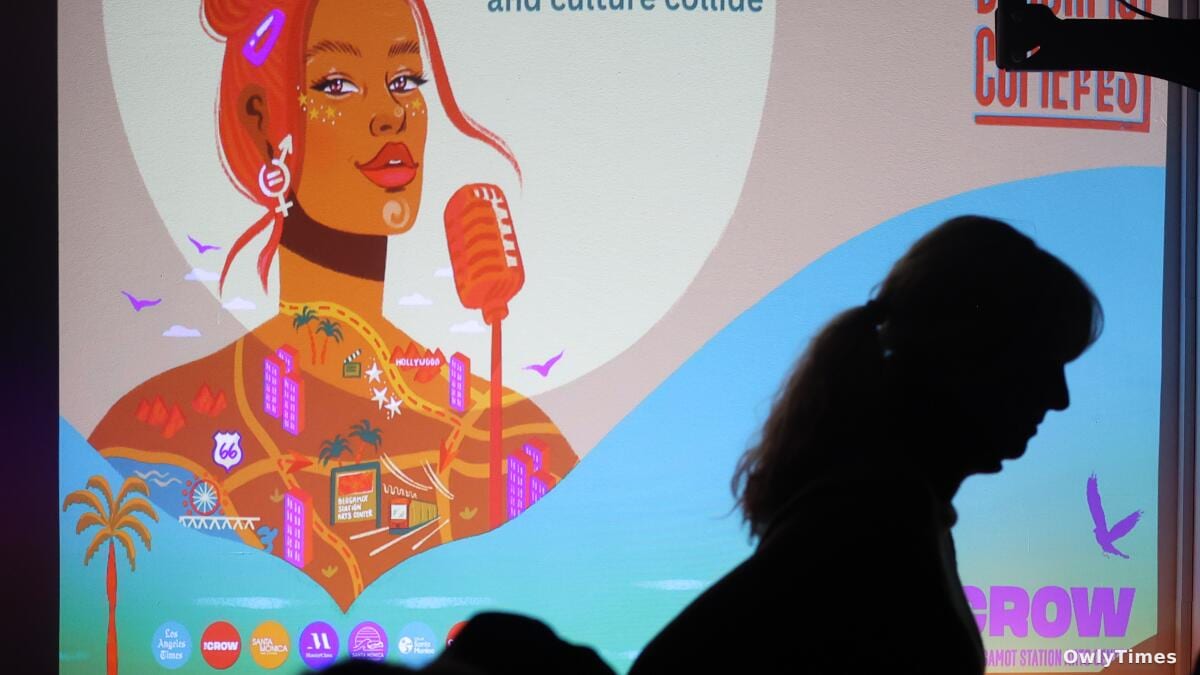

Beyond the Punchline: How a Santa Monica Comedy Festival is Redefining Industry Access
The persistent narrative around “making it” in comedy often centers on a singular, elusive breakthrough moment – a viral clip, a late-night set, a development deal. But what if the crucial ingredient isn’t just talent, but access to the knowledge and networks that translate potential into opportunity? That’s the core question driving the Bergamot Comedy Festival, now in its third year at The Crow in Santa Monica, and it’s a question that’s resonating far beyond the stage. While headlines might focus on the festival as a platform for up-and-coming comedians, the true innovation lies in its deliberate dismantling of traditional gatekeeping, offering not just performance slots, but intensive professional development for anyone willing to participate.
This piece references the the Los Angeles Times report.
The impetus for the festival, as articulated by founder and executive producer Nicole Blaine, stemmed from personal experience. Blaine, feeling marginalized as an “older woman who was talking about having babies” early in her career, recognized a systemic lack of inclusivity within the comedy world. This wasn’t simply about representation, though that’s undeniably important; it was about the practical barriers to entry. “If you aren’t feeling safe and comfortable to fail, then the joke isn’t going to get discovered,” Blaine stated, highlighting the necessity of a supportive environment for creative risk-taking. The Bergamot Festival isn’t positioned as charity, but as a strategic intervention – a self-funded, independent space explicitly committed to diversifying the voices and the pathways to success in comedy. This is a pointed contrast to relying on larger institutions, as Blaine directly states, “The government can’t control this.”
The festival’s structure reflects this commitment. While attracting industry scouts from Netflix, HBO, and Comedy Central is a clear goal, the Bergamot Festival doesn’t stop there. A significant portion of the event is dedicated to free, publicly accessible panels led by professionals from companies like Mic Drop Comedy and “The Tonight Show Starring Jimmy Fallon.” These aren’t superficial Q&As; they’re focused, practical workshops covering everything from self-producing a show to refining a five-minute set. This emphasis on education, Blaine argues, is essential. “We need to provide education for everybody, not just the comics who get into the fest,” she explained, emphasizing the broader impact on the comedy community.
This approach is demonstrably effective, as evidenced by the experience of comedian Bernice Ye. Rejected from performing in the festival’s first two years, Ye didn’t disengage. Instead, she actively participated in the free panels, leveraging the opportunity to network and learn from industry professionals. She describes Blaine’s willingness to ask “the tough questions” as instrumental in fostering genuine connections. This year, Ye is finally performing, framing her inclusion not just as a personal victory, but as a culmination of the knowledge and relationships she cultivated through the festival’s resources. Her story isn’t about overcoming talent deficits; it’s about overcoming informational and networking gaps.
The festival’s impact extends to creating safer spaces for marginalized performers. Brigham Mosley, a genderqueer comedian, found the Crow – the venue hosting the festival – to be a stark contrast to the often hostile environment of open mics. Mosley recounted instances of transphobic jokes following their sets at other clubs, a discomfort that dissipated within the Crow’s more supportive atmosphere. This speaks to a crucial, often overlooked aspect of industry access: the psychological safety required for artists to develop their voice and take risks. The Bergamot Festival, by prioritizing inclusivity and fostering a sense of community, is actively addressing this need.
Limitations to consider: The Bergamot Festival, while impactful, is still a relatively small-scale event. Its reach is currently concentrated in the Los Angeles area, and its long-term influence will depend on its ability to scale and replicate its model elsewhere. Furthermore, while the festival actively seeks diversity, the ultimate selection process remains subjective, and unconscious biases could still play a role. The success stories like Bernice Ye’s are compelling, but they don’t necessarily represent the experience of every applicant.
Looking ahead, the key question isn’t simply whether the Bergamot Comedy Festival will continue to grow, but whether its model of proactive, community-driven professional development can be adopted by larger industry players. Will studios and networks begin to prioritize access and education alongside talent scouting? If the festival’s success demonstrates a clear demand for this type of support, it’s a shift we should expect to see – and one that could fundamentally reshape the landscape of comedy for the better. Watch for whether other independent venues begin to emulate the Bergamot Festival’s open-access panel structure, and whether major networks start actively recruiting from these types of events, signaling a genuine commitment to diversifying the pipeline of comedic talent.





