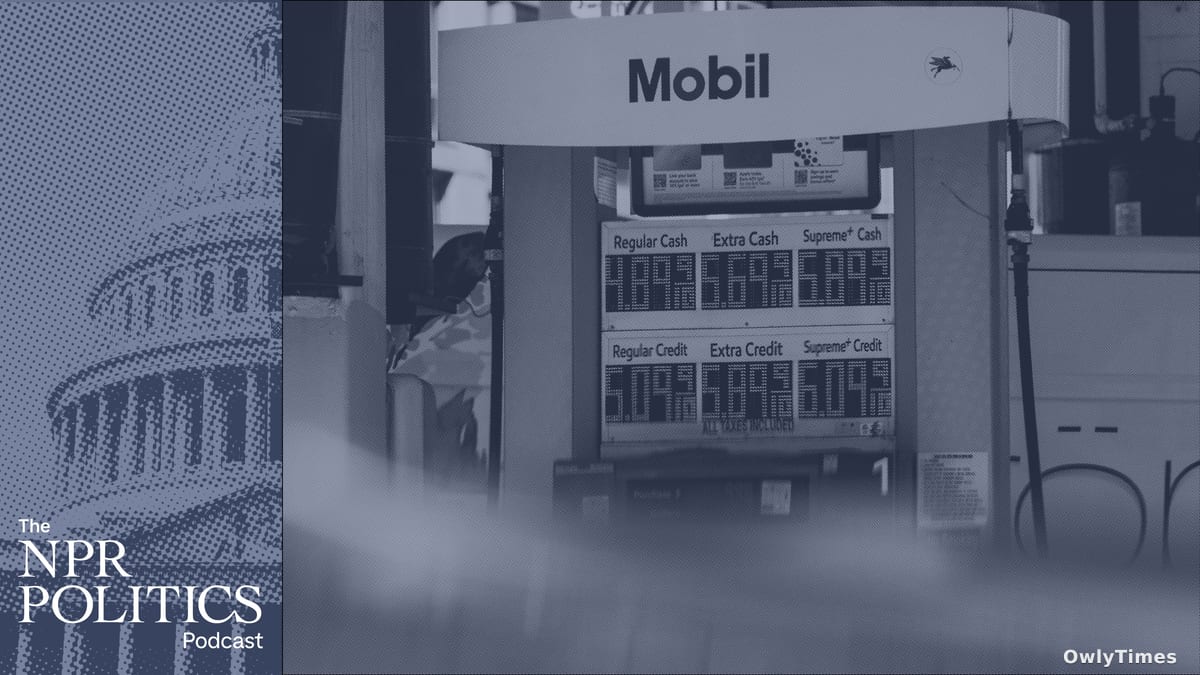

The escalating conflict between the United States and Iran isn’t simply a geopolitical crisis; it’s a calculated risk by the Biden administration to recalibrate American influence in the Middle East through economic pressure, a strategy with potentially significant, and politically fraught, domestic consequences. The immediate impact – roiling global oil markets – is a deliberate lever, intended to weaken the Iranian regime’s financial capacity while simultaneously testing the resilience of the American economy and, crucially, the public’s tolerance for increased energy costs in an election year. This isn’t a spontaneous escalation, but a resumption of a decades-old playbook, updated for a world grappling with energy independence and shifting alliances.
The Price of Projection: Economic Fallout and Political Vulnerability
The discussion on NPR’s Politics Podcast, featuring correspondents Miles Parks, Scott Horsley, and Domenico Montanaro, largely focused on the tangible economic effects – the potential for higher gasoline prices and broader inflationary pressures. However, the podcast’s framing, while accurate, underplays the strategic intent behind accepting these risks. A sustained increase in oil prices, even a modest one, functions as a tax on American consumers, disproportionately impacting lower and middle-income households. This is a politically dangerous calculation, particularly as Biden seeks re-election. The administration is betting that voters will attribute rising costs to external factors – Iranian aggression – rather than to the administration’s policies. This mirrors the Carter era, where the Iranian hostage crisis and subsequent oil shocks contributed significantly to his defeat in 1980. The difference now is a far more sophisticated understanding of the interconnectedness of global energy markets and the potential for targeted sanctions to achieve specific political outcomes.
The podcast correctly points out the broader economic implications beyond the gas pump. Increased oil prices feed into transportation costs, impacting the price of goods across the supply chain, and potentially slowing economic growth. While the US has achieved greater energy independence than in the 1970s – producing roughly 12.3 million barrels per day in 2023, according to the Energy Information Administration – it remains vulnerable to global price fluctuations. The US still imports approximately 8.5 million barrels per day, meaning external shocks directly translate to domestic costs. This vulnerability is exacerbated by the administration’s simultaneous push for a transition to renewable energy, a policy that, while laudable in its long-term goals, creates short-term anxieties about energy security and affordability.
Based on the original NPR report.
The Electoral Calculus: Appealing to Resolve vs. Pocketbooks
The timing of this escalation, coinciding with an election year, is not accidental. Montanaro’s analysis on the podcast highlights the potential for this crisis to become a central issue in the campaign. The administration is attempting to frame the conflict as a demonstration of American resolve on the world stage, appealing to voters who prioritize national security. This is a classic strategy – rallying support around the flag during times of crisis. However, the success of this strategy hinges on the public’s willingness to accept economic hardship in the name of geopolitical objectives. The podcast acknowledges this tension, but doesn’t fully explore the potential for a backlash if gasoline prices spike significantly before November. A sustained price increase of even 50 cents per gallon could erode Biden’s support among key demographics, particularly swing voters.
Who benefits and who loses in this scenario? The Biden administration hopes to benefit from a perception of strength and leadership, potentially bolstering its foreign policy credentials. Oil-producing states outside of Iran, such as Saudi Arabia and the United Arab Emirates, also stand to benefit from increased production and higher prices. Conversely, American consumers, particularly those with lower incomes, lose through higher energy costs. The Iranian regime loses through economic pressure, but may also gain domestic legitimacy by portraying the US as an aggressor. The podcast, produced by Casey Morell and Bria Suggs and edited by Rachel Baye, accurately identifies these immediate consequences, but doesn’t delve into the secondary effects on allied nations reliant on stable energy supplies.
Historical Echoes: Suez, Oil Embargoes, and the Limits of Leverage
The current situation bears a striking resemblance to the 1956 Suez Crisis, where the US, while ostensibly neutral, used economic pressure – withholding financial aid – to compel Britain, France, and Israel to withdraw from Egypt. In both cases, a strategic calculation involved leveraging economic tools to achieve political objectives, with the understanding that domestic costs would be incurred. Similarly, the 1973 oil embargo, imposed by OPEC in response to US support for Israel during the Yom Kippur War, demonstrated the vulnerability of the US economy to disruptions in oil supply. The key difference today is the US’s greater energy independence, but the underlying principle remains the same: control over energy resources is a powerful geopolitical weapon. Muthoni Muturi, as executive producer, oversaw a discussion that touched on these economic realities, but didn’t fully connect them to the historical precedents that illuminate the administration’s strategic thinking.
The podcast’s focus on the immediate economic impact is understandable, but it overlooks the broader geopolitical implications. The US is attempting to reassert its dominance in the Middle East, countering the growing influence of China and Russia. This is a long-term strategic objective, and the conflict with Iran is merely one component of a larger effort to reshape the regional power balance. The question now is whether the administration can manage the economic fallout and maintain public support long enough to achieve its objectives.
The political chess move to watch next isn’t a military escalation, but the administration’s response to potential OPEC+ production cuts. If Saudi Arabia and Russia, sensing an opportunity, reduce output to further drive up prices, will the Biden administration risk a direct confrontation with its allies to stabilize the market, or will it accept the economic consequences and double down on its strategy of pressure? The answer to that question will reveal the true extent of its commitment – and the limits of its leverage.