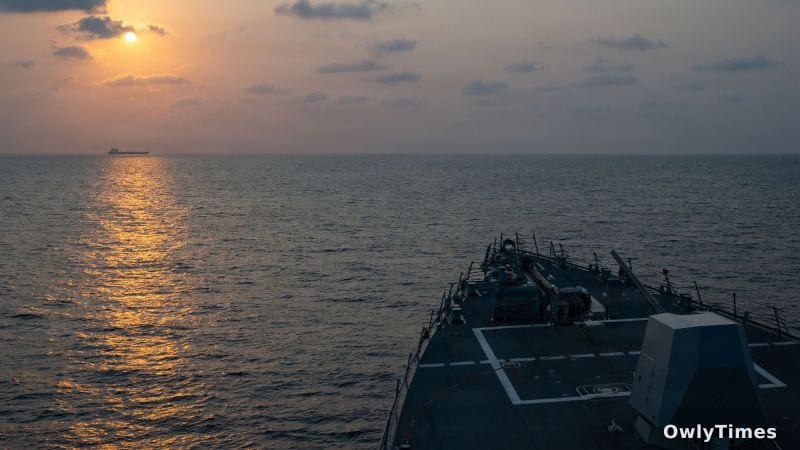

President Donald Trump’s maritime blockade represents a high-stakes bet on a long-standing Washington hypothesis: that the application of overwhelming American economic force will inevitably shatter the Iranian theocracy. By strangling Tehran’s oil exports and critical imports, the White House aims to engineer a societal collapse so total that the regime will be forced to renounce its nuclear program. This strategy relies on the assumption that even a radical state is ultimately beholden to the same material realities as a Western democracy—access to food, energy, and employment.
The strategic calculus here is clear: the administration seeks to achieve decisive leverage without the political and human costs associated with ground invasions or inconclusive aerial bombing campaigns. Who benefits? The White House gains a mechanism for exerting maximum pressure while attempting to restore the economic influence lost when Iran shuttered the Strait of Hormuz. Who loses? The burden falls on both the Iranian public, now facing rampant inflation and severe shortages, and the American voter, who is beginning to absorb the domestic fallout of the conflict.
The internal data suggests the regime in Tehran is under unprecedented strain. According to reporting from The Wall Street Journal, the costs of the conflict have already resulted in a million unemployed, an internet blackout that has decimated the online economy, and the near-total disappearance of staples like red meat. Mohsen Paknejad, Iran’s Oil Minister, has publicly urged citizens to slash energy consumption, while the government has mandated a 70% reduction in electricity use for state offices after 1 p.m. While CNN reports that some US officials believe the Iranian economy has only days or weeks of viability remaining, this view assumes that the regime’s survival instinct will prioritize economic stability over its foundational ethos of resistance.
Historical precedent offers a cautionary tale regarding this reliance on economic triggers. As Alex Vatanka, a senior fellow at the Middle East Institute, noted, this blockade is uncharted territory, surpassing even the economic pressures experienced during the Iran-Iraq war. However, the assumption that economic pain translates directly into political capitulation ignores the regime’s 47-year history of prioritizing revolutionary survival over public welfare. Much like the miscalculation that followed the killing of Supreme Leader Ali Khamenei—which failed to trigger the expected surrender—the administration’s current confidence mirrors a recurring Washington tendency to project American rationalism onto a society that has historically responded to crisis with repression rather than concession.
The political volatility of this move is further sharpened by the domestic calendar. With presidential approval ratings at historic lows and Republicans facing a difficult path in the upcoming midterm elections, the timeline for success is tightening. The administration is essentially racing against the domestic consequences of the war, specifically the persistence of $4-plus gasoline and the threat of rising inflation. If the blockade does not yield a rapid, visible victory, the narrative of a "dead economy" in Iran may soon be overshadowed by the economic frustration of the American electorate.
The next indicator to watch will be the volume and organization of anti-regime protests within Iran. As Vatanka pointed out, the regime’s stability will ultimately be tested by whether the citizenry can overcome the state’s apparatus of repression. Whether this pressure leads to a collapse or simply reinforces the regime’s resolve will determine if Trump has found the "silver bullet" that has eluded his predecessors for nearly half a century.





