
Beyond the Red Glow: Understanding Lunar Eclipses and Seasonal Shifts
The upcoming March sky offers a compelling reminder of the dynamic interplay between Earth, the Moon, and the Sun – events often framed as beautiful spectacles, but rooted in precise astronomical mechanics. While headlines herald a “blood moon” and a close encounter of Venus and Saturn, a deeper look reveals how these phenomena aren’t simply visual treats, but opportunities to understand the forces shaping our planet and our perception of time itself. This month’s celestial events, culminating in the vernal equinox, provide a natural laboratory for observing and appreciating the predictable, yet endlessly fascinating, rhythms of the cosmos.
Based on the original science.nasa.gov report.
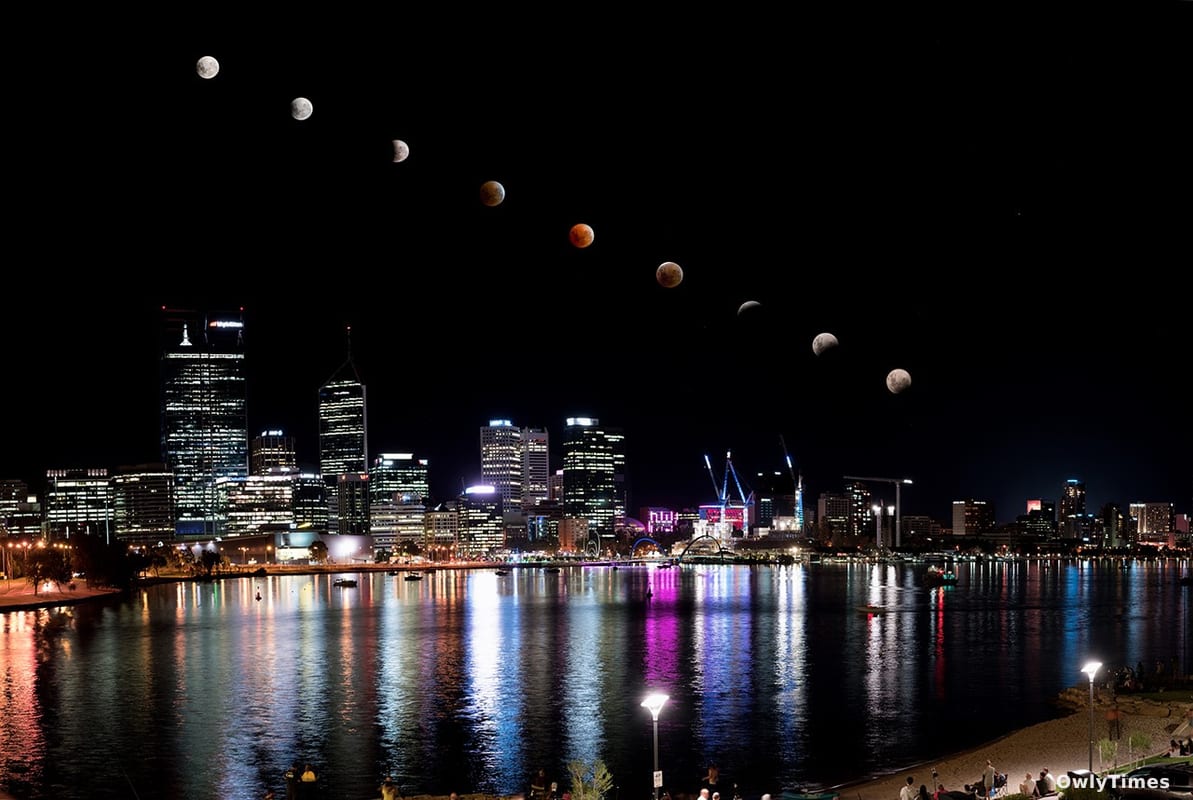
On March 3rd, much of the world will witness a total lunar eclipse. The popular term “blood moon” evokes a dramatic image, and rightly so – the Moon will indeed appear a striking reddish hue. However, it’s crucial to understand why this happens. A lunar eclipse occurs when the Earth passes directly between the Sun and the Moon, casting its shadow onto the lunar surface. Unlike a solar eclipse, where the Moon blocks our view of the Sun, a lunar eclipse is readily visible from anywhere on Earth experiencing nighttime during the event. The red color isn’t due to the Moon emitting red light, but rather the result of Earth’s atmosphere scattering sunlight. Shorter wavelengths of light – blues and violets – are scattered away, while longer wavelengths – reds and oranges – are refracted, or bent, towards the Moon, giving it that characteristic glow. This effect is similar to why sunsets appear red. The eclipse will be particularly well-positioned for observers in eastern Asia and Australia in the evening, transitioning across the Pacific and becoming visible in North and Central America, as well as western South America, in the early morning hours.
The evening of March 8th brings a different kind of celestial alignment: a conjunction of Venus and Saturn. To the casual observer, these two bright objects will appear remarkably close together in the western sky shortly after sunset. They’ll be separated by only about one degree – roughly the width of a finger held at arm’s length. It’s important to remember, however, that this proximity is a line-of-sight effect. Venus and Saturn are, in reality, hundreds of millions of miles apart. A conjunction simply means they happen to occupy similar positions in our sky from Earth’s perspective. These events were historically significant for navigation and calendar-keeping, and continue to offer a tangible connection to the ways ancient cultures understood the cosmos.
Perhaps the most profound event of March is the vernal equinox on March 20th. Often celebrated as the first day of spring in the Northern Hemisphere and autumn in the Southern Hemisphere, the equinox is a precise astronomical occurrence. It marks the moment when the Sun crosses the celestial equator – an imaginary line in the sky above Earth’s equator – as it travels from south to north. This results in roughly equal amounts of daylight and darkness across the globe, with both hemispheres receiving approximately 12 hours of sunlight. The equinox isn’t a single day, but a moment in time, and its occurrence is fundamental to our calendar system and the cycle of seasons. It’s a reminder that our experience of time is inextricably linked to Earth’s orbit around the Sun.
A Shifting Baseline: Tracking Changes in Equinox Timing
While the vernal equinox consistently occurs around March 20th, it’s not fixed to a specific date. Due to slight variations in Earth’s orbit – a phenomenon known as precession – the equinox is gradually shifting earlier in the calendar year. Over centuries, this shift accumulates, and future generations will experience the equinox on different dates than we do today. This subtle change highlights the dynamic nature of Earth’s movements and the importance of precise astronomical measurements. Currently, the equinox is occurring about 58.6 seconds earlier each year, a change that may seem small but will eventually necessitate adjustments to our calendar.
Limitations to Consider: Visibility and Atmospheric Conditions
It’s important to acknowledge the limitations inherent in observing these events. The visibility of the lunar eclipse, for example, is entirely dependent on clear skies and local weather conditions. Light pollution can also significantly diminish the visibility of the Venus-Saturn conjunction, particularly in urban areas. Furthermore, the perceived brightness and color of the “blood moon” can vary depending on atmospheric dust and cloud cover. These factors underscore the fact that astronomical observations are always filtered through the lens of our terrestrial environment.
Looking ahead, researchers are increasingly focused on using lunar eclipses to study Earth’s atmosphere. By analyzing the wavelengths of light that pass through the atmosphere during an eclipse, scientists can gain insights into its composition and temperature. Similarly, precise measurements of planetary positions during conjunctions contribute to refining our understanding of orbital mechanics and gravitational interactions. But a crucial next step is to develop more accessible tools for citizen scientists to contribute to these observations. Imagine a network of amateur astronomers equipped with standardized instruments, collectively gathering data on atmospheric conditions during lunar eclipses – a project that could significantly enhance our understanding of this complex system. Will we see a surge in public engagement with astronomy as these events become more widely publicized, and will that engagement translate into valuable scientific data? That’s a question worth watching for this March, and beyond.





