
The Quiet Power of Defiance: Decoding Mary Ann Borgeson’s Three Decades in Douglas County Politics
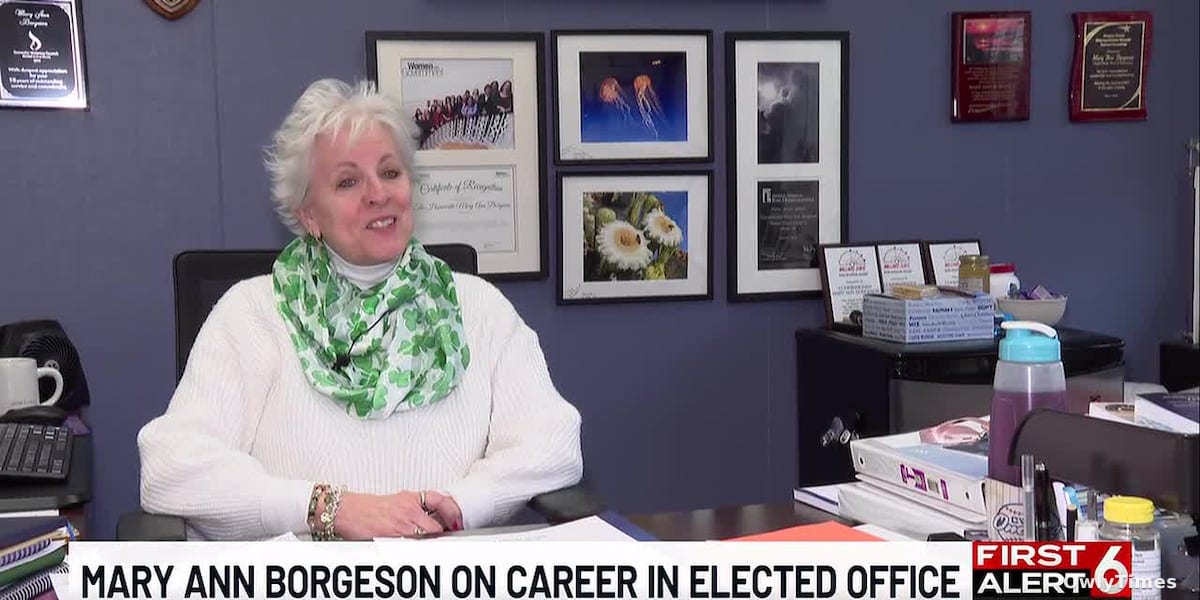
The impending retirement of Mary Ann Borgeson from the Douglas County Commission isn’t simply the departure of a long-serving official; it’s the closing of a chapter defined by a calculated, yet often understated, defiance of party orthodoxy. While framed as a personal decision to spend more time with family, Borgeson’s exit – coinciding with Jean Stothert’s recent electoral defeat as Omaha Mayor – reveals a broader trend: a shifting landscape where pragmatic local governance is increasingly at odds with the nationalizing forces reshaping Republican politics. Borgeson’s longevity wasn’t built on unwavering loyalty, but on a willingness to publicly challenge her own party when she deemed it necessary, a strategy that simultaneously secured her base and alienated the more rigid elements within the Nebraska GOP.
Borgeson’s entry into politics in 1994, spurred by her husband’s suggestion to run for an open seat, is a familiar narrative for women entering traditionally male-dominated fields. However, her subsequent rise to become the first woman elected chairwoman of the commission, and her sustained 32-year tenure, speaks to a political acumen often overlooked in accounts focused on national figures. The key wasn’t charisma or grandstanding, but a consistent application of localized problem-solving, even when it meant contradicting the prevailing party line. Her outspoken opposition to policies she considered unjust – specifically citing her advocacy for mental health services and her forceful debunking of voter fraud claims – wasn’t accidental. It was a deliberate positioning, appealing to a moderate electorate within Douglas County who valued results over rigid ideology.
This approach echoes the strategies employed by earlier generations of female politicians who navigated the constraints of gender and party expectations. Consider the career of Margaret Chase Smith, the first woman to serve in both houses of the U.S. Congress. Smith, a Republican from Maine, gained prominence in the 1950s by publicly challenging Senator Joseph McCarthy during the Red Scare, a move that required significant political courage and a keen understanding of public sentiment. Like Borgeson, Smith prioritized pragmatic governance and a commitment to due process over blind adherence to party dogma. Both women understood that maintaining relevance required a degree of independence, even if it meant facing internal opposition. The difference, of course, is scale: Smith operated on a national stage, while Borgeson’s influence was concentrated within Douglas County, allowing for a more nuanced and sustained approach to defiance.
Reporting from wowt.com informs this analysis.
The issue of mental health advocacy, repeatedly highlighted by Borgeson, is particularly revealing. Her insistence on destigmatizing mental illness and ensuring access to care wasn’t simply a matter of compassion; it was a strategically sound position in a county grappling with rising healthcare costs and a growing need for social services. By framing mental health as a public health issue, rather than a partisan one, Borgeson broadened her appeal and secured support from a diverse coalition of stakeholders. This mirrors the tactics used by public health officials during the early stages of the AIDS epidemic in the 1980s, who successfully navigated political opposition by emphasizing the scientific and medical aspects of the crisis. The common thread is a focus on demonstrable outcomes and a willingness to bypass ideological roadblocks.
Borgeson’s assessment that politics has become “too toxic” is not a lament about a changing political climate, but a strategic calculation. The current environment, characterized by hyper-partisanship and relentless attacks, diminishes the value of the pragmatic, consensus-building approach that defined her career. Her decision to retire now, rather than attempt to navigate this new terrain, suggests a recognition that her style of politics is increasingly unsustainable. Who benefits from her departure? Likely, the more conservative factions within the Nebraska Republican party, who may see an opportunity to reshape the Douglas County Commission in their image. Who loses? The moderate voters who consistently supported Borgeson, and who may find themselves without a champion for pragmatic, locally-focused governance. The political chess move to watch next is whether a successor emerges who attempts to fill Borgeson’s shoes – embracing a similar independent streak – or if the commission shifts decisively to the right, signaling a broader realignment within Douglas County politics.





