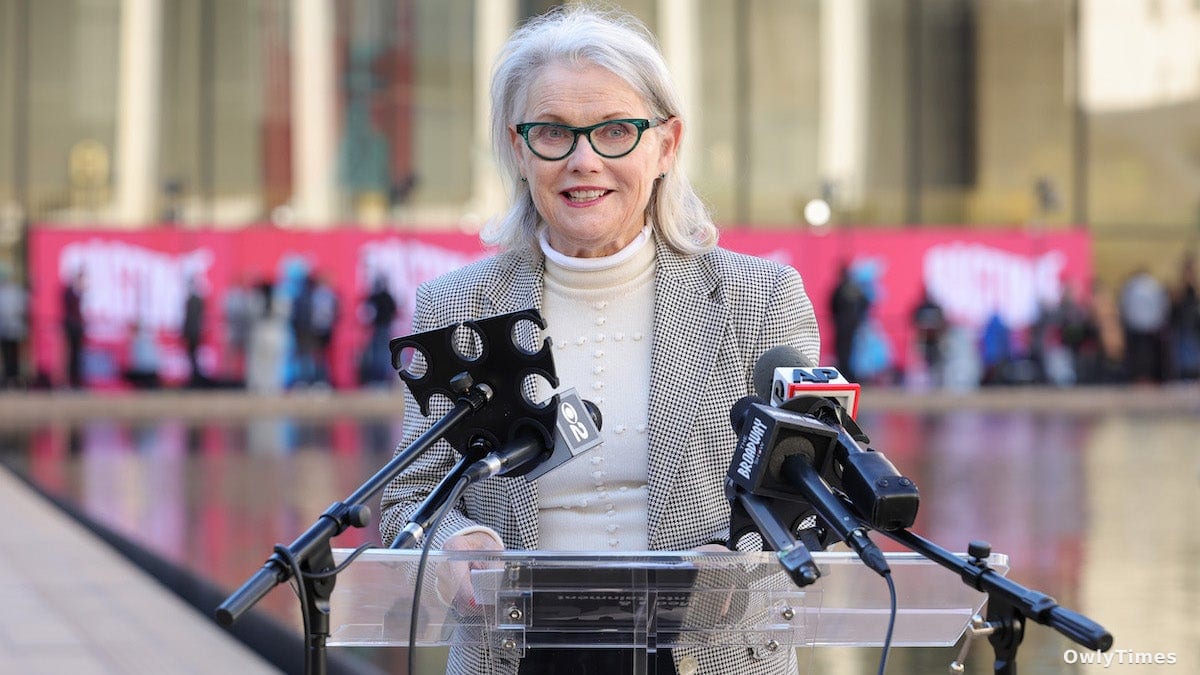

The chipped Formica of a diner booth felt cold under Pat Swinney Kaufman’s hands as she scrolled through congratulatory texts on Friday morning. Not a celebratory breakfast, exactly, but a quiet moment before officially handing the keys to the NYC Mayor’s Office of Media and Entertainment to Rafael Espinal. Kaufman, a North Carolina girl who built a career chasing the cinematic glow of New York, was stepping down, leaving behind a legacy not just of film permits and tax credits, but of a city grappling with how to stay the creative capital of the world. It’s a question that feels particularly urgent now, as the industry recalibrates after a period of unprecedented disruption, and the very definition of “creative work” is being rewritten by AI and the gig economy.
Kaufman’s departure, framed as a planned retirement, arrives at a pivotal moment. The city’s creative industries, a behemoth responsible for over 440,000 jobs and a staggering $150 billion annual economic impact in 2019 – a figure that’s still being fully assessed post-pandemic and strikes – are facing a complex landscape. While Kaufman proudly points to laying “the foundation to make New York City the most stable and reliable location to film,” that stability feels fragile. The 2023 strikes by the Writers Guild of America and SAG-AFTRA exposed vulnerabilities in the production pipeline, and the subsequent rush to resume filming elsewhere highlighted the competitive pressure from states like Georgia and Louisiana, which offer more aggressive financial incentives. New York’s incentives, while improved under Kaufman’s watch, still lag behind.
Beyond the headlines about tax credits and production volume, Kaufman’s tenure was marked by a deliberate effort to broaden the definition of “media and entertainment.” The launch of the “Made in NY” Fund for New Theatrical Works, the inaugural NYC Video Game Festival (drawing 15,000 attendees), and the “NYC Field Guide” series on NYC Life – a surprisingly robust offering covering everything from housing to transit – signaled a recognition that the creative economy isn’t just about Hollywood on the Hudson. It’s about the independent bookstore owner in Brooklyn, the digital artist in the Bronx, the musician busking in the subway. This expansion, however, runs into a fundamental tension: how does a city government effectively support such a diverse and often precarious ecosystem?
See the original thewrap.com story for the full account.
The appointment of Rafael Espinal, previously the Executive Director of the Freelancers Union, is a clear signal. New York City has 1.3 million freelancers, roughly 34% of its workforce, many concentrated in these creative fields. Espinal’s focus on protecting and empowering independent workers is a direct response to the precarity that defines so much of the modern creative landscape. He understands that simply attracting big-budget productions isn’t enough; the city needs to foster an environment where individual artists and small businesses can thrive. But the Freelancers Union, while a powerful advocate, has also faced criticism for its reliance on membership fees and its limited ability to address systemic issues like affordable healthcare and housing – challenges that disproportionately impact creatives. Espinal’s success will hinge on translating advocacy into concrete policy changes.
Kaufman’s legacy isn’t just about what she did, but about the questions she leaves unanswered. Can New York City truly compete with states offering more lucrative financial incentives? Can it balance the needs of large-scale productions with the survival of its independent creative community? And, perhaps most importantly, can it adapt to a future where AI is rapidly reshaping the very nature of creative work, potentially displacing jobs and challenging traditional notions of authorship? The city’s creative industries are its “heart and soul,” as Kaufman often said, but a heart needs more than just a steady beat – it needs constant care, innovation, and a willingness to confront the uncomfortable truths about its own vulnerability. The question now is whether Espinal, and the city he leads, are ready to provide it.