
A Widening Shadow: Boston’s Life Expectancy Gap Demands More Than Urgency
The release of Boston’s “Closing the Gap” report isn’t simply a data point; it’s a stark illustration of a failure to deliver on the promise of equitable health outcomes. While public health officials routinely track life expectancy, the accelerating disparity between Black residents and their neighbors isn’t a new phenomenon, but its rate of increase is alarming. The report details how a 3.3-year life expectancy gap in 2013 has more than doubled to 6.6 years by 2024. This isn’t about individual lifestyle choices, as some narratives might suggest, but a quantifiable consequence of systemic inequities woven into the fabric of the city. The current figures show Black Bostonians living an average of 76.2 years, compared to 82.2 years for other residents – a difference that translates to years of lost life, lost potential, and a deeply fractured social contract.
Source material: boston.com.
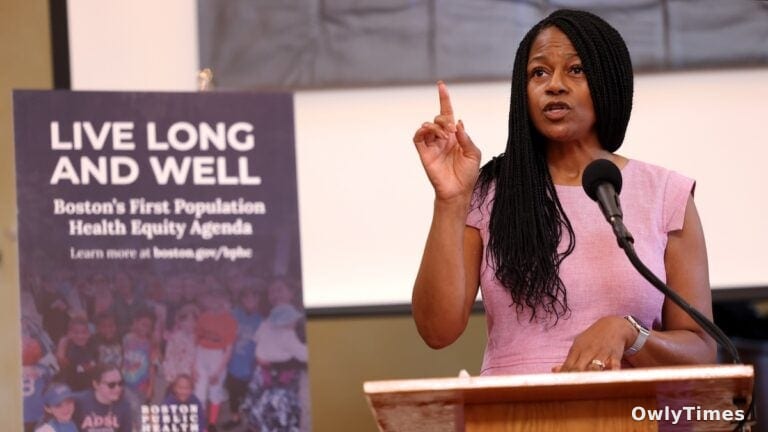
The methodology employed by the Boston Public Health Commission (BPHC) is crucial to understanding the report’s weight. This isn’t a survey relying on self-reported data, but an analysis of mortality records, allowing for a more objective assessment of life expectancy. The BPHC, under the leadership of Dr. Bisola Ojikutu, Commissioner of Public Health and Executive Director, specifically focused on isolating life expectancy within the Black community, a level of granularity often missing in broader public health assessments. This targeted approach reveals not only the overall gap, but also the specific vulnerabilities within that population. The report highlights that between 2022 and 2024, Black men lived 9.3 fewer years than other men in Boston, and Black women lived 6.4 fewer years than their counterparts. These aren’t abstract numbers; they represent real people, families, and communities bearing the brunt of unequal access to resources and care.
The report identifies unintentional overdose, cancer, and cardiometabolic disease as the leading causes of premature mortality for Black Bostonians. However, the inclusion of homicide as a significant factor for Black men – a cause less prominent in other demographic groups – underscores the impact of violence and social determinants of health. This isn’t simply a healthcare problem; it’s a problem rooted in economic opportunity, housing stability, and community safety. The $2 million in combined investments announced alongside the report – $1 million for Black men’s health and $1 million with the Dana-Farber Cancer Institute – are positive steps, but represent a relatively small fraction of the resources needed to address the scale of the problem. While initiatives like the Black Men’s Health Activation Summit and the Mayor’s Live Long and Well Advisory Council are valuable, their impact will be limited without a more comprehensive and sustained commitment to dismantling systemic barriers.
It’s important to note that the report’s timeframe, spanning 2013-2024, encompasses significant societal shifts, including the COVID-19 pandemic, which disproportionately impacted Black communities. While the report doesn’t explicitly quantify the pandemic’s contribution to the widening gap, it’s reasonable to assume it played a role. Furthermore, the report focuses on Boston proper, and doesn’t account for potential variations within different neighborhoods. The Live Long and Well agenda does target Dorchester, Roxbury, and Mattapan – neighborhoods with the greatest health disparities – with $5 million in grants, but a more granular analysis of disparities within these communities is needed.
Limitations to consider include the inherent challenges of attributing causality in complex public health issues. While the report establishes a correlation between race and life expectancy, it doesn’t definitively prove that race causes the disparity. Rather, race serves as a proxy for the cumulative effects of systemic racism and disadvantage. The next crucial research steps involve longitudinal studies that track the health outcomes of Black Bostonians over time, coupled with qualitative research that explores the lived experiences and perspectives of individuals within the community. We need to move beyond simply identifying the problem to understanding the mechanisms driving it. Specifically, future research should investigate the effectiveness of targeted interventions, such as culturally competent healthcare programs and economic empowerment initiatives, in closing the life expectancy gap. Will the current investments be sufficient to reverse this trend, or will Boston continue to witness a widening shadow of health inequity? The answer will depend not only on the allocation of resources, but also on a fundamental shift in priorities and a genuine commitment to racial justice.





