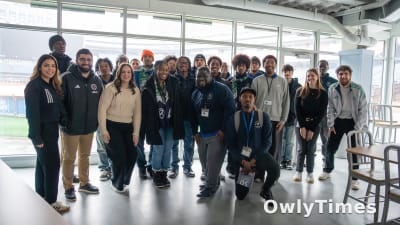

The scent of hot dogs and freshly cut grass hung in the air, a familiar aroma for anyone who’s spent a February afternoon dreaming of warmer days at Gillette Stadium. But on February 18th, the usual game-day energy was different. It wasn’t the roar of the crowd echoing through the stands, but the quiet hum of curiosity as over 20 students from Boston Public Schools navigated the hallowed halls of the New England Revolution’s home, not as spectators, but as potential architects of the sports world itself. This wasn’t just a field trip; it was a deliberate crack in the perception of who gets to have a career in professional sports, and a glimpse into a growing movement to diversify opportunity beyond the playing field.
Beyond the Field: Unpacking the Hidden Job Market
For decades, the dream of “making it” in sports has been narrowly defined: become an athlete. The reality, however, is that for every Lionel Messi or Patrick Mahomes, there’s an army of professionals working behind the scenes – the digital strategists, the fan engagement specialists, the hospitality managers, the communications teams – who keep the multi-billion dollar sports industry running. The Boston Public Schools mentorship program, spearheaded by Jermaine Tulloch, director of equitable student programs, is actively dismantling the myth that a sports career requires athletic prowess. Tulloch’s inspiration stemmed from a personal connection: catering lunch for the Revolution with his mother’s Caribbean food business, Family Affair, last season. He noticed a gap – a lack of visibility for students into the breadth of opportunities available. “I think so many times our students think if they aren’t good enough to make it to the field professionally, then that’s it,” Tulloch explained. “But there are so many other careers in sports, and they learned that today.” This is a crucial point in a landscape where the sports industry is booming – revenue reached $643.8 billion globally in 2022, a 14.4% increase from the previous year, according to a report by Deloitte – yet access to those economic benefits remains unevenly distributed.
Original reporting: revolutionsoccer.net.
A Generational Shift in Career Aspirations
The impact of the visit was palpable. Dairon Mercedes, a junior at Boston Latin School, confessed, “I had no idea how many jobs you can be involved with in the sports industry. You can do so many things.” This sentiment echoes a broader generational shift in career aspirations. Gen Z, in particular, prioritizes purpose and passion in their work, and the energy of a sports team – the sense of community, the excitement, the shared identity – can be incredibly appealing. Samuel Ekweanya, a sophomore at New Mission High School, articulated this perfectly: “It’s provided me a way to know what I want to do in the future…I wasn’t really thinking about professional sports as a career before coming here, but now I’m giving it some thought. I like the ability to be creative and I like sports, so there is something I might want to do.” This isn’t simply about filling jobs; it’s about tapping into a talent pool that has historically been overlooked, and fostering a more diverse and innovative workforce. The program’s success is also a testament to the power of mentorship – providing students with direct access to professionals who can share their experiences and offer guidance.
The Revolution’s Role: Investing in the Next Generation
The New England Revolution’s willingness to open its doors wasn’t purely altruistic. The club recognized a reciprocal benefit. As Tulloch noted, the experience left employees with “a renewed sense of pride.” In an era where corporate social responsibility is increasingly scrutinized, initiatives like this demonstrate a genuine commitment to community engagement. Beyond the positive PR, however, lies a strategic investment in the future. Cultivating relationships with local schools and fostering a pipeline of talent ensures a steady stream of passionate and dedicated individuals who can contribute to the Revolution’s long-term success. The club isn’t just welcoming future fans; they’re cultivating future employees, potentially shaping the very culture of the organization. This is a model other professional sports teams would be wise to emulate, particularly as they grapple with issues of diversity and inclusion.
Passion as a Professional Compass
Perhaps the most powerful takeaway from the day wasn’t a specific job title or skill set, but a simple piece of advice: “do something you love.” Samuel Ekweanya recounted how the Revolution staff seemed to genuinely enjoy their work, “spreading that [passion]…It was nice to see people who were so passionate.” In a world often defined by hustle culture and the pursuit of prestige, this message is particularly resonant. It’s a reminder that career fulfillment isn’t solely about financial reward, but about finding work that aligns with your values and ignites your enthusiasm. As the sports industry continues to evolve – with the rise of esports, the increasing influence of data analytics, and the growing demand for immersive fan experiences – the need for passionate and creative professionals will only intensify. The question now is: will the industry proactively create pathways for diverse talent to fill those roles, or will it continue to rely on the same limited pool of candidates? And more importantly, will other teams follow the Revolution’s lead and actively invest in the next generation of sports professionals, ensuring that the dream of a career in sports is accessible to all?

