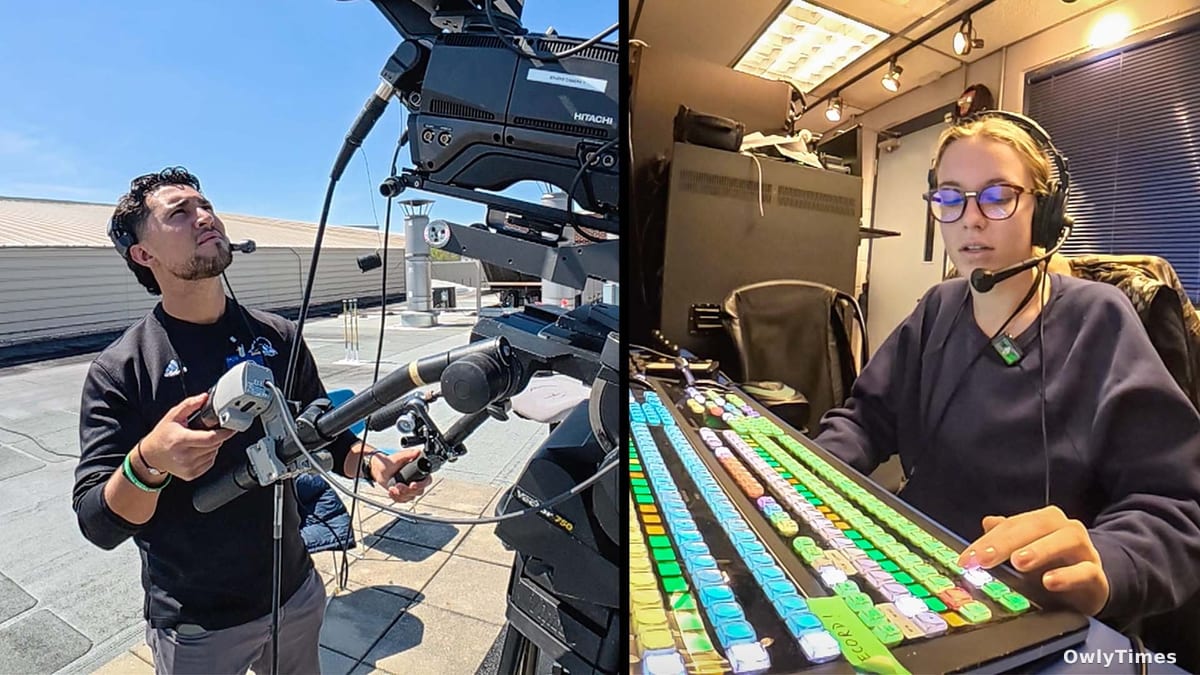

The hum of a live broadcast control room is often mistaken for chaos, but at the University of Delaware, it sounds like a synchronized heartbeat. On a Wednesday, April 29, 2026, the Hens All Access crew isn't just filming a game; they are executing a high-stakes production where the margin for error is nonexistent. Beneath the glow of monitors, students toggle between roles as directors, technical directors, camera operators, and graphics designers, proving that the most important sport being played on campus isn't always the one on the field.
The Classroom Behind the Camera
In an era where media consumption has shifted toward constant, high-definition accessibility, these students are gaining professional-grade experience long before they hold a diploma. By broadcasting athletic events live on ESPN+, the program forces participants to confront the reality of the modern broadcast industry: agility is the new currency. Unlike traditional lecture halls, this environment demands that a student master multiple technical disciplines simultaneously.
This multi-hyphenate approach to media production is a direct response to a shrinking job market that prizes versatility over singular expertise. When a student learns to switch between camera operation and graphics design, they aren't just padding a resume; they are learning the architecture of visual storytelling. The pressure of a live broadcast environment serves as a rigorous proving ground, mirroring the professional demands of major sports networks where technical proficiency is non-negotiable.
Rowing Toward New Horizons
The spirit of collaborative ambition extends far beyond the production booth in Newark. In Philadelphia, the Discovery Pathways Dragon Boat program is channeling that same focus into the water. With the rhythmic chant, "Whose boat? Our boat!" echoing across the river, the team is currently chasing the formidable goal of reaching a world championship.
This isn't just about athletics; it is about the intersection of community building and personal aspiration. Whether they are coordinating a live feed or paddling in unison, these students are operating under the same principle: individual roles are vital, but the collective output is what defines the success of the mission. The program serves as a tangible reminder that giving students the platform to dream beyond their immediate surroundings can change the trajectory of their development.
A Blueprint for Future Media
The industry is watching programs like these closely because they represent the next generation of content creators who are already battle-tested. As digital platforms continue to dominate the sports media landscape, the technical literacy fostered at the University of Delaware becomes a significant competitive advantage. The students are effectively building a bridge between theoretical learning and the high-velocity world of real-time broadcasting.
The next reading of graduation placement statistics for this cohort will show whether this hands-on, multi-role training model provides the necessary leverage to secure long-term careers in the competitive broadcast market. For now, the work continues in the control room and on the water, where the process of building a team is proving to be just as impactful as the final score. As the 2026 academic cycle continues, the persistence of these programs highlights a shift toward experiential learning that prioritizes raw, on-the-ground experience over standard academic progression.