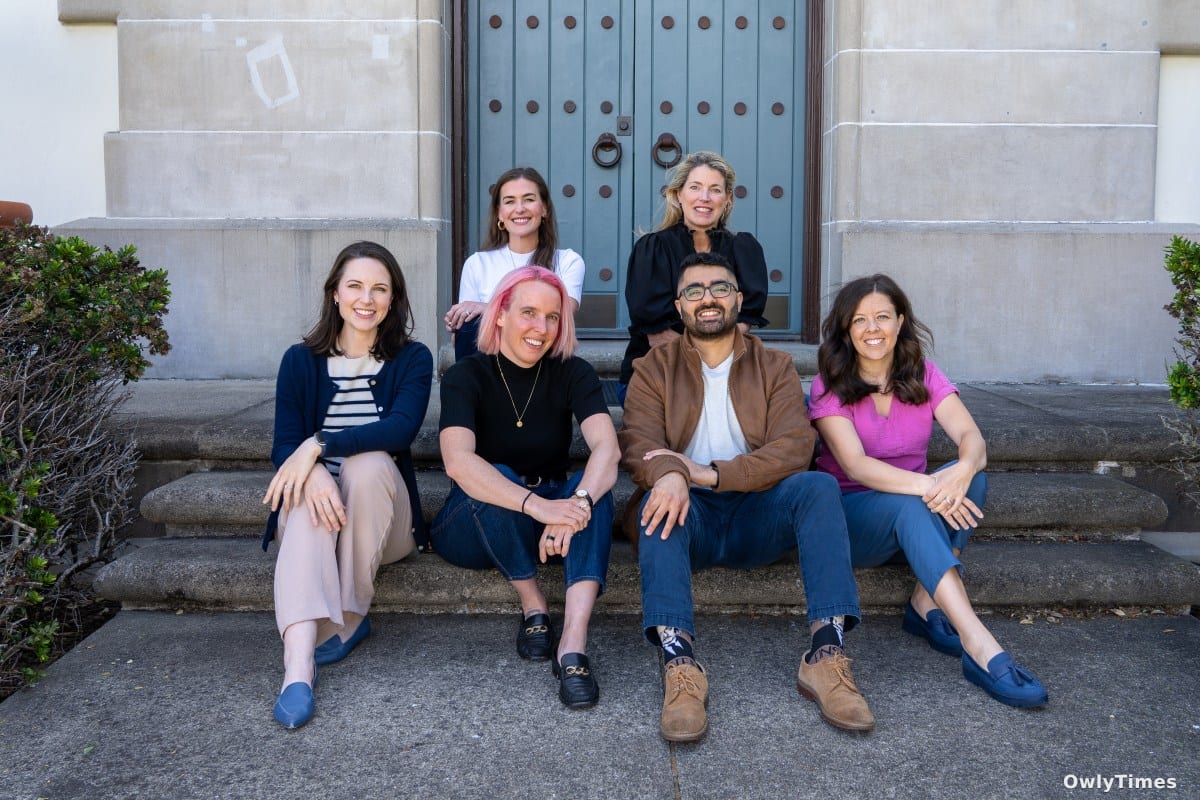

The Shift from “Big Data” to “Smart Data” in Scientific Innovation
The announcement that Breakout Ventures has secured $114 million for its Fund III isn’t simply another venture capital raise; it’s a signal of a fundamental recalibration in how scientific progress is being funded and, crucially, achieved. While the promise of “AI transforming everything” has become a ubiquitous headline, this fund specifically targets the application of artificial intelligence to the notoriously complex fields of biology and chemistry. This isn’t about automating existing lab processes – it’s about enabling entirely new avenues of scientific inquiry that were previously computationally impossible, and the speed with which this fund closed, despite a longer-than-average 18-month raise, suggests significant investor confidence in this specific approach. The question isn’t if AI will impact science, but whether a focused, early-stage investment strategy like Breakout’s will prove more effective than broader, later-stage applications.
This article draws on reporting from TechCrunch.
Breakout Ventures’ trajectory is rooted in a deliberate strategy. Spun out of a Thiel Foundation grant program in 2016, the firm has steadily increased its fund size – $60 million in 2017 for Fund I, $112.5 million in 2021 for Fund II, and now $114 million for Fund III. This incremental growth isn’t accidental. It reflects a learning process, a refinement of their investment thesis, and a growing track record. What’s particularly noteworthy is the consistency of their focus. Unlike some venture firms that dabble in AI across multiple sectors, Breakout remains laser-focused on the “complexity of science,” as articulated by managing director Lindy Fishburne to TechCrunch. This specialization allows them to develop a deeper understanding of the specific challenges and opportunities within these fields, and to identify founders with the unique skillset required to navigate them. The firm has already deployed capital to three companies, planning for at least 20 more investments ranging from $500,000 to $5 million each.
The core idea driving Breakout’s strategy – and the broader trend it represents – is a move beyond simply collecting “big data” in biology and chemistry to generating “smart data.” For decades, scientists have been accumulating vast datasets – genomic sequences, protein structures, chemical compound libraries – but extracting meaningful insights from this data has been a bottleneck. Traditional methods often rely on hypothesis-driven research, where scientists formulate a specific question and then design experiments to test it. AI, particularly machine learning, offers the potential to bypass this limitation by identifying patterns and relationships within the data that humans might miss. This isn’t to say AI will replace scientists, but rather augment their abilities, accelerating the pace of discovery and potentially uncovering entirely new areas of research. Fishburne’s emphasis on finding founders who “understand the need and opportunity” highlights this crucial point: AI is a tool, and its effectiveness depends on the scientific expertise of those wielding it.
However, it’s important to temper enthusiasm with a realistic assessment of the challenges. The application of AI to scientific fields is not without its limitations. Data quality remains a significant hurdle. Biological and chemical data is often noisy, incomplete, and subject to biases. AI algorithms are only as good as the data they are trained on, and flawed data can lead to inaccurate predictions and misleading conclusions. Furthermore, the “black box” nature of some AI algorithms can make it difficult to understand why a particular prediction was made, hindering scientific understanding and potentially raising ethical concerns. The fund’s average check size, while substantial, also suggests a focus on very early-stage companies, meaning a significant portion of these investments may not yield returns for several years, and many may fail altogether.
Looking ahead, the success of Fund III – and the broader trend of AI-driven scientific innovation – will hinge on several key factors. We’ll need to see demonstrable breakthroughs in areas like drug discovery, materials science, and personalized medicine that can be directly attributed to the application of AI. Equally important will be the development of robust methods for validating AI-generated predictions and ensuring the reproducibility of results. The composition of Breakout’s limited partners – including The Kraft Group, Pinegrove Venture Partners, and S-Cubed Capital – suggests a willingness to accept the inherent risks of early-stage investing in a rapidly evolving field. The critical question now is whether these investments will translate into tangible scientific advancements, and whether other venture firms will follow suit, further accelerating the integration of AI into the core of scientific research. Will we see a shift in academic funding models to prioritize AI-assisted research, or will the bulk of innovation remain concentrated in the private sector?