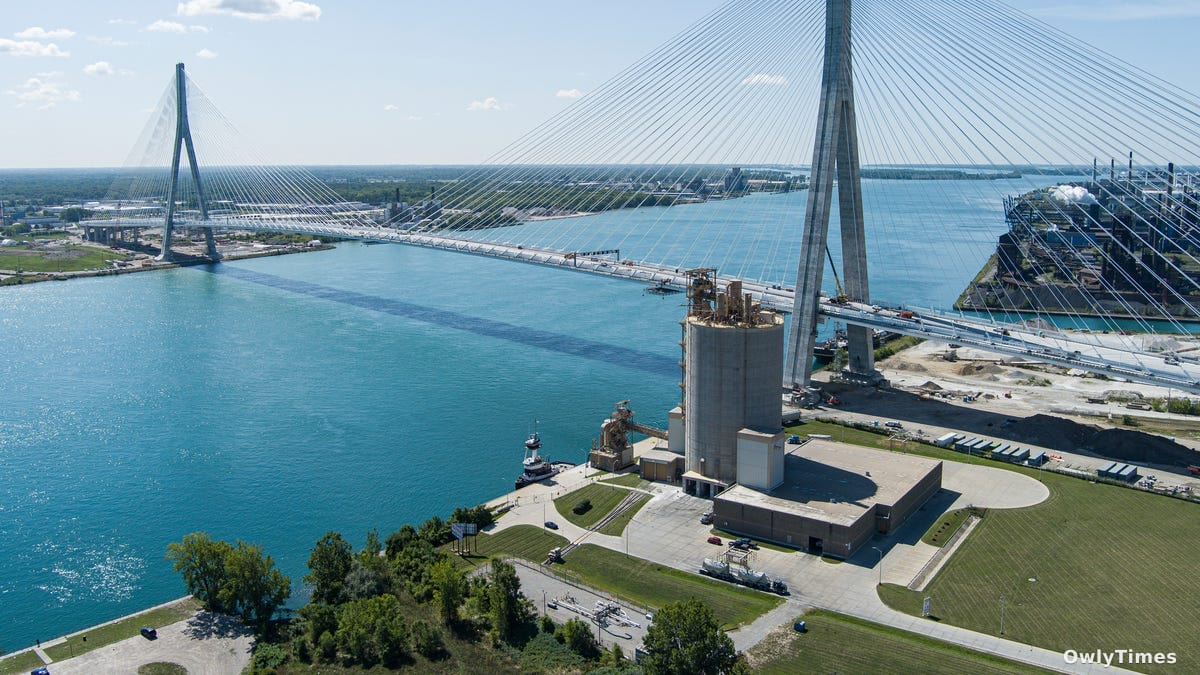

The strategic calculation is clear: the Gordie Howe International Bridge isn’t simply about easing congestion between the US and Canada, it’s a pressure point in a complex web of economic interests and political loyalties. The escalating rhetoric surrounding its opening – from President Trump’s threat to block it, to Vice President Vance’s accusations of Canadian exploitation, and a new Democratic attack ad targeting Republican Senate candidate Mike Rogers – reveals a deliberate effort to weaponize infrastructure for partisan gain. This isn’t a debate about logistics; it’s about who controls a vital economic artery and the rents it generates.
The core of the conflict lies in the impending disruption to the Ambassador Bridge, a privately-owned crossing currently enjoying what Michael Greiner, an associate professor of management, terms “monopoly rents.” The new bridge, with its significantly lower toll rates – $5.75 for passenger vehicles versus the Ambassador Bridge’s $10 – directly challenges that lucrative position. The announced rates, set by the Windsor-Detroit Bridge Authority, aren’t simply competitive; they’re a calculated move to undercut the Ambassador Bridge and force a reevaluation of its pricing structure. This explains the $1 million contribution from Matthew Moroun, whose family owns the Ambassador Bridge, to President Trump’s Make America Great Again super PAC – a clear attempt to secure political protection for a threatened asset. Who benefits and who loses is starkly defined: the Moroun family stands to lose significant revenue, while consumers and businesses stand to gain from lower crossing costs.
The situation echoes historical precedents of infrastructure projects becoming entangled in political maneuvering. Consider the Transcontinental Railroad in the 19th century, where land grants and government subsidies fueled intense lobbying and accusations of corruption as competing interests vied for control of the lucrative railway network. Similarly, the construction of the Interstate Highway System in the 1950s wasn’t solely about improving transportation; it was also about stimulating economic growth in specific regions and bolstering the influence of powerful construction companies. The Gordie Howe Bridge is following a similar trajectory, albeit on a smaller scale, where economic interests are actively shaping the political narrative. The timing of the Democratic ad targeting Mike Rogers, accusing him of “trying to stop” the bridge, is no accident. It’s designed to paint him as aligned with the interests of the Moroun family and out of touch with the economic benefits the bridge could bring.
The political calculus extends beyond direct financial interests. Vice President Vance’s framing of the bridge as a matter of national advantage – accusing Canada of “taking advantage” of the US – taps into a broader populist sentiment of protecting American jobs and industries. This rhetoric, while seemingly unrelated to toll rates, serves to solidify support among a base concerned about economic sovereignty. It also conveniently deflects attention from the fact that the bridge is a joint project with Canada, a key trading partner. The Ambassador Bridge, opened in 1929, currently handles approximately 25% of all US-Canada merchandise trade, a figure poised to diminish with the new bridge’s opening. This potential loss of market share is the underlying driver of the current political pressure.
Original reporting: freep.com.
Looking ahead, the critical chess move to watch is whether the Ambassador Bridge will adopt a dynamic pricing model, as suggested by Professor Greiner. The possibility of “surge pricing” or exclusive contracts with trucking companies represents a strategic attempt to retain market share in the face of increased competition. It would also signal a willingness to aggressively defend its economic interests, potentially escalating the conflict further. Will the Moroun family attempt to leverage its private ownership to innovate its toll collection, or will it be forced to lower prices and accept reduced profits? The answer to that question will not only determine the future of the Ambassador Bridge, but also the broader political landscape surrounding this crucial border crossing.





