
Is the American AI "lead" a strategic advantage or a runaway train with no brakes?
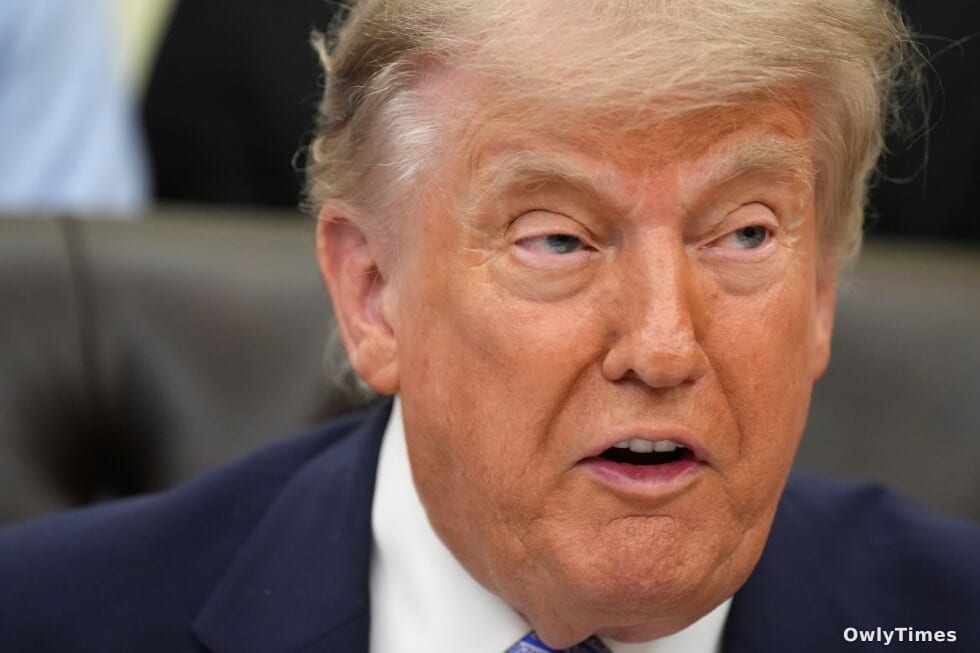
President Donald Trump’s eleventh-hour decision to scrap an executive order designed to vet advanced artificial intelligence systems suggests the White House is currently paralyzed by that exact question. The administration had planned a high-profile ceremony this past Thursday to unveil a framework for government oversight of the most powerful AI models, only to pull the plug hours before the event. According to the AP report, the President personally intervened, fearing the oversight could "dull America’s edge."
The real story here isn't the policy flip-flop itself—it’s the fundamental contradiction at the heart of the current tech agenda. We are seeing a government that treats AI as a vital economic engine to be supercharged, yet simultaneously recognizes that the technology’s capacity to identify software vulnerabilities is a massive cybersecurity threat.
Think of it like trying to build a faster race car while the engine is prone to overheating. You want to win the race against international competitors, but you can’t exactly win if the car explodes on the track. This tension was on full display in April, when Treasury Secretary Scott Bessent and outgoing Federal Reserve Chair Jerome Powell held an urgent meeting with Wall Street CEOs to sound the alarm on the specific cybersecurity risks posed by Anthropic’s model, Claude Mythos.
This isn't just bureaucratic posturing; it has real-world consequences for how digital infrastructure functions. If the government cannot establish a reliable framework for testing these models, ordinary users are left in the middle of a tug-of-war between rapid corporate deployment and institutional anxiety. The situation is further complicated by a bizarre, ongoing legal standoff: in February, the Trump administration ordered all federal agencies to stop using Anthropic’s chatbot, Claude, following a public clash between the Pentagon and CEO Dario Amodei.
The Illusion of Regulatory Consistency
The administration’s stance on oversight remains a moving target, often disappearing as quickly as it appears. Earlier this month, the Commerce Department announced voluntary agreements with Google, Microsoft, and Elon Musk’s xAI to evaluate their most powerful models before release. Shortly after the announcement, the documentation vanished from the agency’s official website.
Serena Booth, a computer science professor at Brown University, notes that this legislative "whiplash" is a byproduct of deep-seated fractures within the administration. The goal of maintaining a competitive "lead" over global rivals like China—a priority reinforced by the President’s recent summit with Xi Jinping—is currently outweighing the push for formal safety guardrails. Even within the administration, officials like Vice President JD Vance are stuck echoing a delicate balancing act, emphasizing the need to "win the AI race" while simultaneously claiming to protect citizens.
A Calculated Wait-and-See Approach
For industry insiders, this uncertainty is framed as "healthy tension," as described by Dean Ball of the Foundation for American Innovation. The theory is that the government is simply terrified of the political fallout of either stifling innovation or failing to regulate a potentially dangerous tool.
The next move depends entirely on how the government handles its existing, albeit inconsistent, agreements with big tech players. We will have to watch whether the Commerce Department reinstates its public screening agreements or if the administration chooses to abandon the collaborative model entirely in favor of a "move fast and break things" approach. The next reading of those public-private collaboration metrics will show whether the government is actually capable of auditing the tools it is simultaneously trying to promote as the future of the economy.