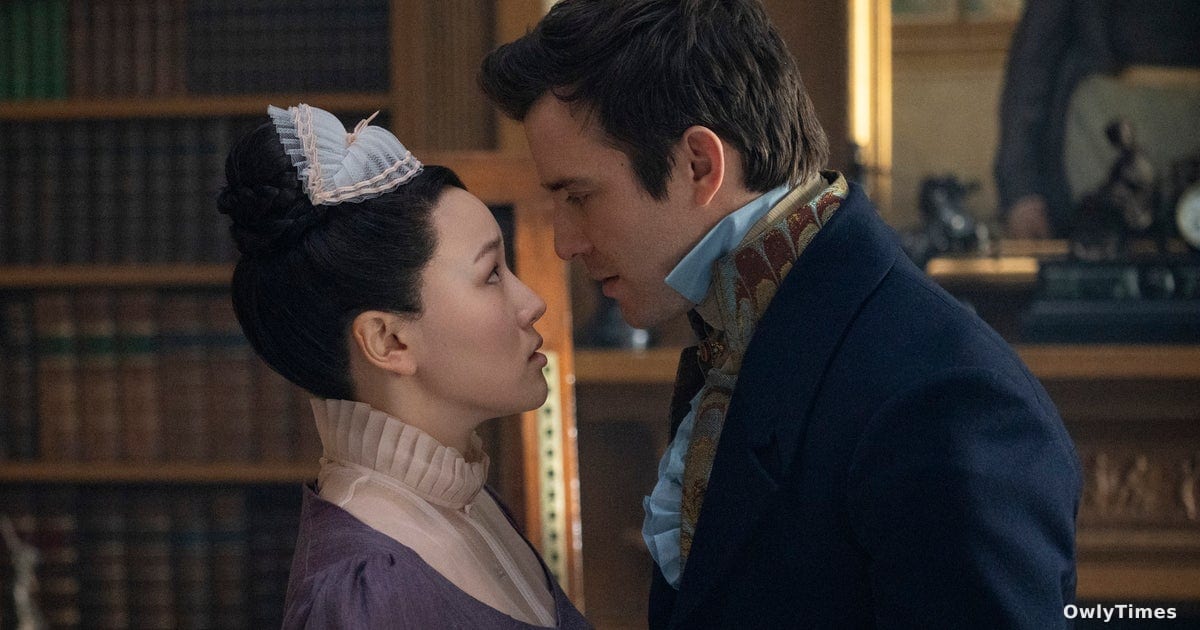

The enduring appeal of historical romance often rests on a promise: that love can conquer all. But what happens when the obstacles aren’t simply disapproving families or societal expectations, but the very structure of the society itself? That’s the central, and surprisingly pragmatic, question posed by the latest turn in Netflix’s “Bridgerton,” a series that has consistently demonstrated a willingness to examine the politics of romance, not just the passion. The mid-season cliffhanger of Season 4 – Benedict Bridgerton’s (Luke Thompson) proposition to Sophie Beck (Yerin Ha) to become his mistress – isn’t a shocking betrayal of the genre, as some initial reactions suggest, but a pointed illustration of the limited agency available to individuals within a rigidly hierarchical system. It’s a moment that forces viewers to confront the uncomfortable truth that, for many in the Regency era, “happily ever after” wasn’t a right, but a privilege.
The scene itself, unfolding on the staircase of the Bridgerton estate, is charged with expectation. Following episodes of simmering attraction, Benedict finally articulates his consuming desire for Sophie, only to offer not a proposal of marriage, but a clandestine arrangement. His question – “Sophie, be my mistress” – lands with a chilling weight, immediately deflating the romantic tension. While some viewers have expressed disappointment, framing the season as drifting into an unsatisfying “ensemble drama” lacking the focused romantic catharsis of earlier seasons like “Heated Rivalry,” this shift isn’t a deviation from the show’s core principles. Rather, it’s a logical extension of the world Shonda Rhimes has been meticulously building since the first season aired in December 2020, a world where desire is always entangled with power dynamics.
Drawn from huffpost.com.
The criticism that “Bridgerton” has become less about romance and more about social commentary misses a crucial point: the two have always been inextricably linked within the series. Even the initial, highly successful season featuring Daphne Bridgerton (Phoebe Dynevor) and Simon Basset (Regé-Jean Page) wasn’t simply a tale of finding love. It grappled with issues of reproductive control, familial legacy, and the societal pressures placed upon women to secure a advantageous marriage. The conflict surrounding Simon’s vow to never father an heir, and Daphne’s subsequent frustration and eventual manipulation to overcome it, highlighted the precarious position of women within the ton, lacking basic knowledge of their own bodies and desires due to societal constraints. This exploration of female agency, and its limitations, was further amplified in the spin-off “Queen Charlotte,” which delved into the political machinations surrounding marriage and the monarchy, demonstrating how women’s desires were routinely sacrificed for strategic gain.
The current storyline with Benedict and Sophie is a direct continuation of this thematic thread. A marriage between them is, realistically, impossible. A maid, even one as intelligent and captivating as Sophie, simply isn’t a suitable match for a member of the aristocracy. Benedict’s offer, while undeniably problematic, represents the only viable path forward within the confines of their world. The show isn’t endorsing this arrangement; it’s presenting it as a harsh reality, forcing both characters – and the audience – to confront the difficult choices they must make. This is mirrored in parallel storylines, such as Violet Bridgerton’s (Ruth Gemmell) hesitant exploration of a new relationship and Francesca Bridgerton’s (Hannah Dodd) sobering introduction to the potential for heartbreak. These narratives aren’t distractions from the central romance; they’re contextualizing it, demonstrating that love doesn’t exist in a vacuum.
However, the show does run the risk of becoming overly diluted. As “Bridgerton” expands its universe, incorporating more subplots and characters, the focus on the central romantic arc can become fragmented. The structure of dedicating each season to a different sibling’s love story creates a natural tension between world-building and delivering the passionate connection viewers crave. The show’s success hinges on its ability to strike a balance, to maintain the emotional core of the romance while continuing to explore the complex social and political landscape that shapes it. The question now isn’t simply whether Benedict and Sophie can navigate their unconventional relationship, but whether “Bridgerton” can sustain its unique blend of steamy romance and social commentary without losing the spark that initially captivated audiences. Will future seasons successfully integrate these expanding storylines, or will the show succumb to the weight of its own ambition? The answer will likely be revealed not just in the unfolding of individual romances, but in how effectively “Bridgerton” continues to illuminate the enduring power – and the inherent limitations – of love within a world defined by inequality.