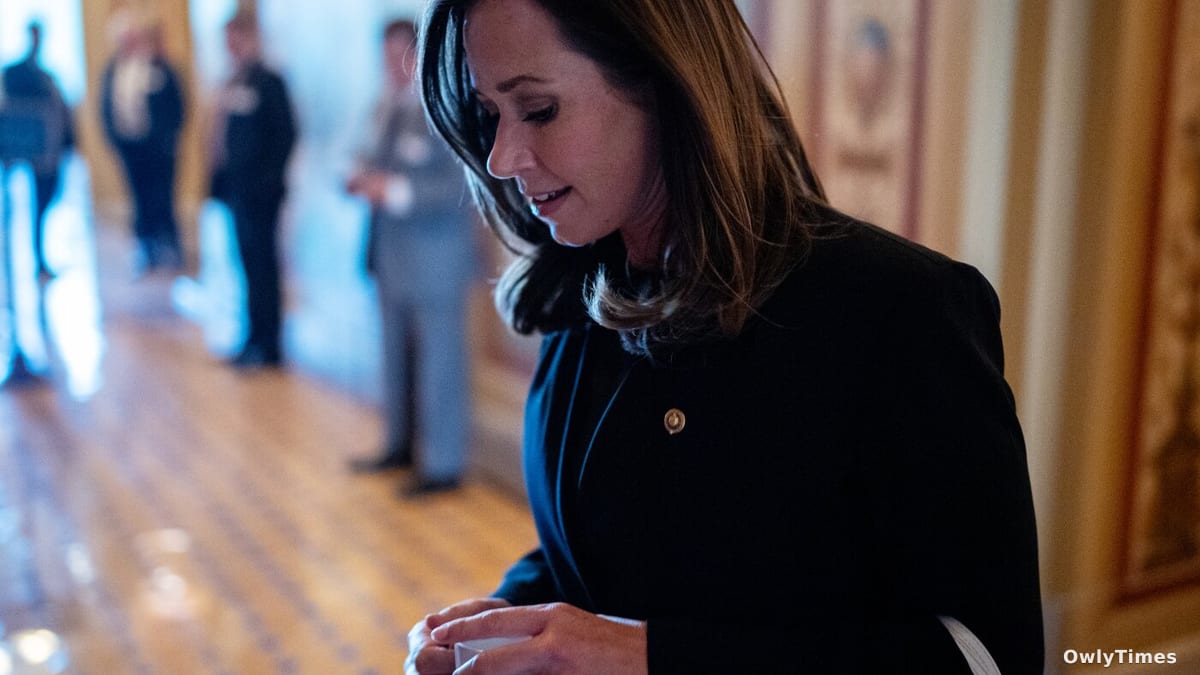

The Strategic Calculus of Katie Britt’s Ascent
The current impasse over Department of Homeland Security funding isn’t simply a budgetary standoff; it’s a deliberate test of Katie Britt’s evolving political brand. Two years removed from a nationally scrutinized State of the Union rebuttal that initially painted her as a hardline firebrand, the Senator from Alabama is now positioned as an unlikely mediator, tasked with navigating a deeply polarized Congress through a crisis of her party’s own making. The strategic calculation is clear: Republicans, facing public backlash over stalled border security measures and the optics of a government shutdown, are leveraging Britt’s emerging reputation for dealmaking to project an image of pragmatic problem-solving – even as core ideological demands remain unmet.
The initial perception of Britt, solidified by the widely parodied “scary mom” persona following her 2023 rebuttal, was a calculated risk. Placing a freshman Senator – particularly one from a reliably conservative state – in such a high-profile, adversarial role served to signal a commitment to uncompromising opposition to the Biden administration. However, the long-term viability of that strategy was questionable. The current moment, with the DHS funding stalled for over ten days and the Minneapolis shootings amplifying calls for reform, reveals a shift. Britt’s involvement in negotiations isn’t about softening Republican demands; it’s about controlling the narrative around those demands and demonstrating a willingness to engage – a posture that allows the party to claim it’s seeking solutions, not simply obstruction. Who benefits and who loses here is complex. Republicans benefit from appearing reasonable, while Democrats risk being painted as inflexible. The real losers are the American public, facing potential disruptions to vital services like airport security and disaster relief.
Reporting from NPR informs this analysis.
This pivot towards bipartisan engagement isn’t a sudden conversion. Veteran Alabama political columnist Steve Flowers, who recognized Britt’s potential as a teenager, points to her formative years working under Richard Shelby, Alabama’s long-serving Republican Senator. Shelby, a master of the appropriations process, operated on a principle of trust and cross-aisle relationships – a stark contrast to the increasingly partisan atmosphere of modern Washington. Shelby’s approach, characterized by genuine friendship with figures like former Senator Patrick Leahy, D-Vt., prioritized delivering for his state over ideological purity. Britt absorbed this lesson, making a point of building relationships with all 99 Senate chiefs of staff upon arriving in Washington. This groundwork is now paying dividends, allowing her to navigate the treacherous waters of the DHS negotiations with a degree of credibility on both sides of the aisle.
The parallel to historical precedents is striking. Consider the role of Senator Robert Byrd of West Virginia, a Democrat who, despite his staunch liberalism, maintained a reputation for legislative craftsmanship and a willingness to work with Republicans. Byrd, like Britt, understood that governing required compromise, even when it meant sacrificing ideological perfection. Both figures represent a dwindling breed of legislator – those who prioritize institutional effectiveness over performative politics. However, the context differs significantly. Byrd operated in a Senate where committee chairs wielded far more power and bipartisan deals were more commonplace. Britt is navigating a chamber defined by hyper-partisanship and the constant threat of primary challenges from more ideological candidates.
Britt’s ability to walk this tightrope is further complicated by her own voting record. While she has demonstrated a willingness to criticize President Trump – notably condemning a racist video posted on his social media – she maintains a 100% alignment with his legislative positions. This duality raises questions about the sincerity of her outreach to Democrats. Is she genuinely seeking compromise, or is she simply providing cover for a party unwilling to concede on its core demands? Senator Chris Murphy, D-Conn., Britt’s counterpart on the appropriations subcommittee, has expressed frustration with what he perceives as a disconnect between Britt’s rhetoric and her actions, accusing her of prioritizing Republican talking points over genuine negotiation.
The political chess move to watch next isn’t whether Britt can secure a DHS funding deal – it’s whether she can maintain her credibility as a mediator after the deal is struck. If the final agreement is perceived as a Republican victory, she risks alienating Democrats and reinforcing the “scary mom” caricature. If it’s seen as a Democratic win, she could face backlash from the right, jeopardizing her future prospects within the party. The true test of Britt’s political acumen will be her ability to navigate this delicate balance, proving that she is not merely a facilitator, but a genuine force for compromise in a deeply divided Washington. Will she be able to leverage this moment to establish herself as a long-term player, or will she be relegated to the role of a temporary negotiator, ultimately consumed by the forces of polarization?





