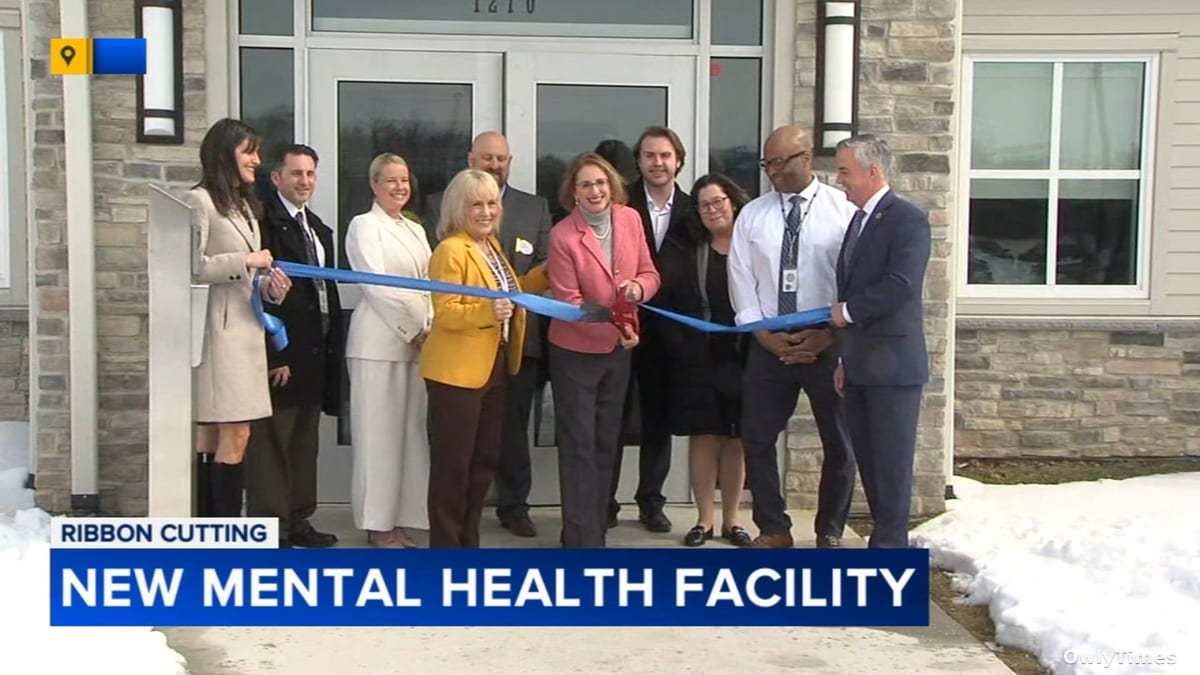

The opening of the Diversion, Assessment, Restoration and Treatment (DART) center in Doylestown Township this Wednesday isn’t simply the addition of another mental health facility to Bucks County; it represents a deliberate, and arguably overdue, shift in how Pennsylvania approaches the intersection of mental illness and the criminal justice system. While headlines focus on the new beds available – a critical need, to be sure – the DART center’s structure signals a broader acknowledgement that incarceration is often a profoundly unhelpful response to behaviors stemming from untreated mental health conditions. The question now is whether this model, built on diversion and restoration, can scale to meet the escalating demand and address the systemic issues that funnel individuals with mental illness into the legal system in the first place.
A Three-Pronged Approach to Crisis Intervention
The DART center, located on Almshouse Road, isn’t a single facility, but rather a carefully designed complex of three distinct units, each addressing a specific stage in a person’s journey through mental health crisis. The Short-Term Observation Unit, with capacity for eight individuals, offers a crucial two-week period of transitional housing. This isn’t intended as long-term shelter, but as a bridge – a safe space to stabilize after a hospitalization or to prevent escalation to a crisis requiring hospitalization. This is a significant departure from the historical pattern of discharging individuals directly back into potentially destabilizing environments. The Restoration to Competency Unit directly addresses a long-standing bottleneck in the legal system. Individuals facing criminal charges who have been deemed incompetent to stand trial – meaning they don’t understand the charges against them or can’t assist in their own defense, often due to mental illness – will receive treatment aimed at restoring their competency. Finally, the Residential Treatment Facility for Adults provides longer-term support for individuals working towards community reintegration.
See the original 6abc.com story for the full account.
This tiered system is notable because it moves beyond simply containing individuals experiencing mental health crises. Bucks County Commissioners have publicly stated the goal is to reduce recidivism and improve outcomes, but the true measure of success will be whether the center can demonstrably alter the trajectory of individuals caught in the cycle of mental illness, homelessness, and incarceration. Data from the Pennsylvania Commission on Sentencing shows that individuals with mental health diagnoses are disproportionately represented in the state’s correctional facilities, and often receive longer sentences for similar offenses compared to those without such diagnoses. The DART center is, in essence, a localized experiment in addressing this systemic inequity.
Filling a Critical Gap in Pennsylvania’s Mental Health Infrastructure
The opening of the DART center arrives at a moment of acute need. Pennsylvania, like many states, has struggled for years with a shortage of mental health resources, particularly beds for acute and sub-acute care. A 2024 report by the Hospital and Healthsystem Association of Pennsylvania revealed a 15% increase in emergency department visits related to mental health crises compared to 2020, coupled with a simultaneous decrease in available inpatient psychiatric beds. This creates a dangerous situation where individuals in crisis are often left waiting for days in emergency rooms, or are discharged prematurely due to lack of capacity. The eight beds in the Short-Term Observation Unit, while a welcome addition, represent a small fraction of the overall need. Dr. Maria Rodriguez, a psychiatrist practicing in nearby Montgomery County, noted in a recent interview that “even a modest increase in transitional housing options can significantly reduce the burden on emergency services and improve patient outcomes, but it’s just one piece of a much larger puzzle.”
The Restoration to Competency Unit is particularly crucial given the legal and ethical complexities surrounding competency to stand trial. Individuals deemed incompetent are often held in state hospitals for extended periods while awaiting treatment, a process that can be both costly and detrimental to their mental health. The DART center’s ability to provide this treatment locally could expedite the legal process and ensure individuals receive timely care. However, the unit’s capacity is currently undefined beyond its existence, and the specific criteria for admission remain to be fully articulated.
Limitations to Consider: Capacity and Systemic Barriers
While the DART center represents a positive step, several limitations must be acknowledged. The most immediate is capacity. Eight beds for short-term observation and an unspecified number within the Restoration and Residential Treatment units are unlikely to meet the full scope of need in Bucks County, let alone the surrounding region. Furthermore, the center’s success hinges on effective collaboration with existing community-based mental health providers, social services agencies, and the criminal justice system. Seamless referrals and coordinated care are essential, and any breakdown in these connections could undermine the center’s effectiveness.
Perhaps the most significant challenge lies beyond the walls of the DART center itself. Systemic barriers to accessing mental health care – including insurance coverage, transportation, and stigma – remain pervasive. The center can provide treatment, but it cannot solve the underlying social and economic factors that contribute to mental illness and prevent individuals from seeking help in the first place. The center also doesn’t address the shortage of qualified mental health professionals, a problem plaguing Pennsylvania and the nation.
The Next Steps: Data Collection and Scalability
The opening of the DART center is not an endpoint, but a starting point. The next crucial step is rigorous data collection to assess the center’s impact. Bucks County officials have indicated they will track metrics such as readmission rates, involvement in the criminal justice system, and overall quality of life for individuals who utilize the center’s services. This data will be essential for demonstrating the center’s value and justifying further investment.
More importantly, the county needs to explore the feasibility of replicating this model in other parts of Pennsylvania. Can the DART center’s three-pronged approach be adapted to meet the unique needs of different communities? What funding mechanisms are necessary to support such expansion? And, crucially, how can we address the systemic barriers that prevent individuals from accessing the care they need, regardless of whether a DART center is nearby? The success of this initiative will ultimately be measured not just by the number of beds it provides, but by its ability to inspire a broader, more compassionate, and more effective response to the mental health crisis facing Pennsylvania. We should watch for the release of the initial data set in February of 2027, and whether it prompts further investment in similar diversion programs across the state.