
The challenge of modern mental health care often lies in the friction between acute crisis intervention and the rigid architecture of our emergency systems. For decades, the default response for individuals in mental health or substance abuse distress has been the emergency room or the jail cell, environments that are rarely equipped to foster recovery. With the Oklahoma City Council voting this past Tuesday to approve final plans for the Robert Ravitz Crisis Center, the city is attempting to bridge this gap by creating a specialized facility designed to prioritize clinical stabilization over custodial containment.
This project is a significant component of the $1.1 billion MAPS 4 program, a massive municipal investment strategy. When residents voted in 2019 to authorize the program, they directed nearly $45 million toward the development of mental health crisis facilities and transitional housing. Of that total, $12.27 million was specifically earmarked for this center. Beyond public funding, the project has garnered $3 million in support from the Arnall Family Foundation, highlighting a rare alignment between municipal planning and private philanthropic interest in the state’s health infrastructure.
The facility is named in memory of the late Robert “Bob” Ravitz, a long-serving public defender in Oklahoma County whose legal career was defined by his advocacy for the mentally ill. His legacy is anchored in the landmark U.S. Supreme Court case Cooper v. Oklahoma, where he successfully argued for the protection of defendants awaiting competency rulings. By housing this new center in his name, the city signals an intent to move away from the criminalization of mental health issues, a shift that Statewide Crisis Services Director Lauren Stover described as a necessary departure from current trends. She noted that the center offers a way to stabilize patients outside of settings like hospital emergency departments or the criminal justice system.
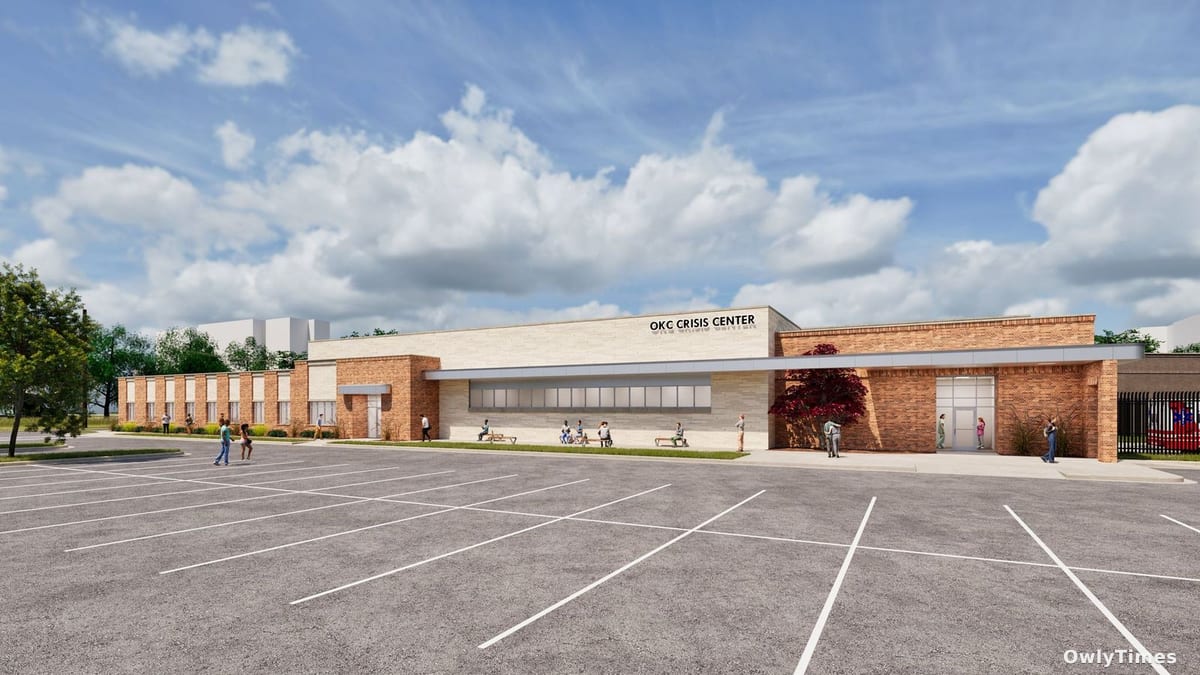
The facility, slated for construction at 1200 NE 13th St., is designed to handle the immediate transition from crisis to care. The physical layout will include an urgent recovery center featuring 25 observation stations and two dedicated crisis stabilization wings that can support up to 16 beds. The inclusion of a calming room, group therapy space, and a social living area reflects a therapeutic design philosophy aimed at reducing the trauma often associated with psychiatric intake. It is important to note that while the facility provides a necessary landing place, its success will depend heavily on the transition to long-term care; the center is intended to connect patients to ongoing support rather than simply acting as a short-term holding area.
Limitations to consider include the scale of the facility relative to the volume of crisis calls within the city. While the 16 stabilization beds and 25 observation stations represent a significant increase in capacity, the efficacy of this model will be measured by how seamlessly it integrates with the Oklahoma Department of Mental Health and Substance Abuse Services, which will operate the center. If the referral pipelines between law enforcement, hospitals, and this new center are not tightly synchronized, the facility could face bottlenecks that mirror the very emergency room overcrowding it seeks to mitigate.
Construction is expected to begin in early summer, with a scheduled opening in 2027. The progress of the project, specifically the demolition of the former Lottie House at the site and the subsequent groundbreaking, will be the primary metrics to watch. These milestones will indicate whether the city’s ambitious timeline remains on track to replace traditional, high-pressure intervention settings with a more clinical, recovery-focused environment.