
Is the future of sports fandom less about what you see and more about what you feel? While Silicon Valley chases the metaverse and augmented reality, the Milwaukee Bucks are quietly deploying a technology that bypasses visual spectacle altogether, offering a genuinely inclusive experience for blind and low-vision fans. The real story here isn't about flashy new entertainment formats—it's about a fundamental shift in how we define access and participation in shared cultural experiences, and a reminder that true innovation often serves the most overlooked audiences.
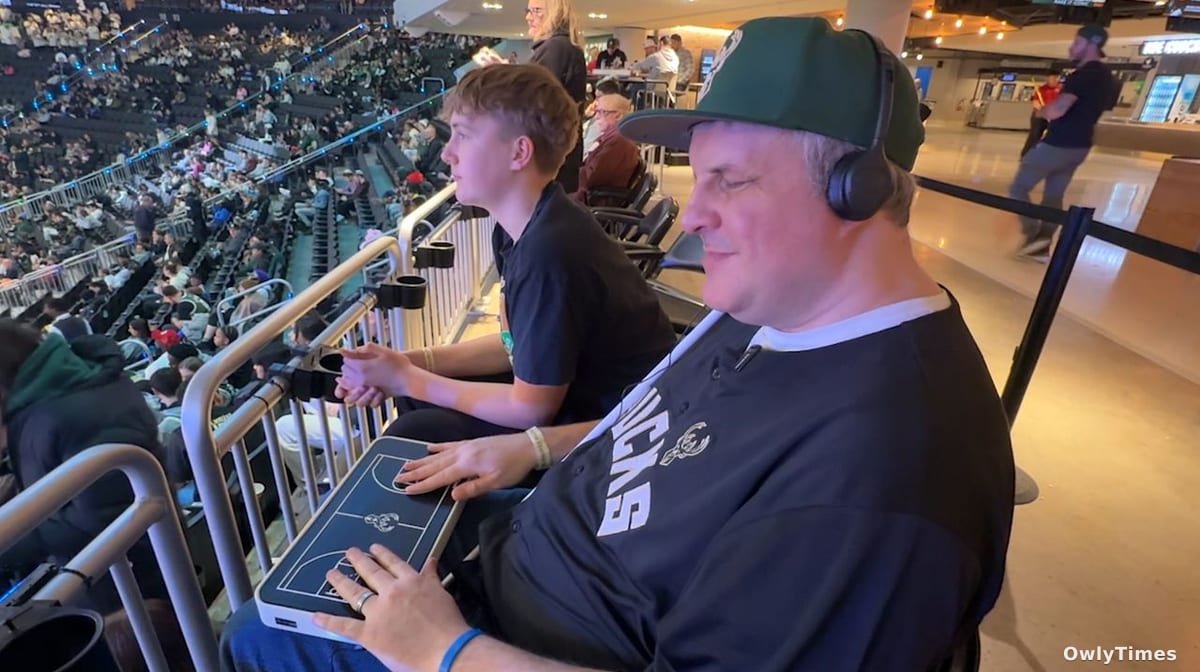
The Bucks recently acquired five “tactile broadcast devices” from a company called OneCourt, allowing fans to “watch” the game through vibrations and real-time audio cues. This isn’t a gimmick; it’s a carefully engineered system that translates on-court action into a language anyone can understand. The device maps the court, so fans can feel where the ball is moving, when a shot is taken, and even when a timeout is called. It’s a far cry from relying on a companion’s play-by-play, or straining to catch snippets from the arena announcer. For lifelong fan Steve Heesen, who is blind, it’s a revelation. “It’s all imagination in my mind, but now I can feel it under my fingertips,” Heesen explained. “It’s been great. Being able to follow along on the court and follow along the game with everyone else.”
Drawn from spectrumnews1.com.
This isn’t simply about providing a better game-day experience, though that’s significant. Consider the broader context: in 2023, the accessibility market – encompassing people with disabilities – represents an estimated $13.6 trillion in disposable income globally, yet remains consistently underserved by tech companies focused on the “next big thing.” The tech industry often prioritizes features that appeal to the widest demographic, inadvertently excluding those with specific needs. The Bucks’ investment, while modest in scale (five devices is a starting point, not a solution), signals a different approach. Rodrick Cureton, the Bucks’ impact and culture manager, put it plainly: “We want to make sure every fan can experience the game at a high level, and we want to make sure everyone can use them who needs them.” That statement, while seemingly straightforward, is a radical departure from the typical marketing-driven rationale behind most tech deployments.
The impact extends beyond the arena. Heesen highlights the sense of independence the device provides. “The ability to be independent and autonomous and be able to follow things on my own and get the information when I want and not have to rely on other people if I don’t choose to,” he said. This speaks to a deeper desire for self-sufficiency, a desire often amplified for individuals navigating a world not designed with their needs in mind. Heesen’s hope that this technology expands beyond professional sports – envisioning it used at his son’s high school games – underscores the potential for broader application. The cost of the devices is also noteworthy; they are available for free rental through the Bucks app, removing a significant barrier to access. This is a crucial detail, as accessibility solutions are often prohibitively expensive, further exacerbating existing inequalities.
But let’s be clear: five devices don’t solve systemic inaccessibility. The Bucks’ initiative is a commendable first step, but it’s a drop in the bucket. The real test will be scaling this technology, not just within the NBA, but across all levels of sports and entertainment. Will other teams follow suit? Will OneCourt be able to meet potential demand? More importantly, will this inspire a broader conversation about inclusive design principles within the tech industry? I predict that within the next two years, we’ll see a surge in demand for “sensory substitution” technologies – devices that translate information from one sense to another – not as niche products for people with disabilities, but as mainstream tools for enhancing experiences for everyone. The question isn’t whether technology can make sports more accessible, but whether we’ll prioritize building a future where it does.