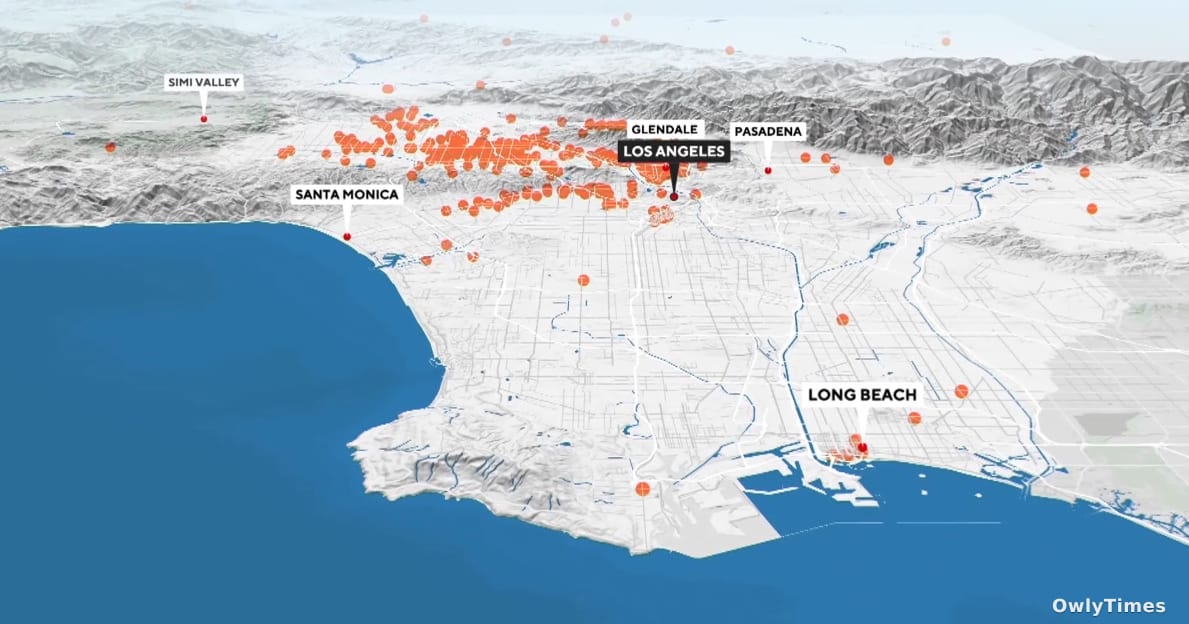

Is California’s “easy business” reputation now a haven for fraudsters? The state prides itself on being a launchpad for innovation, a place where anyone with a dream and a few bucks can start a company. But a new investigation by CBS News California, reported by Ross Palombo, reveals a disturbing trend: over 800 business registrations filed in 2025 may be fraudulent, and the real story here isn’t just about numbers – it’s about a systematic exploitation of former legal immigrants and a shockingly porous system for verifying who’s actually starting a business. While 800 might seem like a small fraction of the 3 million businesses registered in California last year, it’s a significant jump, and a clear signal that identity theft is evolving beyond stolen credit cards and into the realm of fabricated enterprises.
The problem, as detailed by fraud investigator David Maimon of SentiLink, centers on a surprisingly vulnerable population: immigrants who previously lived and established records in the US – often for education or temporary work – and have since returned home. Maimon’s data analysis shows criminals are specifically targeting these “golden IDs” because victims are less likely to detect fraudulent activity while living abroad. It’s a chillingly efficient tactic. Think about it: you studied in the US a decade ago, built a credit history, then moved back to your home country. You’re probably not routinely checking your California business filings. That’s exactly what these criminals are counting on.
Reporting from CBS News informs this analysis.
The case of Tomas Andriusonis, a resident of the Netherlands, perfectly illustrates the issue. Someone registered “Andriusonis Kitchen & Bath” in North Hills, California, using his identity and a residential address occupied by unsuspecting homeowners. When confronted, Andriusonis was understandably bewildered, stating he’d never owned a kitchen and bath business. This wasn’t an isolated incident. Palombo’s team found over ten suspicious filings – construction companies, senior care centers, even pharmacies – all linked to false information and, crucially, real people whose identities had been compromised. Three separate fraudulent businesses were even registered to a single apartment in Glendale.
The ease with which these fake businesses are created is particularly alarming. CBS News California Investigates was able to register “Fake Business, LLC” for just $70, with no apparent verification process. This isn’t a glitch in the system; it’s a fundamental flaw. California Secretary of State Shirley Weber declined an interview, but a representative stated the office’s responsibility is simply to “file” the paperwork, not to investigate its legitimacy. This is a bureaucratic cop-out. The state is essentially acting as a rubber stamp for potentially illegal activity, creating a veneer of legitimacy that allows criminals to access larger loans and commit more significant fraud. Maimon points out that having a registered business dramatically increases the scale of potential scams.
The consequences for victims are devastating. One woman, a former Penn State student now living in Thailand, discovered 30 fraudulent accounts and thousands of dollars in charges linked to a fake construction company registered in her name. Her credit score plummeted from 800 to 419, effectively ruining her financial life. Bank of America even filed a lawsuit against Andriusonis for $45,000 in charges he never authorized. These aren’t abstract financial losses; they’re lives upended, futures jeopardized. Los Angeles County Sheriff’s Department Sgt. Peter Hish, who handles cyberfraud cases, reports his unit saw 25,000 ID theft cases last year, and has seen victims driven to suicidal thoughts. The sheer volume is overwhelming, and business registration fraud is just one piece of the puzzle.
The silence from Governor Gavin Newsom’s office is deafening. Repeated requests for comment were ignored, a clear indication that this issue isn’t a priority. This isn’t just a California problem, either. The state’s lax regulations are attracting criminals from across the country, and the data from the Federal Trade Commission shows Los Angeles, Long Beach, and Anaheim ranking sixth for identity theft among all US metropolitan areas. The FTC data also shows a 97% increase in identity theft reports between Q1 and Q3 of 2025 compared to all of 2024. This isn’t a blip; it’s a surge.
Here’s what to watch for: by the end of 2026, expect to see a class-action lawsuit filed against the California Secretary of State’s office, demanding stricter verification procedures for business registrations. The current system is demonstrably broken, and the cost of inaction – both financial and human – is simply too high. The question isn’t if the state will be forced to change, but when and how much damage will be done before they do.





