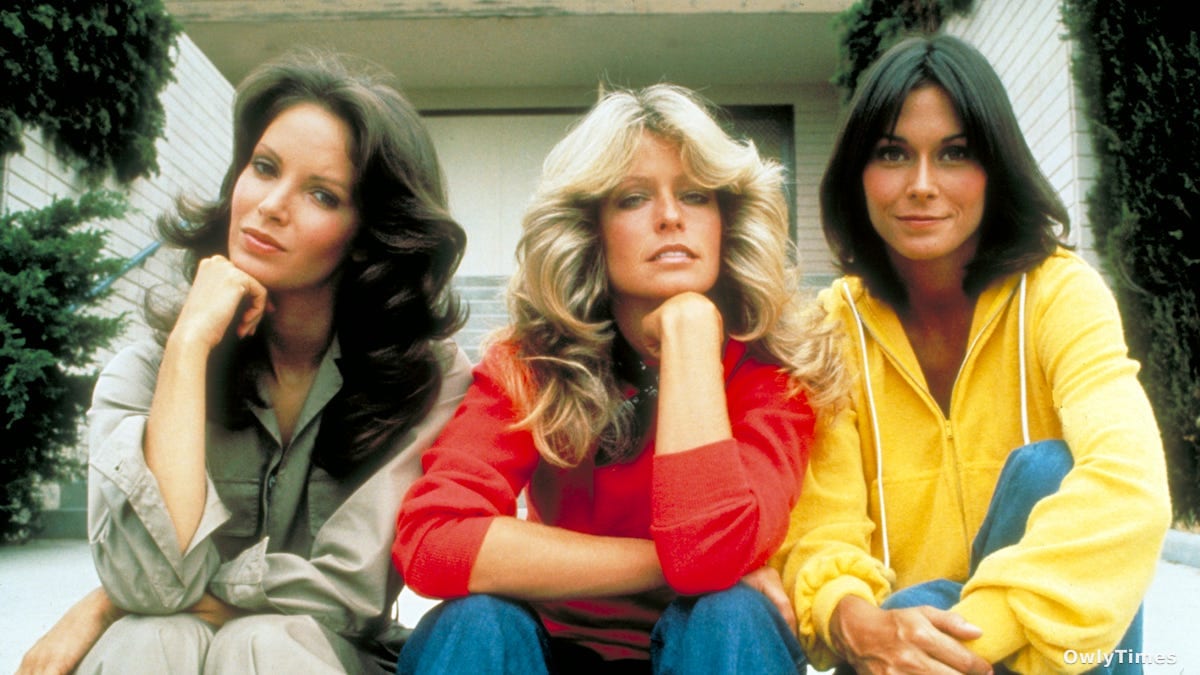

The chipped Formica of the diner booth felt cool under my elbows as I watched the rerun. It was a Season 1 episode, “Consenting Adults,” and Farrah Fawcett’s Jill Munroe was undercover as… a sex worker. Even through the hazy filter of late-night cable in 1992, the audacity of it struck me. Here were women, ostensibly empowered, navigating a world still deeply uncomfortable with female agency, and doing it in platform heels and feathered hair. Fifty years after “Charlie’s Angels” first bounced onto television screens in September 1976, it’s easy to dismiss the show as camp, a relic of a bygone era. But to do so is to miss the seismic cultural shift it represented – and the complicated legacy it continues to shape.
The Power of the Poster and the Promise of Freedom
The immediate impact of “Charlie’s Angels” was undeniable. The show wasn’t a critical darling; many reviewers derided it as fluff. But it was a ratings juggernaut, consistently ranking among the top 10 shows during its five-season run. More importantly, it launched Farrah Fawcett into superstardom. Her iconic poster, a red swimsuit and a gravity-defying smile, sold over 12 million copies in 1977 – a figure that dwarfed even pin-ups of established stars. This wasn’t just about sex appeal; it was about a new kind of aspirational image. Fawcett’s Jill Munroe wasn’t a damsel in distress. She was athletic, capable, and in control, even when undercover in dangerous situations. The show tapped into a burgeoning desire for female independence, fueled by the second-wave feminist movement, even as it packaged it in a highly commercialized, undeniably male-gaze-driven format.
See the original USA Today story for the full account.
The tension here is crucial. While the show presented women as capable operatives, the narrative always circled back to their appearance. The Angels’ outfits, hairstyles, and romantic entanglements were consistently highlighted, often overshadowing their detective work. This duality – empowerment through attractiveness – is what continues to spark debate. Was it a progressive step forward, or a reinforcement of patriarchal standards? The answer, predictably, is both. The show offered a fantasy of freedom, but one constrained by the expectations of the time.
Navigating Cast Changes and Shifting Cultural Tides
The show’s longevity, however, wasn’t without its turbulence. Farrah Fawcett’s departure after just one season was a major blow, fueled by contract disputes and a desire to pursue a film career. Her replacement, Cheryl Ladd as Kris Munroe, was a capable actress, but struggled to fill Fawcett’s enormous shoes. The show continued, with Kate Jackson’s Kelly Garrett remaining a central figure, alongside Jaclyn Smith, who became the only original Angel to last the entire series. Later, Shelley Hack joined the cast in 1979, replacing Jackson, and while she brought a different energy to the role, the constant cast shuffling signaled a struggle to maintain the initial magic.
These changes mirrored broader shifts in the cultural landscape. The late 70s and early 80s saw a backlash against the perceived excesses of the feminist movement, and a rise in conservative values. “Charlie’s Angels,” while still popular, began to feel increasingly out of step with the times. The show’s reliance on formulaic plots and its emphasis on superficiality drew criticism, and ratings gradually declined. By 1981, the Angels had hung up their disguises, concluding their five-season run.
Beyond the Headlines: The Enduring Appeal of the Angel Persona
But the story didn’t end there. The “Charlie’s Angels” brand has been resurrected multiple times, with a feature film in 2000 and a rebooted television series in 2011. Both attempts failed to capture the original’s spark, largely because they lacked the specific cultural context that made the show so resonant in the first place. The 2019 reboot, starring Kristen Stewart, Naomi Scott, and Ella Balinska, attempted to modernize the concept, focusing on a global intelligence agency and emphasizing the Angels’ skills and teamwork. However, it was a box office disappointment, grossing just $76.1 million worldwide against a $55 million production budget. This failure wasn’t simply about a bad movie; it was a sign that audiences weren’t ready for a “Charlie’s Angels” that didn’t grapple with the original’s complicated legacy.
The enduring appeal of the Angel persona isn’t about the crime-solving or the disguises. It’s about the fantasy of women operating outside of traditional constraints, forging their own paths, and supporting each other. The unseen Charlie Townsend and his voice on the speakerphone represent a patriarchal structure, but the Angels consistently subvert it, using their intelligence and resourcefulness to get the job done. They were, in a way, proto-girlbosses, navigating a male-dominated world on their own terms.
What Does This Legacy Mean for the Future?
As “Charlie’s Angels” celebrates its 50th anniversary, it’s a crucial moment to re-evaluate its place in television history. It wasn’t a perfect show, and its flaws are readily apparent. But it was a groundbreaking one, and its impact on popular culture is undeniable. The show helped to pave the way for more complex and nuanced portrayals of women on television, and it continues to inspire conversations about female empowerment, representation, and the enduring power of a good red swimsuit.
The question now is: can the “Charlie’s Angels” formula be successfully reimagined for a new generation? Or is the show destined to remain a nostalgic artifact, a reminder of a time when female empowerment was both celebrated and constrained? The industry is currently obsessed with reboots and revivals, but the failure of recent attempts suggests that simply updating the aesthetic isn’t enough. The next iteration of “Charlie’s Angels” will need to confront its own history, acknowledge its contradictions, and offer a vision of female agency that feels genuinely relevant to the challenges of today. Otherwise, it risks becoming just another forgotten relic of a bygone era.