
Is the automotive industry’s obsession with flashy AI demos obscuring a more fundamental shift happening elsewhere? Everyone’s talking about Tesla’s Full Self-Driving, or the latest generative AI integration in a Mercedes-Benz, but the real story here isn’t about headline-grabbing features – it’s about sustained, systemic innovation. And right now, the data suggests a surprising leader: Chery Automobile. For twelve consecutive years, this Chinese automaker has topped the invention patent charts in Anhui Province, a statistic that’s easy to dismiss until you look closer at what’s happening beyond the patent filings.
The sheer scale of Chery’s recent patent activity is striking. In 2025 alone, applications jumped nearly 50% year-over-year, with authorizations – meaning approved patents – exploding by over 300%. This isn’t a blip; it’s a sustained investment in core technology, a deliberate strategy to build a deep bench of intellectual property. But patents are just table stakes. The auto industry has been littered with companies holding promising technologies that never made it to market. What separates Chery is the speed with which they’re translating those patents into tangible products and real-world applications.
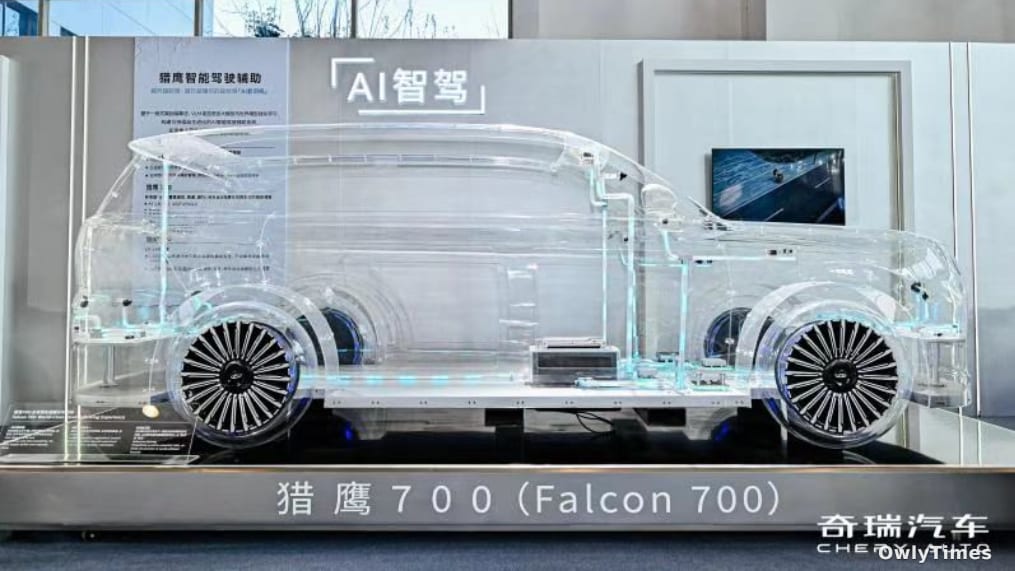
Consider the recent Spring Festival travel rush in China, the largest annual human migration on Earth. Chery’s Falcon Intelligent driver assistance system, equipped in 130,000 vehicles, logged over 12.86 million kilometers. That’s not a simulation; that’s 12.86 million kilometers of real-world testing under incredibly demanding conditions. The system triggered “millisecond-level collision avoidance” over 10,000 times, executed lane corrections more than 5.5 million times, and handled automated parking maneuvers over 170,000 times. These aren’t vanity metrics; they represent a massive data set informing continuous improvement, and a level of real-world validation most competitors can only dream of.
But Chery’s ambitions extend far beyond simply improving the driving experience. They’re building a surprisingly diverse AI ecosystem. The Moja humanoid robot, for example, wasn’t confined to a lab. It volunteered at Wuhu Station, guiding travelers, performed at the Wuhu Spring Festival Gala, and even served as a “reporter” at the Anhui Provincial Two Sessions – a carefully orchestrated PR move, yes, but also a demonstration of the robot’s capabilities in a complex, unpredictable environment. Simultaneously, the “Wuyou Smart Police U001” vehicle-mounted drone, a collaboration with Wuhu Public Security, launched operations, establishing a “trinity smart patrol system” integrating aerial, ground, and network surveillance. This isn’t just about cars anymore; it’s about intelligent solutions for transportation, security, and public service.
See the original autonews.gasgoo.com story for the full account.
The market is responding. The relaunch of the classic Chery QQ series, now the “AI-powered smart electric sedan” QQ3, garnered over 27,000 pre-orders within three hours of opening. That’s a significant vote of confidence, particularly in a crowded EV market. The iCAR V27, a mid-to-large off-road SUV equipped with the high-end Falcon 700 system, is poised for launch both domestically and internationally. And Chery is quietly integrating cutting-edge technologies like EMB (electro-mechanical braking) – borrowed from the aviation industry – into its EXEED EX7 model, promising millisecond-level braking precision.
This isn’t a haphazard collection of AI features; it’s a deliberate strategy to build a “Land, Sea, and Air” ecosystem. The “Land” component focuses on intelligent driving and smart cabins. The “Water” domain features amphibious systems. And the “Air” sector includes flying cars and drones. Underpinning this ecosystem is Chery’s “technology-first” philosophy and a “super technology shelf” encompassing five major areas – Mars Architecture, Kunpeng Power, Lingxi Smart Cabin, Falcon Intelligent Driving, and the Galaxy Ecosystem – containing over 400 advanced technologies. This isn’t just about incremental improvements; it’s about building a platform for future innovation.
The automotive industry has moved past simply competing on horsepower. It’s now a contest of intelligent experiences, and ultimately, AI system capabilities. Chery’s twelve years of patent accumulation are now translating into a tangible competitive edge. But here’s the question everyone in Detroit, Wolfsburg, and Silicon Valley should be asking: can a legacy automaker, traditionally focused on manufacturing, successfully navigate this new landscape and ride the global wave of intelligence? The answer won’t be found in a press release, but in the continued deployment and refinement of Chery’s AI-powered products – and in whether they can maintain this momentum as the competition inevitably heats up. Watch for the Falcon system to appear in more than 35 models by year-end; if that rollout falters, the narrative shifts. But if Chery delivers, expect to see a significant re-evaluation of the global automotive power structure within the next 18 months.





