
Is the future of the Chinese auto industry actually…boring? While the world fixates on robotaxis and flying cars, a quiet consensus is emerging from Beijing to Shanghai: disruptive technologies aren’t arriving on the scene in 2026. The real story here isn’t about revolutionary leaps, it’s about ruthless execution. After years of chasing “who can do it better,” China’s automakers are now laser-focused on a far more pragmatic question: how many units can you ship, and how much money can you save? This isn’t a failure of ambition, but a brutal reckoning with the realities of scaling innovation in the world’s largest car market.
Cui Dongshu, secretary-general of the China Passenger Car Association (CPCA), succinctly captures the shift. The industry, he notes, hasn’t reached an obvious inflection point for new technology competition. A recent Gasgoo survey of engineers and technical staff confirms this, revealing that 2026 priorities are dominated by Level 3 autonomy, solid-state batteries, and cost-cutting – hardly the stuff of sci-fi headlines. This isn’t to say innovation is dead, but it’s been…grounded. The multiple-choice exam on technology roadmaps is over; now it’s about refining the answers.
Reporting from autonews.gasgoo.com informs this analysis.
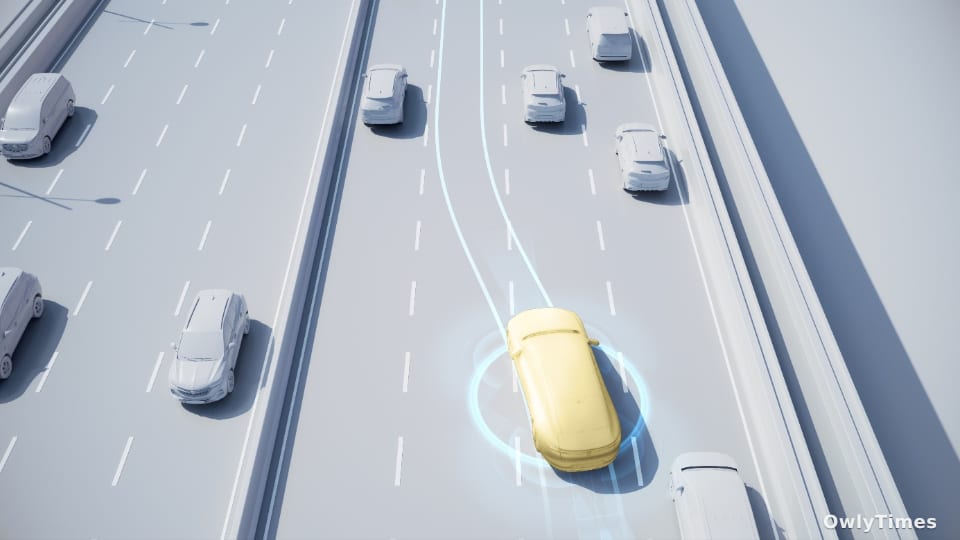
The focus on Level 3 (conditional autonomous driving) isn’t surprising, but the timeline is revealing. 2026 is being positioned as a critical year for validating mass production, with players like Huawei’s Qiankun Intelligent Driving, Voyah (with its Taishan Ultra SUV), and XPENG all aiming for commercial rollout. However, even within this push, opinions are diverging. Jiang Haipeng, deputy general manager of Great Wall Motor’s Technology Center, predicts 2026 will be the tipping point for highway L3, with urban deployment lagging until 2027. This isn’t pessimism, it’s acknowledging the practical constraints of computing power and, crucially, cost.
The bottleneck isn’t just having the technology, it’s getting it to work reliably and affordably in the real world. End-to-end large models (VLA models) perform beautifully in the cloud, but migrating them to the vehicle side requires a massive leap in computational capability – one not expected until 2028, when computing power is projected to exceed 1,000 TOPS. Hu Ming echoes this caution, pointing to “dual constraints of technology and policy.” Even if components meet standards, integrating them across all conditions remains a formidable engineering challenge. And that challenge comes with a hefty price tag: a complete L3 hardware package adds an estimated 30,000 to 50,000 yuan (roughly $4,100 to $6,800 USD) per vehicle. This means L3 will initially be confined to vehicles priced above 350,000 yuan, trickling down to the mainstream market only in 2027 or 2028 – if at all.
While autonomy grabs headlines, the intelligent cockpit is undergoing a more immediate, if less flashy, evolution. The shift isn’t simply about adding more features, but about reconstructing the user experience through deep integration of VLA models. Think “anthropomorphic” systems that anticipate driver intentions through eye tracking, gesture recognition, and even seat pressure sensing. This is driving changes in hardware – the 180-degree rotating seats and wrap-around airbags in the Luxeed V9 aren’t just gimmicks, they’re signals of a cockpit designed around specific usage scenarios. However, automakers are also grappling with user acceptance. Li Auto owners readily embrace driver assistance, while Geely owners remain more cautious, preferring manual control. Bridging this psychological gap is a critical challenge.
Beyond software and user experience, the race is intensifying in power batteries and smart chassis. Semi-solid-state batteries are moving from the lab to mass installation, with costs rapidly declining. Last year, SAIC’s MG4 became the first mass-produced vehicle to feature the technology, priced at 99,800 yuan. Dongfeng Motor and GAC are planning similar deployments in 2026. But this isn’t a disruptive breakthrough, it’s about adapting proven solutions to more platforms, driving down costs, and improving quality control. Similarly, in smart chassis, the focus is shifting from component performance to system integration – think active suspension, brake-by-wire, and steer-by-wire technologies. Steer-by-wire, in particular, is poised for a breakthrough in 2026, eliminating mechanical connections and paving the way for higher levels of autonomous driving.
This relentless pursuit of refinement is happening against a backdrop of intense price competition. Several industry insiders predict the price war will continue throughout 2026, forcing automakers to prioritize cost-cutting and efficiency. Gao Fei (a pseudonym) bluntly states that “price is a competitive tool you can’t get around.” Companies are exploring everything from in-house chip development (like BYD) to domestic substitution and supply chain restructuring. The pressure is particularly acute in the semiconductor sector, where prices are surging. This is forcing automakers to consider vertical integration – investing in upstream manufacturing to control costs and secure supply.
The dual strategy of moving upmarket and cutting costs is becoming increasingly crucial. Premiumization offers higher profit margins and a platform for showcasing technological prowess, but it’s not a guaranteed path to success. As Hu Ming points out, the Chinese high-end market is fiercely competitive, and realizing scale effects takes time. Ultimately, the Chinese auto industry in 2026 is navigating a complex tension: pushing the boundaries of technology while simultaneously battling to maintain affordability.
Here’s what to watch for: by the end of 2026, pay attention to which automakers are actually delivering Level 3 functionality at scale, and at what price point. Don’t get distracted by flashy demos – focus on the number of vehicles on the road, and the real-world user experience. The companies that can successfully navigate this balancing act – delivering incremental improvements at scale while controlling costs – will be the ones that thrive in the years to come. The future of Chinese autos isn’t about flying cars; it’s about mastering the art of the perfectly engineered, relentlessly affordable, and increasingly intelligent vehicle.