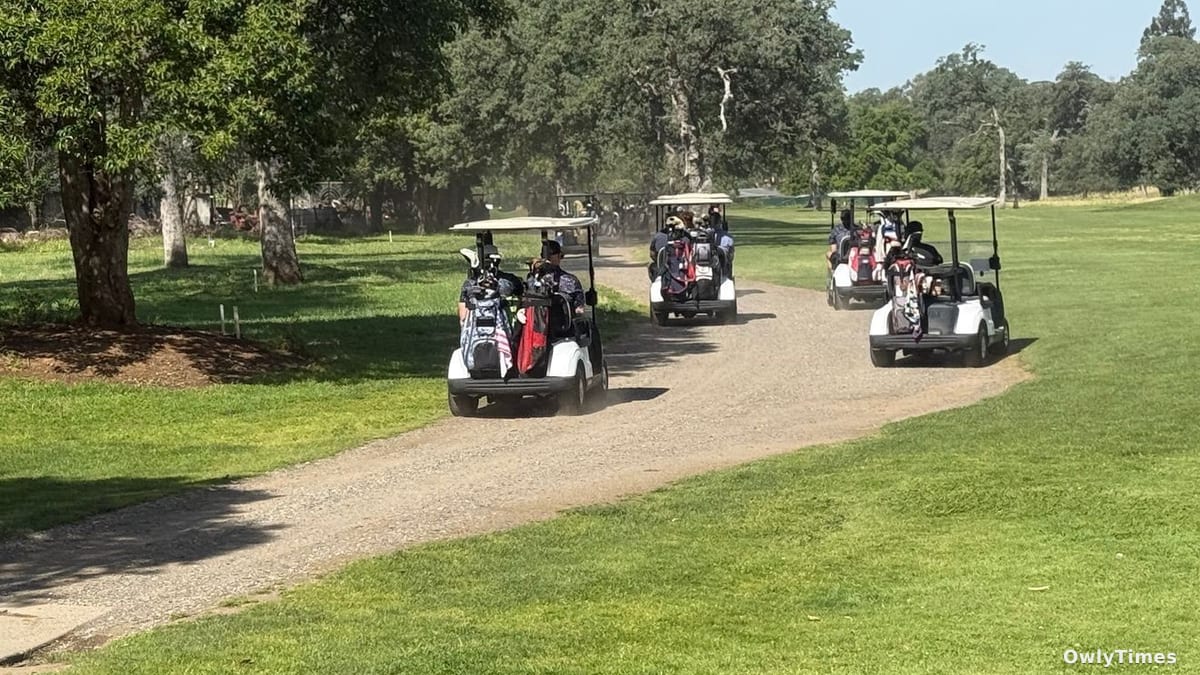

The quiet crisis of cumulative psychological trauma among first responders is shifting from a hidden occupational hazard to a public health priority in Butte County. While the physical dangers of law enforcement are often front-page news, the invisible toll of repeated exposure to high-stress events remains an under-discussed scientific reality. On Friday, May 1, 2026, the third annual 'Swing Fore Cesar' Golf Tournament at the Bidwell Park Golf Course served as a platform to bridge this gap, drawing 166 participants to address the mental health needs of those who serve the community.
Quantifying the Invisible Burden
The event honors the memory of Chico Police Sergeant Cesar Sandoval, who served for over 28 years before his death in 2022. The urgency behind this initiative is rooted in a stark statistical reality regarding professional trauma. According to board members of the event, more first responders succumb to suicide annually than to line-of-duty deaths. The disparity in exposure is equally staggering: while the average person encounters roughly 5 to 6 traumatic events in a lifetime, a law enforcement officer may face between 800 and 900 such incidents over a 20-year career.
This is not merely a matter of stress; it is a clinical challenge involving chronic psychological activation that, without proper intervention, can lead to long-term health decline. The event organizers are leveraging these figures to advocate for proactive mental health resources rather than reactive ones. As Lisa Jellison, a licensed clinical social worker and board member of 'Swing Fore Cesar,' noted, the focus has expanded from supporting retirees to providing preventative care for active-duty personnel and their families.
Translating Awareness into Infrastructure
The success of this year’s tournament translates directly into tangible support for the Butte Strong First Responders Wellness Unit. This unit operates on the premise that the mental and physical health of first responders is inextricably linked to their ability to function safely. By funding this unit, the community is attempting to create a buffer against the physiological and emotional wear associated with high-frequency traumatic exposure.
Beyond the wellness unit, the funds support the Cesar Sandoval Scholarship at Willows High School and the Sergeant Cesar Sandoval Award at the Butte College Police Academy. These awards are designed to institutionalize the character traits embodied by Sergeant Sandoval, who was described by board member and retired probation officer Brian Rodrigo as a person who "would give you the shirt off his back." By incentivizing these values in the next generation of officers, the program hopes to foster a culture that views seeking help as a strength rather than a liability.
Considerations for Long-term Efficacy
While the community momentum is significant, the challenge lies in the sustainability of these wellness models. The primary limitation to consider is the scalability of such localized, volunteer-driven efforts. While the funds raised provide a vital stopgap, the long-term mental health of first responders requires persistent, systemic integration within police departments that goes beyond the financial support of a single annual event. The efficacy of the Butte Strong First Responders Wellness Unit will ultimately be measured by its ability to maintain consistent engagement with officers who may be hesitant to utilize mental health services due to cultural stigmas within the profession.
As the organization continues to grow, the next reading of the participation rates and the utilization metrics of the Butte Strong First Responders Wellness Unit will show whether these community-led initiatives are successfully reducing the barrier to entry for officers seeking professional help. The continued outreach by board members like Lisa Carrillo serves as a vital signal that the conversation regarding mental health in the line of duty is moving toward a more sustained, integrated model of care.