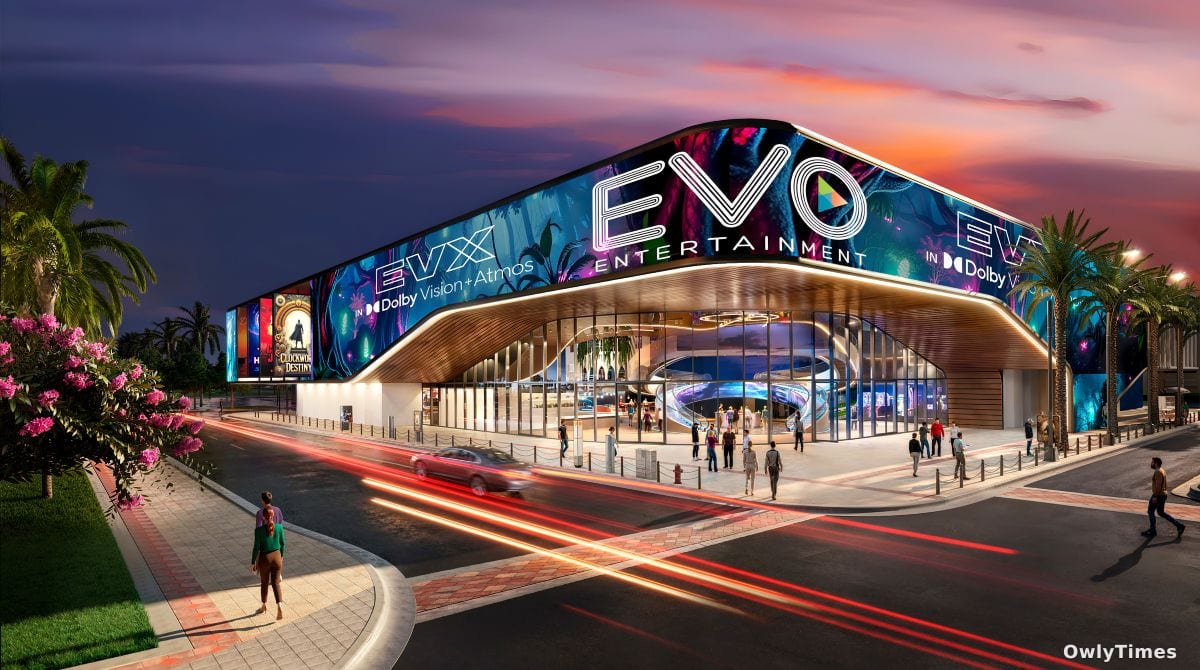

The flicker of a projector is about to take on a gargantuan new scale in Clearwater, where a 131-foot-wide cinematic expanse is set to redefine the city’s skyline. As streaming services fight for the scraps of our shortening attention spans, the Cleveland Street Alliance, LLC is betting $50 million in private capital that the future of entertainment isn’t found on a smartphone, but in a sprawling, 83,000-square-foot “family entertainment complex” anchored by a seven-screen multiplex.
A Massive Bet on Physical Presence
At the corner of Cleveland Street and Myrtle Avenue, this project aims to pull residents out of their living rooms and into a high-octane environment. Operated by the Texas-based EVO Entertainment, the facility promises to be more than just a place to watch films; it will integrate bowling, arcade gaming, laser tag, and dining. While many urban centers struggle to fill empty storefronts, this development seeks to act as the “gateway” to a completely re-imagined corridor, moving beyond the passive consumption of media toward a total, interactive experience.
The sheer ambition of the screen size—131 feet—serves as a physical manifestation of a broader shift in the entertainment industry: the demand for spectacle that cannot be replicated in a home theater. By creating a hub that demands physical travel and social interaction, the Alliance is attempting to anchor a community’s identity around a shared, tangible space rather than a digital one.
The Architect of a New Downtown
Managing this transformation is Scott Dobbins, the founder and principal of the Tampa-based commercial real estate firm Hybridge. Dobbins has framed the project not as a demolition of the past, but as a surgical intervention into the city’s history. With 23 projects already underway on the historic thoroughfare, the strategy is building-by-building, replacing aging and underutilized properties with what Dobbins describes as a “cohesive, active and architecturally distinct corridor.”
The scope of this influence is visible at the 1,400-square-foot showroom that debuted on April 18 at 331 Cleveland Street. Featuring large-scale digital media and a detailed model of the downtown, the showroom acts as a public interface for the vision. It is a calculated move toward transparency in a development process that is notably associated with the Church of Scientology. Dobbins has been explicit about this partnership, noting that the Alliance is comprised of the Church, its parishioners, and professionals working in concert.
Global Design Meets Local Restoration
The project’s aesthetic and structural integrity is backed by a coalition of high-profile partners, including Halflants & Pichette architects, Streetsense, Gensler, and Fairmount Properties. Their involvement suggests a rigorous approach to urban planning, blending modern amenities with the preservation of historic structures, such as the ongoing work on the Peoples Bank building at 432 Cleveland.
This collaboration highlights a growing trend in American urbanism: the consolidation of influence to drive sweeping neighborhood revitalization. Whether this model of top-down, cohesive development can sustain the foot traffic required to support a $50 million investment remains the central tension of the project. As the city reviews the request for a demolition permit for the current building, the next reading of the local permit approval process will signal whether this massive vision for the Cleveland Street corridor will move from a model in a showroom to a permanent fixture of the Clearwater landscape.