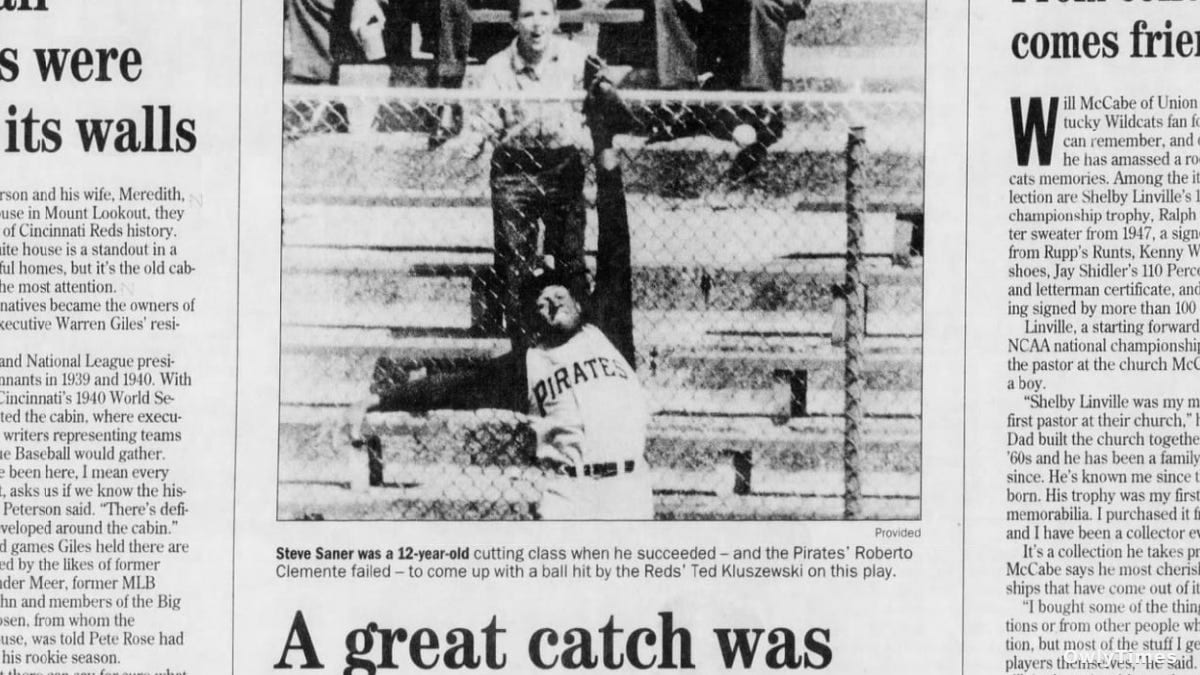

In an era where every movement is tracked by a digital footprint, we often romanticize the days when a secret could stay buried. But for Steve Saner, a 13-year-old growing up in Bellevue, Kentucky, the truth didn't need a surveillance state to find him; it just needed a sharp-eyed photographer and the local newspaper. Long before the era of social media receipts, Saner discovered that some moments are simply too vibrant to remain hidden, especially when they involve the high-stakes passion of baseball.
The Allure of the West End
For Saner, now an 80-year-old resident of Fort Thomas, the temptation of the ballpark was far stronger than the call of the classroom. In the late 1950s, the Cincinnati Reds were more than a team; they were a community heartbeat centered at the fabled Crosley Field. Saner describes himself as a "snotty-nosed" kid with an incurable obsession for the game. The sensory experience of the ballpark—the aroma of peanuts roasted by the legendary Peanut Jim and the raw, unamplified sound of a ball hitting a catcher’s mitt—offered an intimacy that television simply couldn't replicate.
A Calculated Risk at Crosley Field
On April 15, 1959, the allure of the diamond finally outweighed the responsibilities of Sacred Heart School. After completing his daily duty of distributing milk to classrooms, Saner and two friends executed a plan to slip away. They walked across the bridge into the West End, lured by the promise of watching the Pittsburgh Pirates—a team featuring the legendary Roberto Clemente.
At just 50 cents a ticket, the game was accessible, but Saner played it like a professional. He was a dedicated "ball hawk," studying the tendencies of hitters to predict where a ball might land. His hustle served a dual purpose: it fed his passion and provided a small revenue stream, as he would sell the balls he caught to fund his future visits to the park.
The Photographic Evidence of Truancy
The defining moment of his rebellion came in the third inning, when Reds outfielder Jerry Lynch launched a home run to right field. As the ball sailed over Clemente’s reach, Saner snagged the prize from under the bench seats. He believed he had escaped undetected, but the eye of the lens was unforgiving. Gene Smith, a photographer for the Associated Press, had captured the entire sequence, immortalizing Saner in the background of the shot.
The irony was perfect: that same evening, Saner’s father, a dedicated Boy Scout leader, was touring the press room at The Enquirer. While watching the sports section roll off the press, he spotted his own son cheering in the photograph. It was a confrontation that bridged the gap between a strict upbringing and a shared love for the sport. Ultimately, his father’s passion for baseball softened the blow, leaving Saner with a scolding, a lesson learned, and a permanent memento of his youth.
A Legacy Framed in Ink
Saner never skipped school again, but his relationship with the game only deepened. When the Pirates returned to Cincinnati later that season, he brought that very photograph to the stadium, where he successfully secured an autograph from Clemente himself. That framed image remains a family heirloom, a testament to a time when a boy’s love for the game could land him in the paper, but also grant him a piece of history.
As Saner reflects on his life, the next reading of his personal history—the preservation of that autographed heirloom—will serve as the ultimate indicator of whether the risk was worth the reward. For a kid who lived for the crack of the bat, the answer remains a firm, nostalgic yes.