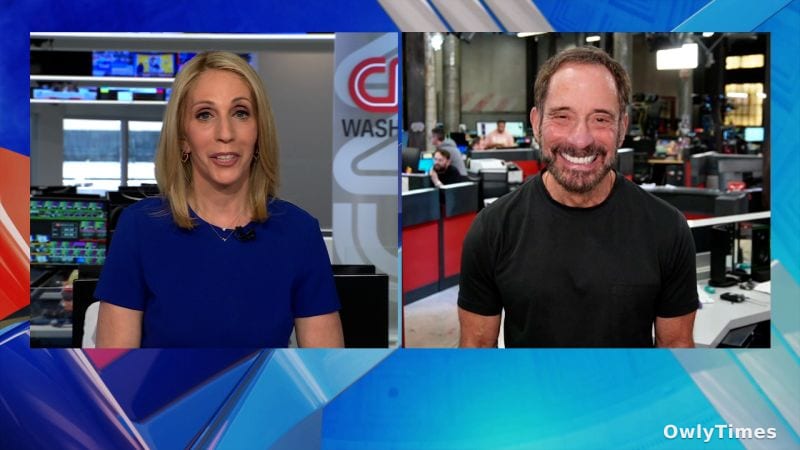

The strategic calculus behind TMZ founder Harvey Levin’s push into Washington, D.C., is less about ideological alignment and more about the commodification of institutional access. By inserting a tabloid powerhouse into the rigid architecture of Pentagon briefings and White House press scrums, Levin is testing a fundamental hypothesis: that the high-friction, personality-driven style of celebrity journalism can effectively strip away the performative layers of political communication. For the legacy press, this move is a disruptive intrusion; for Levin, it is an expansion of the "star system" into the halls of governance.
The Disruption of the Briefing Room
The entry of TMZ into the Pentagon briefing room signifies a shift in how power is scrutinized. In this ecosystem, the traditional power brokers—the established national security correspondents—benefit from a predictable, long-standing rapport with officials. TMZ, conversely, thrives on the unexpected, favoring the "gotcha" moment or the human-interest angle that often bypasses nuanced policy analysis.
The primary losers in this shift are the institutional gatekeepers who rely on the slow, methodical pace of traditional reporting. When Levin states, "We really are going to be breaking stories," he is signaling an intent to bypass the conventional vetting cycles that define Washington reporting. This creates a tension between the need for speed and the depth of institutional knowledge, a trade-off that has defined the decline of local newspapers across the country over the last two decades.
A New Paradigm of Accountability
Historical precedent suggests that when tabloid-style media enters the political sphere, the standard of "seriousness" is forced to adapt. Much like the transition of television news from the solemn broadcasts of the mid-20th century to the 24-hour cable cycle that emerged in the 1980s, the inclusion of TMZ into the D.C. press corps will likely accelerate the pace of news consumption. This is not necessarily an improvement in factual quality, but it is an inevitable evolution of political media as it competes for a shrinking attention span.
The contradiction here is palpable. Politicians often decry the "sensationalism" of the media, yet they are increasingly reliant on the very outlets that thrive on it to reach a fragmented electorate. By appearing on CNN’s "Inside Politics" to outline his strategy, Levin is effectively laundering his outlet’s reputation, positioning TMZ not as an outlier, but as a legitimate participant in the national conversation.
The Metrics of Influence
The success of this strategy will be measured not by the complexity of the policy analysis provided, but by the volume of engagement and the disruption of the status quo. Levin’s approach—"I kind of like the idea that people are just watching us find our way"—is a classic trial-by-fire tactic. It allows the outlet to fail, adapt, or succeed in public view, ensuring that even their stumbles generate traffic.
For the observers of this transition, the next reading of the Pentagon press secretary’s interactions with the TMZ contingent will indicate whether this experiment forces a permanent change in how official information is dispensed. If the standard briefing becomes a venue for viral content rather than policy clarification, the threshold for what constitutes a "serious" question in Washington will have officially shifted.





