
The path to closing the digital divide in California’s technology heartland is increasingly being paved not by software engineers or policymakers, but by a group of parents in the Central San Joaquin Valley. While the national conversation around computer science often centers on curriculum standards and hardware procurement, a grassroots initiative in Stanislaus County is testing a different hypothesis: that systemic change in education access is best driven by the families who have historically been left behind by the digital revolution.
From Digital Exclusion to Advocacy
For the past year, roughly a dozen parents from the local migrant community have gathered monthly at the Stanislaus County education office in Modesto. Led by Rudy Escobar, the coordinator of computer science and STEM at the Stanislaus County Office of Education, these two-hour sessions began with the most fundamental of hurdles. Many participants, who had previously navigated the world primarily through smartphones for basic communication, had limited experience with traditional computing environments.
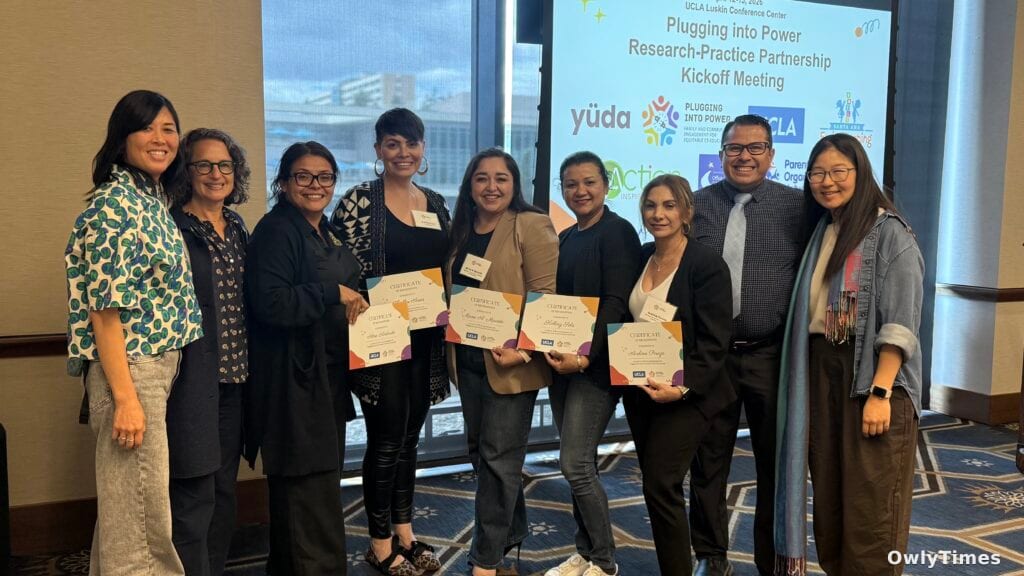
The training moved quickly from the functional—creating email accounts and navigating Google applications—to the strategic. As participants gained fluency, the curriculum pivoted toward the school system itself. By demystifying the technology their children were expected to master, these parents moved from passive observers to informed advocates. On April 13, 2026, the culmination of this work was marked at the UCLA Luskin Conference Center in Los Angeles, where the participants received certificates recognizing their dual journey in digital literacy and civic engagement.
The Gap Between Intent and Access
The necessity of this work is underscored by stark disparities in California’s educational landscape. While the state is widely recognized as the birthplace of the modern technology industry, the reality of classroom access remains fragmented. According to a national report on computer science access, 58% of California high schools offered a computer science class in the 2024-25 school year. While this represents a significant increase from 39% in 2016, the growth is not distributed equitably.
The data reveals a clear geographic and socioeconomic tension: in 2024-25, only 44% of rural schools offered such a class, compared to 63% of urban and suburban institutions. For parents like Kelly Solis and Avelina Peraza, both from the Patterson Joint Unified School District, these numbers are not just statistics; they are barriers to their children’s future. Peraza, who has children in middle school, noted that while the district provides extracurricular STEM activities like robotics, formal computer science instruction is absent at the middle school level. This is a critical gap, as advocates argue that early exposure is essential to fostering sustained interest in STEM fields before students reach high school.
Measuring the Impact of Parental Voice
The significance of this model lies in its recognition of who controls the agenda in public schools. Escobar, who also serves as a leader for Computer Science for California (CSforCA), emphasizes that affluent districts often see robust computer science pathways precisely because parents demand them. By training parents to draft formal letters to principals, superintendents, and school boards, the program aims to replicate that advocacy power in socioeconomically disadvantaged communities.
The ultimate success of this initiative will be measured by its ability to translate individual empowerment into institutional shifts. Neil Vento, the communications coordinator for the Patterson district, has invited this parental input through established advisory meetings, framing the district as a partner in resource allocation. Participants like Mirna Macedo are already looking beyond their immediate school district, aiming to expand the reach of these skills throughout the entire Central Valley. As these parents continue to advocate for curriculum updates—including digital literacy, coding, and artificial intelligence—the next reading of district-level course offerings will show whether this parent-led pressure is sufficient to bridge the long-standing divide in California’s classrooms.





