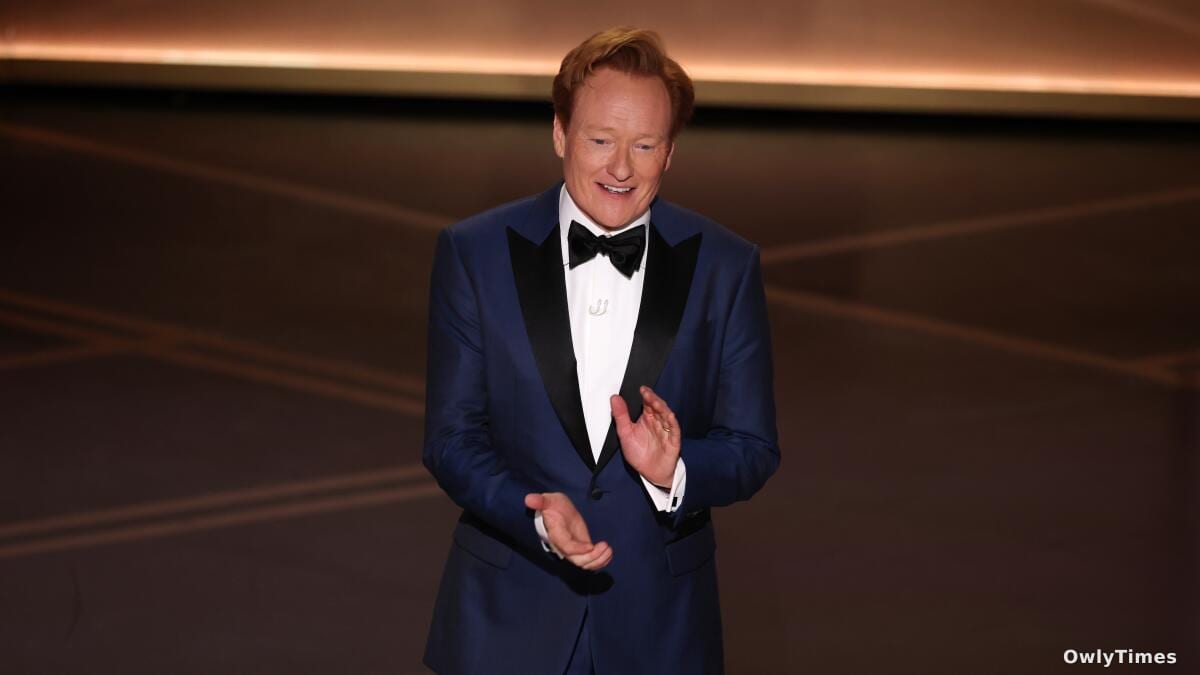

The announcement rippled through the industry with a mix of comfort and curious anticipation: Conan O’Brien, the king of self-deprecating wit, is set to host the 99th Academy Awards on March 14, 2027, for an unprecedented third consecutive year. It’s a move that signals the Academy’s faith in a beloved comedic voice, yet beneath the surface, this seemingly straightforward decision is a crucial pivot point for Hollywood’s most prestigious night, reflecting profound shifts in how we consume and celebrate culture. The Oscars, much like the broader entertainment landscape, are in the midst of an identity crisis, and O’Brien's return is either a steady hand guiding the ship or a familiar face on a rapidly changing tide.
Conan's Comedic Comeback Amidst Shifting Sands
O'Brien's charm and unique comedic rhythm have clearly resonated, prompting his return after helming the ceremony in both 2025 and this year. Craig Erwich, President of Disney Television Group, lauded O’Brien’s impact, stating on Tuesday that "Conan has created remarkable energy around the Oscars. His singular comedic voice makes Hollywood’s biggest night one of the most entertaining celebrations of the year." This glowing endorsement, reported by the Los Angeles Times, underscores the Academy's commitment to entertainment value as a bulwark against declining viewership. With Raj Kapoor and Katy Mullan also returning as executive producers for their fourth consecutive year, the team is banking on consistency and comedic chops to navigate turbulent waters. O’Brien will join an elite pantheon of hosts who have emceed three times, including Jerry Lewis, Steve Martin, Conrad Nagel, and David Niven, though he still has a long way to go to catch Bob Hope, who holds the record with 19 hosting gigs.
The Ratings Riddle: Why Numbers Don't Tell the Whole Story
While the Academy and Disney express confidence in O’Brien's ability to inject energy, the raw numbers tell a more sobering story about the traditional awards telecast. The ABC telecast of the 2026 ceremony averaged 17.9 million viewers, marking a 9% drop from the previous year’s 19.7 million. This downward trend is part of a larger pattern, with the Oscars having hit an all-time low of 10.5 million viewers in 2021. The narrative emerging from the industry is clear: younger audiences, increasingly, prefer to view clips of the ceremony on social media rather than commit to a multi-hour live television event. This shift highlights a fundamental tension: the desire for cultural relevance versus the challenge of capturing a fragmented, on-demand audience. The Academy's continued investment in a familiar, engaging host like Conan O’Brien is a clear attempt to bridge this generational viewing gap.
A New Home, A New Era: The Oscars' Radical Reinvention
Beyond the host and the ratings, the Academy is making even more radical moves to adapt to the future. Starting in 2029, the Oscars will vacate Hollywood’s iconic Dolby Theatre, its home for nearly a quarter-century, for L.A. Live in downtown Los Angeles. This physical relocation isn't just about a change of scenery; it symbolizes a broader reimagining of the event itself. More dramatically, that same year will see the ceremony end its five-decade run on ABC, moving instead to stream exclusively on YouTube. This digital-first strategy, announced by Academy of Motion Picture Arts and Sciences Chief Executive Bill Kramer and President Lynette Howell Taylor at Disney's upfront presentation, is a direct acknowledgment of evolving consumption habits and a bold bet on the future of media distribution for events like the Academy Awards.
Beyond the Broadcast: The Future of Live Awards
O’Brien’s return, coupled with these monumental structural changes, paints a vivid picture of an industry in transition. It's a moment where the enduring appeal of a charismatic personality meets the undeniable force of technological and cultural evolution. The move to YouTube streaming and a new venue in 2029 isn't just a logistical update; it's a desperate gambit to redefine the Oscars for a new generation, hoping to capture the "remarkable energy" that O'Brien brings and translate it into a format that resonates with a global, digitally native audience. The success or failure of these audacious changes will offer critical insights into the viability of traditional awards shows in an era where every moment is curated, clipped, and consumed on demand, making the 99th Academy Awards far more than just another night for statues and speeches.